Child terrified of the doctor: what to do?
A child's fear of the doctor is common and manageable. Learn practical, evidence-based ways to reduce anxiety before, during, and after a visit.
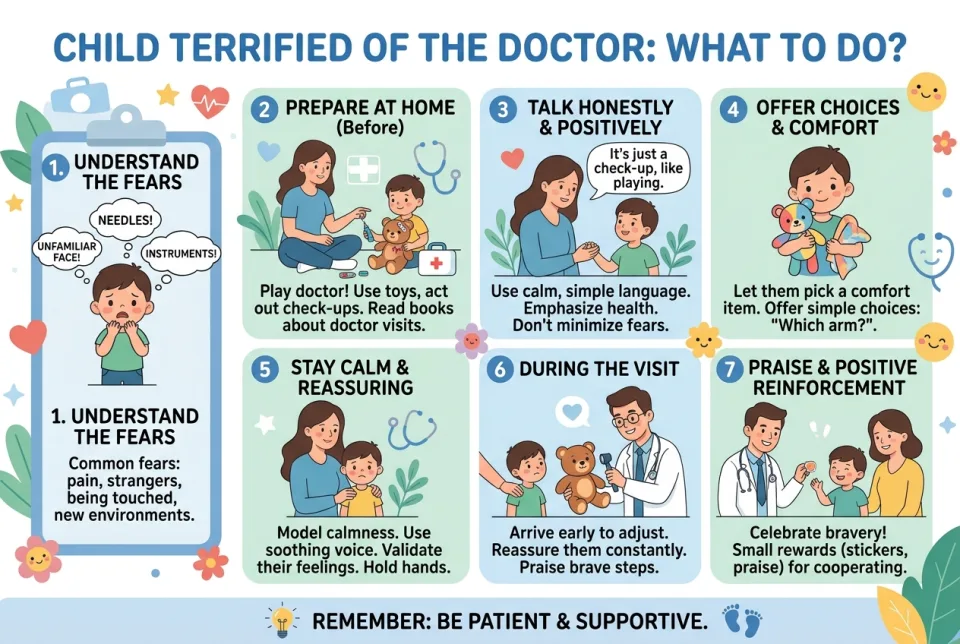
Quick answer
5 steps — read this before anything else
-
1
Stay calm and validate your child's feelings without forcing them to 'be brave'.
-
2
Prepare your child in advance with simple, honest explanations of what will happen.
-
3
Use play, books, or videos to familiarize your child with medical tools and visits.
-
4
Distract and comfort your child during the visit with toys, songs, or deep breathing.
-
5
Praise your child afterward for coping, not just for being brave.
Warning
If your child is in a medical emergency, call emergency services immediately. Do not let fear delay necessary care.
Important — please read
This content is general educational and informational only, and is not a substitute for professional medical advice, diagnosis or treatment. Always seek the advice of a qualified health provider with any questions you may have about a medical condition. Never disregard or delay seeking professional medical care because of something you read here. In an emergency or life-threatening situation, call your local emergency services (police, fire or ambulance) immediately.
Many children feel scared or anxious about visiting the doctor. This fear is normal and often stems from unfamiliar surroundings, previous painful experiences, or fear of the unknown. With patience and preparation, you can help your child feel safer and more cooperative during medical visits.
What is happening
Young children may not understand why they need to see a doctor and may associate the visit with pain, such as shots or throat swabs. Their anxiety can show as crying, clinging, or tantrums. This is a normal stress response, not misbehavior.
Emergency warning
If your child is in immediate danger or has a medical emergency, call your local emergency services right away. Do not delay care because of fear; emergency responders are trained to help frightened children.
What to do first
- Stay calm yourself. Children pick up on your anxiety. Take a deep breath and speak in a soothing voice.
- Acknowledge feelings. Say, "It's okay to feel scared. I'm here with you." Avoid dismissing or minimizing their fear.
- Offer comfort. Hold your child, use a favorite toy or blanket, and reassure them that you will stay close.
Step by step
Before the visit
- Prepare in advance. Use simple, honest words to explain what will happen. For example, "The doctor will look in your ears and listen to your heart. It won't hurt."
- Use play. Pretend play with a toy doctor kit or read books about doctor visits to make the experience more familiar.
- Avoid bribes or false promises. Don't say "It won't hurt" if a shot is needed. Instead, say, "It might feel like a quick pinch, but it will be over fast."
- Schedule wisely. Choose a time when your child is well-rested and not hungry.
During the visit
- Distract and engage. Bring a favorite toy, sing a song, or tell a story during the examination.
- Use deep breathing. Practice slow breaths together, like blowing out candles.
- Give choices when possible. Let your child choose which arm for a shot or whether to sit on your lap.
- Praise coping efforts. Acknowledge your child's bravery, even if they cried.
After the visit
- Celebrate. Do a small reward or activity together to reinforce positive coping.
- Talk about it. Ask what went well and what was hard, and reassure your child for next time.
What NOT to do
- Don't force or threaten. Avoid saying "Stop crying" or "Be a big kid." This can increase anxiety.
- Don't lie about procedures. Honesty builds trust.
- Don't show your own fear. If you're anxious, step aside and let another caregiver help.
- Don't skip necessary care. Avoiding the doctor can lead to bigger problems.
When to seek professional care
If your child's fear is severe, persistent, or interferes with necessary medical care, talk to your pediatrician. They can offer strategies or refer you to a child psychologist or counselor who specializes in anxiety.
What to monitor
Watch for signs of extreme distress, such as prolonged crying, vomiting, or panic attacks. If these occur, discuss them with your doctor.
How to prevent it
- Regular check-ups. Familiarity reduces fear over time.
- Open communication. Talk about health and doctor visits positively at home.
- Role-play. Use pretend play to rehearse visits.
With patience and preparation, most children gradually become more comfortable with medical visits. If you have ongoing concerns, consult your child's healthcare provider.
This is general information and not a substitute for professional medical advice. In an emergency, call your local emergency services.
Sources & references
Spotted an error? Report it — we correct factual mistakes promptly.
Read next
What Should You Do If Your Child Is Refused Entry to School Because of Missing Documents?
If your child is turned away from school because of missing paperwork, stay calm and act quickly. This guide explains how to resolve the issue and get your child enrolled.
What Should I Consider When Comparing an Only Child vs. a Large Family?
There is no single best family size. Research shows that family dynamics, resources, and parenting quality matter far more than the number of siblings.
What age can kids stay home alone legally?
There is no single legal age for leaving a child home alone in most places. The law focuses on whether the child is mature enough and the situation is safe.
Child sleepwalking at night: what to do?
Sleepwalking in children is common and usually harmless. Learn how to keep your child safe during an episode and when to talk to a doctor.
Related handy tools
Checklists, decision guides, scenarios and quizzes for the same situation.