Bullying at school: what to do?
Bullying is repeated, intentional harm. Learn safe, practical steps for students, parents, and bystanders to stop it and get support.
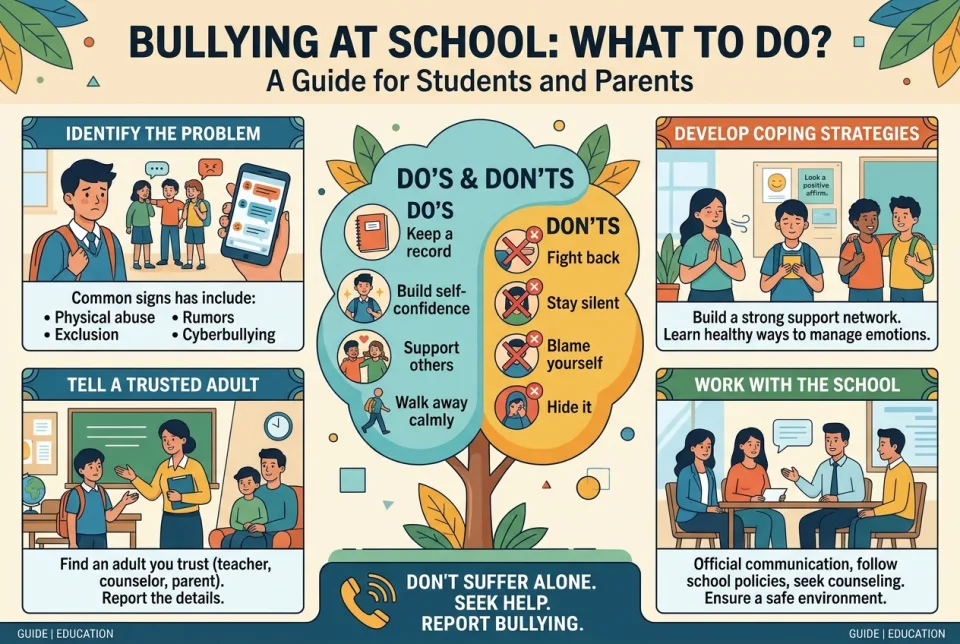
Quick answer
5 steps — read this before anything else
-
1
Tell a trusted adult (parent, teacher, counselor) immediately; do not handle it alone.
-
2
Document incidents: dates, times, places, what happened, and who was involved.
-
3
Avoid confronting the person who is bullying; prioritize your safety.
-
4
Ask the school for their anti-bullying policy and how they will respond.
-
5
Seek emotional support from family, friends, or a counselor.
Warning
If you are in immediate danger or have thoughts of harming yourself, call your local emergency number right away.
Bullying is repeated, intentional behavior that hurts, intimidates, or excludes someone. It can be physical, verbal, social (like spreading rumors), or online. If you or someone you know is being bullied, you are not alone and it is not your fault. Taking action early can stop it and protect your well-being.
What is happening
Bullying often involves a power imbalance: the person doing it may be bigger, more popular, or hold some advantage. It can happen in person, via messages, or on social media. Recognizing it is the first step: it is not a normal part of growing up, and it should not be ignored.
What to do first
- Tell a trusted adult. Speak to a parent, caregiver, teacher, school counselor, or coach. If the first adult does not help, tell another. Keep telling until someone takes action.
- Stay safe. Avoid being alone in places where bullying happens. Sit near others, use well-lit routes, and keep your phone charged.
- Do not fight back physically. Responding with violence can escalate the situation and get you hurt or in trouble. Instead, use assertive words like "Stop" or "Leave me alone" and walk away.
- Document everything. Write down what happened, when, where, and who was involved. Save screenshots of online messages. This helps the school investigate.
- Ask the school for help. Request a meeting with a teacher or administrator. Ask about the school's anti-bullying policy and what steps they will take. Follow up in writing if needed.
If you are a parent or caregiver
Listen calmly and believe your child. Avoid blaming them or telling them to "just ignore it." Ask what they need and reassure them that you will help. Contact the school and request a written response. If the bullying involves threats, physical harm, or sexual content, report it to the police.
If you are a bystander
Do not join in or laugh. If it is safe, speak up or help the person leave the situation. Report what you saw to an adult. Supporting the person being bullied can make a big difference.
What NOT to do
- Do not confront the person bullying you alone or in anger; it can put you at risk.
- Do not delete evidence of online bullying; save it first.
- Do not keep it secret. Bullying thrives in silence.
- Do not retaliate with threats or violence.
When to seek professional help
If you feel hopeless, anxious, depressed, or have thoughts of harming yourself, tell a trusted adult and seek help from a mental health professional immediately. In the U.S., you can call or text 988 for the Suicide & Crisis Lifeline. If you are in immediate danger, call your local emergency number.
How to prevent it
Schools can reduce bullying by promoting respect, supervising hotspots, and responding consistently. Students can help by including others, not sharing harmful posts, and reporting bullying. Parents can stay involved and talk openly about online safety.
Remember: bullying is not your fault, and help is available. Take the first step today by telling someone you trust.
Spotted an error? Report it — we correct factual mistakes promptly.
Read next
What Should You Do If Your Child Is Refused Entry to School Because of Missing Documents?
If your child is turned away from school because of missing paperwork, stay calm and act quickly. This guide explains how to resolve the issue and get your child enrolled.
Child having an asthma attack at school: what to do?
Learn how to recognize an asthma attack in a child at school and respond quickly with the right steps, including when to call emergency services.
Child gets a fever at night: what to do?
A step-by-step guide for parents on how to safely manage a child's fever at night, including when to call for help and what to avoid.
Child swallowed a small object: what to do?
Most small objects pass through without harm, but some can cause serious injury. Learn when to act fast and when to watch and wait.
Related handy tools
Checklists, decision guides, scenarios and quizzes for the same situation.