Washing machine shakes violently on spin: what to do?
A washing machine that shakes violently during the spin cycle can damage the appliance or your floor. Learn the common causes and safe steps to fix them.
Quick answer
5 steps — read this before anything else
-
1
Stop the cycle and unplug the machine before inspecting.
-
2
Check that the machine is level and all four feet are firmly on the floor.
-
3
Redistribute the load evenly and avoid washing single heavy items.
-
4
Inspect the shipping bolts, suspension, and floor for issues.
-
5
If the problem persists, call a qualified appliance technician.
Warning
Stop and unplug the machine immediately if you see sparks, smoke, or a burning smell, and call local emergency services if there is a fire risk.
A washing machine that shakes violently during the spin cycle is more than a nuisance: it can damage the appliance, the floor, and nearby cabinets, and may indicate a serious mechanical problem. Most cases are caused by simple issues like an unbalanced load or an unlevel machine, but some point to worn parts that need professional attention.
What is happening
During the spin cycle, the drum rotates at high speed to extract water. If the load is unevenly distributed or the machine is not properly supported, the drum's motion becomes unbalanced, causing strong vibrations that transfer to the entire unit. Modern machines have sensors that may stop the cycle or reduce speed when imbalance is detected, but older or malfunctioning machines may continue to shake.
Emergency warning
If you notice sparks, smoke, a burning smell, or water leaking near electrical components, stop the machine immediately, unplug it if it is safe to do so, and call local emergency services if there is a fire risk. Do not touch the machine with wet hands or stand in water.
What to do first
- Stop the cycle and unplug the machine. Never inspect a running machine.
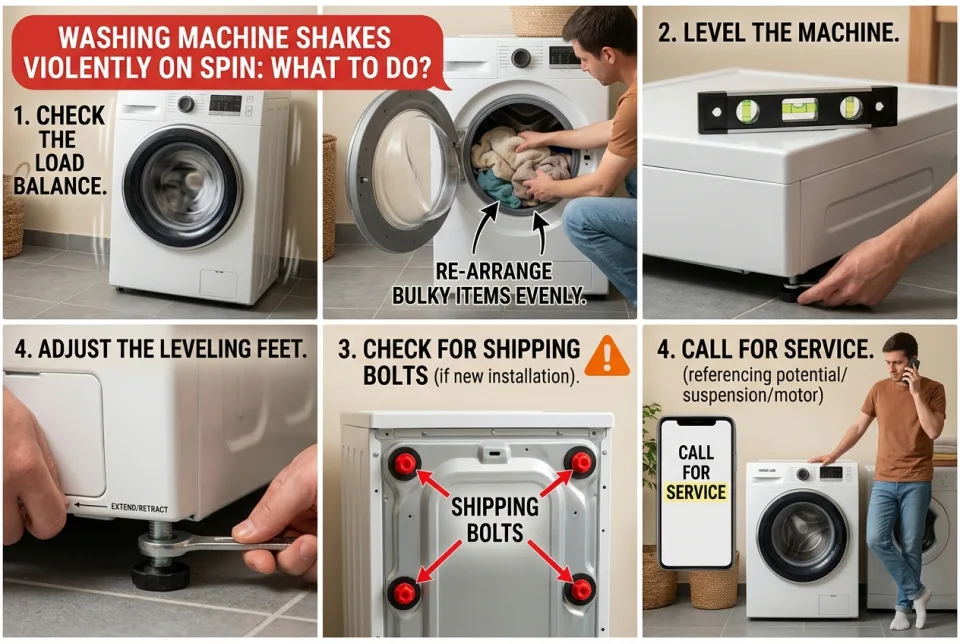
- Check the load. Open the door and redistribute the clothes evenly around the drum. Avoid washing a single heavy item like a blanket or rug without adding other items to balance the load.
- Verify the machine is level. Use a spirit level on top of the machine. Adjust the feet until it sits firmly on the floor without rocking. Tighten the lock nuts on the feet.
- Inspect the floor. A weak or flexible floor (especially on upper levels) can amplify vibrations. If the floor moves, consider reinforcing it or relocating the machine.
- Check for shipping bolts. If the machine is new, remove the shipping bolts (usually at the back) before use. They lock the drum for transport and cause severe shaking if left in.
- Examine the suspension and shock absorbers. With the machine unplugged, press down on the drum corners. If it bounces excessively or feels loose, the suspension may be worn and need replacement.
What NOT to do
- Do not continue running the machine if it shakes violently; this can cause permanent damage or injury.
- Do not try to stop a moving drum by hand.
- Do not place the machine on a weak or uneven surface.
- Do not ignore repeated imbalance errors; they often signal a mechanical fault.
- Do not attempt electrical repairs unless you are qualified.
When to call a professional
If the machine still shakes after you have balanced the load, leveled the machine, and checked for shipping bolts, or if you notice unusual noises, a burning smell, or visible damage to the drum or suspension, contact a qualified appliance technician. Attempting complex repairs yourself can be dangerous and may void warranties.
How to prevent it
- Load the machine evenly and avoid mixing very large and very small items.
- Use the correct amount of detergent to prevent excessive suds that can cause imbalance.
- Regularly check that the machine remains level and the feet are secure.
- Follow the manufacturer's guidelines for load size and maintenance.
By taking these steps, you can often resolve the shaking and extend the life of your washing machine. If the problem persists, seek professional help to avoid further damage.
Spotted an error? Report it — we correct factual mistakes promptly.
Read next
What Should You Do If Your Washing Machine Smells Bad? 8 Cleaning Tricks That Help
A musty washing machine is usually caused by trapped moisture, detergent residue, or mold. Here are 8 safe cleaning tricks to remove the smell and keep it from coming back.
What to Do If Your Clothes Smell Bad After Washing?
Clothes that smell musty or sour after washing usually mean detergent residue, a dirty machine, or slow drying. Here are 8 practical tricks to fix it.
Burned socket smell in the wall: what to do?
A burning smell from a wall socket is a serious fire hazard. Act quickly to cut power and get professional help.
Boiler pressure too low or too high: what to do?
Boiler pressure problems can stop your heating or damage the system. Learn safe steps to diagnose and correct low or high pressure, and when to call a professional.
Related handy tools
Checklists, decision guides, scenarios and quizzes for the same situation.