Pet travel documents for going abroad: what to do?
Taking a pet abroad requires careful planning and specific documents. Start early, check the destination's rules, and ensure your pet meets all health requirements.
Quick answer
5 steps — read this before anything else
-
1
Check the destination country's import requirements well in advance.
-
2
Visit a veterinarian to discuss vaccinations, microchipping, and health certificates.
-
3
Obtain an official health certificate and any required treatments (e.g., rabies vaccination, tapeworm treatment).
-
4
Ensure your pet is microchipped and the microchip number matches the documents.
-
5
Confirm airline and transport carrier rules for pet travel.
Traveling abroad with a pet involves more than booking a ticket. Each country has its own rules for importing animals, and these rules are strictly enforced. Whether you are moving permanently or taking a vacation, you need to prepare the correct documents and health checks. Start at least several months before your trip, as some requirements, such as rabies titers or waiting periods, can take weeks or months to complete.
What is happening
When you cross an international border with a pet, you are subject to the destination country's animal health regulations. These regulations exist to prevent the spread of diseases like rabies. Common requirements include a microchip, rabies vaccination, a health certificate issued by an official veterinarian, and sometimes additional treatments or tests. The exact rules depend on the country you are entering and the country you are coming from. For example, the European Union has specific rules for pets entering from EU and non-EU countries, and some countries like the UK and Australia have particularly strict requirements.
Step by step
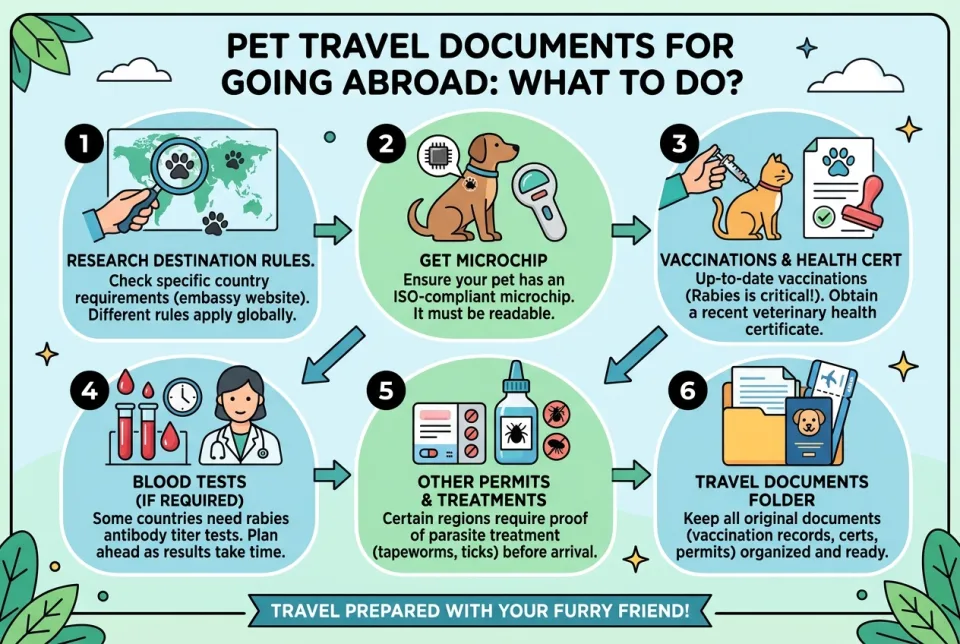
- Research the destination's requirements. Check the official government website of the country you are visiting or the embassy. Look for the section on importing pets. Requirements can change, so verify the information close to your travel date.
- Visit your veterinarian early. Schedule an appointment at least 3-6 months before travel. Discuss your plans and ask for guidance on vaccinations, microchipping, and paperwork. Your vet can also advise on parasite prevention and fitness for travel.
- Microchip your pet. Many countries require a microchip that meets ISO standards (11784/11785). The microchip must be implanted before or at the same time as the rabies vaccination for the vaccination to be considered valid. Ensure the microchip number is recorded correctly on all documents.
- Vaccinate for rabies. Rabies vaccination is almost always required. The vaccine must be current and administered according to the manufacturer's schedule. Some countries require a rabies titer test (blood test) to prove immunity, followed by a waiting period (often 3 months).
- Obtain an official health certificate. This certificate is typically issued by a government-accredited veterinarian shortly before travel (often within 10 days). It confirms your pet is healthy and meets the destination's requirements. Some countries require the certificate to be endorsed by a government authority (e.g., USDA in the US).
- Complete any additional treatments. Some countries require treatment for parasites such as tapeworm or ticks within a specific timeframe before entry. For example, the UK requires tapeworm treatment for dogs entering from certain countries.
- Check airline and transport rules. Airlines have their own requirements for pet travel, including health certificates, acclimation, and carrier specifications. Confirm with your airline well in advance.
- Prepare a travel folder. Keep all original documents, including vaccination records, health certificates, microchip information, and any test results, in a secure folder. Carry them with you, not in checked luggage.
What NOT to do
- Do not assume your home country's rules apply abroad. Each country sets its own requirements.
- Do not travel with a pet that is not microchipped or whose microchip number does not match the documents.
- Do not use a health certificate that is expired or issued by a non-accredited veterinarian.
- Do not leave planning to the last minute. Some requirements involve long waiting periods.
- Do not attempt to hide your pet or avoid declaring it at customs. Penalties can include quarantine, fines, or refusal of entry.
When to seek professional help
If you are unsure about any requirement, consult your veterinarian or contact the destination country's embassy or agricultural department. For complex moves, consider hiring a pet relocation service that specializes in international travel. Always verify information from official sources, as rules can change.
Traveling with a pet can be rewarding if you plan ahead. Start early, follow the rules, and keep your pet's health and safety as the top priority.
Spotted an error? Report it — we correct factual mistakes promptly.
Read next
What Should I Do If an Adoption Is Not Going as Planned?
Adoption delays, changes of heart, or unexpected legal hurdles are common and rarely mean the process is over. Here is how to stabilise the situation, protect your rights, and decide your next step.
Introducing a new pet to your home: what to do?
Bringing a new pet home is exciting but can be stressful for the animal. Follow these steps to help your pet settle in safely and comfortably.
Pet overheat in summer: what to do?
Pets can overheat quickly in hot weather. Learn the signs of heatstroke, immediate first aid steps, and when to call a vet.
Dog limping after intense play: what to do?
A limping dog after intense play may have a strain, sprain, or more serious injury. Learn safe first steps, what to avoid, and when to see a vet.
Related handy tools
Checklists, decision guides, scenarios and quizzes for the same situation.