Dog limping after intense play: what to do?
A limping dog after intense play may have a strain, sprain, or more serious injury. Learn safe first steps, what to avoid, and when to see a vet.
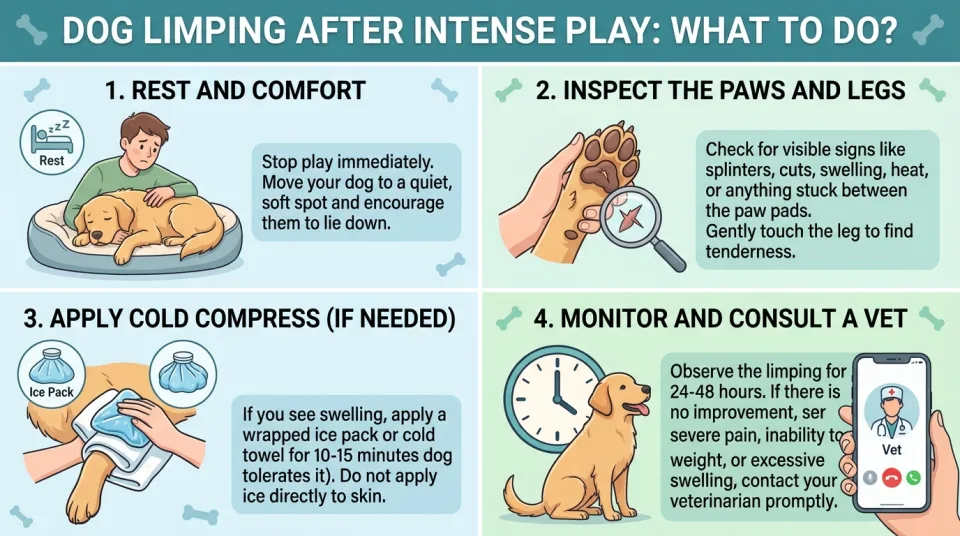
Quick answer
5 steps — read this before anything else
-
1
Stop all play and exercise immediately; keep your dog calm and confined.
-
2
Check the affected leg for visible wounds, swelling, or foreign objects, but do not probe deeply.
-
3
Apply a cold compress for up to 10-15 minutes if your dog tolerates it, then keep them rested.
-
4
Call your veterinarian for advice, especially if your dog cannot bear weight or seems in pain.
-
5
Do not give any human pain medication without veterinary guidance.
Warning
Never give your dog human pain medications such as ibuprofen or acetaminophen; they can be fatal. Call a veterinarian immediately if your dog cannot bear weight, has an open wound, or shows severe pain.
Important — please read
This content is general educational and informational only, and is not a substitute for professional medical advice, diagnosis or treatment. Always seek the advice of a qualified health provider with any questions you may have about a medical condition. Never disregard or delay seeking professional medical care because of something you read here. In an emergency or life-threatening situation, call your local emergency services (police, fire or ambulance) immediately.
After a burst of intense play, a dog may suddenly start limping. This can be caused by a simple strain, a sprain, a muscle pull, or something more serious like a ligament tear or fracture. Because dogs often hide pain, any limp deserves attention. Your goal is to keep your dog safe, prevent further injury, and get professional advice.
What is happening?
Limping (lameness) means your dog is not bearing weight normally on one or more legs. After intense play, common causes include soft tissue injuries (strains or sprains), joint injuries, paw pad cuts, or foreign objects stuck in the paw. Less often, it can be a sign of a more serious problem like a cruciate ligament tear or a fracture. Only a veterinarian can diagnose the exact cause.
Emergency warning
Call your veterinarian or an emergency veterinary clinic immediately if your dog shows any of these signs:
- Cannot put any weight on the leg at all, or the leg looks deformed.
- Severe pain, crying, or aggression when you touch the leg.
- Open wound, heavy bleeding, or a bone visible.
- Sudden swelling and heat in the leg.
- Collapse, weakness, or difficulty breathing.
- The limp does not improve after 24-48 hours of rest.
What to do first
- Stop all activity. End play immediately and keep your dog calm. Do not encourage them to walk it off.
- Confine your dog. Use a crate or a small safe area to limit movement. This helps prevent further injury.
- Check the leg gently. Look for cuts, swelling, or foreign objects like thorns or glass. Do not probe deep wounds or pull out embedded objects. If your dog resists, stop.
- Apply a cold compress. If your dog allows, place a cold pack wrapped in a cloth on the affected area for up to 10-15 minutes. Never put ice directly on the skin.
- Call your veterinarian. Describe what happened and follow their advice. They may recommend rest and monitoring, or they may want to see your dog.
- Keep your dog rested. Limit walks to short toilet breaks only, and keep your dog on a leash.
What NOT to do
- Do not give human pain medications such as ibuprofen, acetaminophen, or aspirin. Many are toxic to dogs.
- Do not force your dog to walk or continue playing.
- Do not massage or stretch the leg vigorously.
- Do not apply heat in the first 48 hours; it can increase swelling.
- Do not attempt to remove a deeply embedded object yourself.
- Do not delay veterinary care if your dog is in obvious pain or cannot bear weight.
When to seek professional care
See a veterinarian if the limp persists for more than 24-48 hours, if your dog cannot bear weight, if there is swelling or pain, or if your dog seems unwell. Puppies and older dogs should be seen sooner because their bones and joints are more vulnerable.
What to monitor
Watch for changes in weight-bearing, swelling, appetite, and energy. If your dog's condition worsens or new symptoms appear, contact your vet promptly.
How to prevent it
Warm up before intense play, avoid sudden bursts of high-impact activity, keep your dog at a healthy weight, and ensure play areas are free of hazards. Regular exercise and gradual conditioning help reduce injury risk.
This is general information and not a substitute for professional veterinary advice. In an emergency, call your local emergency veterinary service immediately.
Sources & references
Spotted an error? Report it — we correct factual mistakes promptly.
Read next
What Do I Do If I Can't Find Pet-Friendly Housing?
Finding a rental that welcomes pets can be tough, but a clear plan, solid references, and a pet resume can open more doors than you expect.
What Should I Do If an Adoption Is Not Going as Planned?
Adoption delays, changes of heart, or unexpected legal hurdles are common and rarely mean the process is over. Here is how to stabilise the situation, protect your rights, and decide your next step.
What to Do If You Are Stung by a Bee? Essential First Aid Steps
Learn the immediate first aid actions to take after a bee sting to reduce pain, minimize swelling, and recognize severe allergic reactions quickly.
What to Do If a Dog Bites You? Urgent Steps to Avoid Infection
Learn what to do if a dog bites you with this emergency response guide. Proper first aid and immediate medical care prevent dangerous infections and complications.
Related handy tools
Checklists, decision guides, scenarios and quizzes for the same situation.