Parking brake stuck engaged: what to do?
If your parking brake is stuck, don't force it. Learn safe steps to release it and when to call a professional.
Quick answer
4 steps — read this before anything else
-
1
Do not drive with the parking brake engaged; it can damage the brakes and be unsafe.
-
2
Try releasing the brake fully: push the release button or lever, or press the electronic parking brake button while pressing the brake pedal.
-
3
If it won't release, safely pull over, turn on hazard lights, and call a tow truck or mechanic.
-
4
Never crawl under the vehicle to fix it yourself; seek professional help.
Warning
Driving with the parking brake engaged can cause brake overheating and failure. Do not drive if the brake will not release; call a tow truck or mechanic.
If your parking brake is stuck engaged, you may notice the vehicle feels sluggish, the brake warning light stays on, or you smell burning. Do not ignore it. Driving with the parking brake on can overheat and damage the brakes and may be dangerous. This guide explains safe steps to take.
What is happening
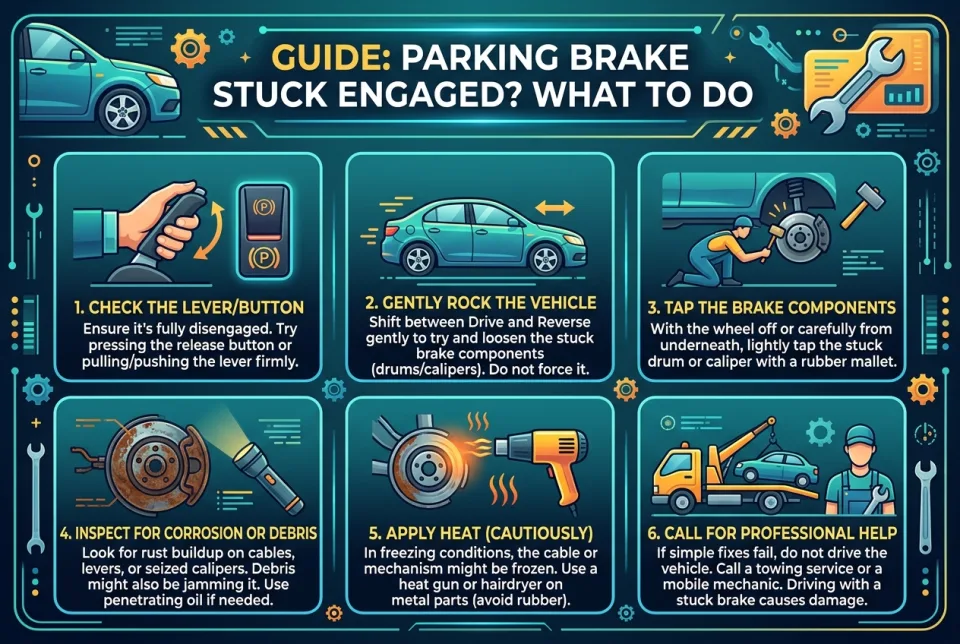
The parking brake (also called handbrake or emergency brake) can stick for several reasons: a cable may be rusted or frozen, the brake shoes may be stuck to the drum, or an electronic parking brake may have a fault. In cold weather, moisture can freeze the cable or brake components. Sometimes the brake is simply not fully released.
What to do first
- Stay calm and do not force anything. Forcing a stuck lever or button can cause damage.
- Make sure the brake is fully released. For a manual handbrake, push the release button and lower the lever completely. For a foot-operated parking brake, press the release pedal. For an electronic parking brake, press the brake pedal and then press the parking brake button to release it (check your owner's manual for the correct procedure).
- Check for warning lights. If the brake warning light remains on, the brake may still be engaged.
- Try moving slowly. In a safe area, gently try to move forward and backward. Sometimes a slight movement can free a stuck brake. Do not accelerate hard.
- If the brake still won't release, stop and seek help. Do not continue driving. Call a tow truck or a qualified mechanic.
What NOT to do
- Do not drive at normal speeds with the parking brake engaged. This can cause brake failure and is unsafe.
- Do not crawl under the vehicle to try to release the brake yourself. The vehicle could roll or crush you.
- Do not pour hot water or use a flame to free frozen brakes; this can damage components or cause injury.
- Do not ignore the problem. A stuck parking brake can lead to costly repairs and unsafe driving.
When to call for help
Call a professional if:
- The parking brake will not release after following the steps above.
- You see smoke or smell burning from the wheels.
- The brake warning light stays on and the vehicle feels sluggish.
- You are not sure what to do. It is always safer to call for assistance.
What to monitor
After the brake is released, pay attention to any unusual noises, smells, or a dragging feeling. If you notice any, have the vehicle checked by a mechanic. The parking brake may need adjustment or repair.
How to prevent it
- Use the parking brake regularly, but avoid over-tightening.
- In cold weather, try to park in a dry place and avoid setting the parking brake if it is wet and freezing conditions are expected (use wheel chocks instead, if safe).
- Have your parking brake inspected during routine maintenance.
- Follow the manufacturer's instructions for electronic parking brakes.
If your parking brake is stuck, the safest action is to stop and call for professional help. Do not risk driving with it engaged.
Spotted an error? Report it — we correct factual mistakes promptly.
Read next
Accident in a rental car abroad: what to do?
A step-by-step guide to handling a rental car accident in a foreign country, from securing the scene to notifying the rental company and your insurer.
Brake failure while driving: what to do?
Brake failure at speed is a true emergency. Stay calm, pump the pedal, downshift, and use the handbrake or road friction to slow down safely.
Car overheating: what to do?
When your car overheats, quick action can prevent engine damage and keep you safe. Learn the steps to take and what to avoid.
Car alarm keeps going off: what to do?
A car alarm that keeps triggering is annoying and can drain your battery. Learn how to silence it safely, find common causes, and prevent repeat false alarms.
Related handy tools
Checklists, decision guides, scenarios and quizzes for the same situation.