Accident in a rental car abroad: what to do?
A step-by-step guide to handling a rental car accident in a foreign country, from securing the scene to notifying the rental company and your insurer.
Quick answer
5 steps — read this before anything else
-
1
Stop safely, turn on hazard lights, and check for injuries; call emergency services if anyone is hurt.
-
2
Call the local police and request a written accident report.
-
3
Photograph the scene, damage, and other vehicles, and exchange details with the other driver.
-
4
Contact the rental company's emergency line immediately and follow their instructions.
-
5
Notify your insurer or credit card company that provides rental coverage as soon as possible.
Warning
If anyone is injured or there is a risk of fire or further collision, call local emergency services immediately and move to a safe location.
An accident in a rental car abroad can be stressful, especially with language barriers and unfamiliar laws. Staying calm and following a clear sequence of steps will protect your safety and your rights.
What to do first
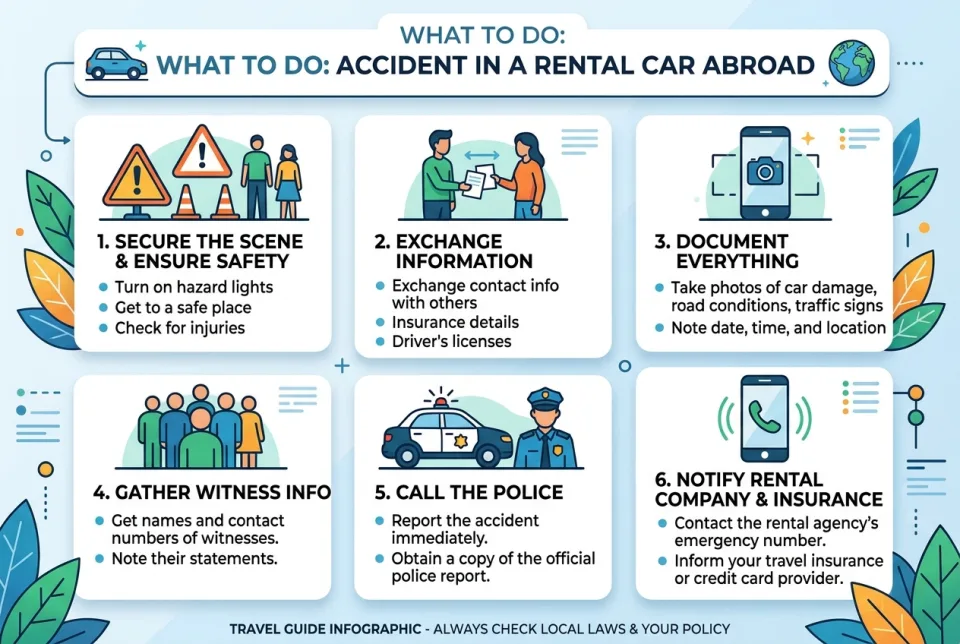
- Stop safely and secure the scene. Pull over as soon as it is safe, turn on hazard lights, and set up a warning triangle if you have one and it is safe to do so.
- Check for injuries. If anyone is hurt, call local emergency services immediately. Do not move injured people unless there is immediate danger (e.g., fire).
- Call the police. In most countries you must report any accident involving injury, significant damage, or a dispute. Ask for a written accident report (often called a constat or police report). This document is crucial for insurance and rental claims.
- Exchange information. Get the other driver's name, address, phone number, license plate, and insurance details. Also note witnesses' contact information.
- Document everything. Take photos of vehicle positions, damage, road conditions, and any injuries. Use your phone's timestamp feature.
- Contact the rental company. Call the emergency number provided in your rental agreement. They will guide you on next steps, including towing and replacement vehicle.
- Notify your insurer. If you have rental coverage through your credit card or a separate policy, call them as soon as possible. Provide the police report number and photos.
What NOT to do
- Do not leave the scene without exchanging information or without police permission; it may be a criminal offense.
- Do not admit fault or sign any document you do not understand. You can describe what happened factually without accepting blame.
- Do not accept cash payments or agree to settle privately without informing the rental company and your insurer.
- Do not continue driving if the vehicle is damaged or unsafe; call the rental company for advice.
- Do not ignore the rental company's instructions; they may void your coverage if you fail to report promptly.
When to seek professional help
If you are injured, seek medical attention even if you feel fine; some injuries appear later. If you face legal issues or the other party is aggressive, contact your embassy or consulate for a list of local English-speaking lawyers. If the rental company disputes the damage, keep all documentation and consider contacting your insurer's claims department.
How to prevent problems
- Before renting, check what coverage you already have (credit card, personal auto policy) and consider supplemental insurance.
- Familiarize yourself with local traffic laws and emergency numbers.
- Keep the rental agreement and emergency contact numbers in the glove box.
- Always carry a warning triangle and reflective vest if required by local law.
After the accident, follow up with the rental company and your insurer to ensure claims are processed. Keep copies of all documents. This guide is general information and not a substitute for professional legal or insurance advice.
Spotted an error? Report it — we correct factual mistakes promptly.
Read next
What should you do after a car accident?
A step-by-step guide to staying safe, getting help, and handling the aftermath of a car accident, from securing the scene to exchanging information.
What to Do If You Have a Car Accident
Knowing the exact steps to take immediately following a vehicle collision helps protect lives, prevents secondary hazards, and ensures proper documentation.
Brake failure while driving: what to do?
Brake failure at speed is a true emergency. Stay calm, pump the pedal, downshift, and use the handbrake or road friction to slow down safely.
Car overheating: what to do?
When your car overheats, quick action can prevent engine damage and keep you safe. Learn the steps to take and what to avoid.
Related handy tools
Checklists, decision guides, scenarios and quizzes for the same situation.