Car alarm keeps going off: what to do?
A car alarm that keeps triggering is annoying and can drain your battery. Learn how to silence it safely, find common causes, and prevent repeat false alarms.
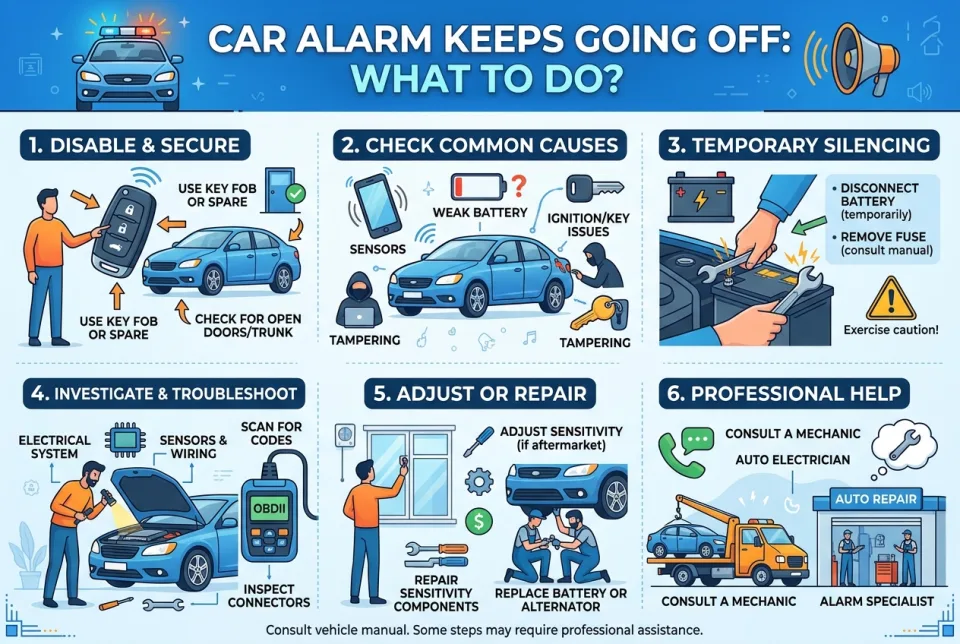
Quick answer
5 steps — read this before anything else
-
1
Press the unlock button on your key fob to silence the alarm.
-
2
If it keeps sounding, disconnect the vehicle battery (negative terminal first) or remove the alarm fuse.
-
3
Check for obvious triggers: open doors, windows, or a pet or object moving inside.
-
4
Inspect the cabin for insects or loose items that may set off motion sensors.
-
5
If the problem persists, have a mechanic or auto electrician diagnose the alarm system.
Warning
Disconnecting the battery can cause sparks. Wear eye protection and keep flames away. Never disconnect the battery while the engine is running.
A car alarm that keeps going off is more than a nuisance: it can annoy neighbors, drain your battery, and signal a problem with the vehicle's security system. Most false alarms have simple causes you can check yourself. This guide explains how to stop the noise safely and what to do next.
What to do first
- Silence the alarm. Press the unlock button on your key fob. If that does not work, try the lock button, then unlock again. Some cars have a valet mode or a dedicated alarm-off button; check your owner's manual.
- Check for obvious triggers. Look for open doors, windows, or the trunk. A pet, a person, or a moving object inside can set off motion sensors. Also check for a loose item hanging from the mirror or a phone charger that might be swinging.
- Inspect for insects. Spiders and other insects inside the cabin can trigger ultrasonic or motion sensors. A quick vacuum or insect spray (used safely) may solve it.
- Disconnect the battery if needed. If the alarm will not stop and you cannot find the fuse, disconnect the negative (black) battery terminal using a wrench. This is safe if done carefully, but it will reset your radio and clock. Alternatively, remove the alarm fuse (check the owner's manual for its location).
- Look for signs of tampering. Check for broken windows, scratched locks, or a damaged door sensor. If you suspect a break-in attempt, call the police non-emergency line.
Common causes of false alarms
- Faulty door, hood, or trunk sensor. A worn switch can tell the alarm a door is open when it is not.
- Low battery or poor connection. A weak car battery or corroded terminals can cause voltage drops that trigger the alarm.
- Motion sensors. Aftermarket alarms with shock or motion sensors may be too sensitive. Adjust the sensitivity if possible.
- Extreme weather. Strong wind or thunder can shake the car and set off vibration sensors.
- Key fob issues. A damaged button or low fob battery can send false signals.
What NOT to do
- Do not ignore it for long. A constantly sounding alarm will drain the battery and may violate local noise ordinances.
- Do not cut random wires. You could disable safety systems or cause a short circuit. Use the fuse box instead.
- Do not disconnect the battery while the engine is running. This can damage the alternator and electronics.
- Do not assume it is a break-in. Most repeated alarms are false. Check first, then act.
When to seek professional help
If the alarm continues to trigger after you have checked the basics, or if you see warning lights on the dashboard, have a qualified mechanic or auto electrician inspect the system. They can test sensors, the alarm module, and the battery. If your car is under warranty, contact the dealer.
How to prevent future false alarms
- Keep the interior clean and free of loose objects.
- Regularly check the battery and terminals for corrosion.
- If you have an aftermarket alarm, have the sensitivity adjusted.
- Park in a garage or well-lit area to reduce tampering and weather triggers.
By following these steps, you can usually stop a false alarm quickly and avoid repeat episodes. If the problem persists, a professional diagnosis is the safest next step.
Spotted an error? Report it — we correct factual mistakes promptly.
Read next
What to Do When Your Device Takes Too Long to Charge
Learn why your phone, tablet, or electronic device is charging slowly and how to safely troubleshoot cables, ports, power sources, and battery performance.
What to Do If Your Device Has Long Charging Times
If your smartphone, tablet, or laptop is taking unusually long to charge, follow these troubleshooting steps to identify damaged accessories, dirty ports, or battery health issues.
Accident in a rental car abroad: what to do?
A step-by-step guide to handling a rental car accident in a foreign country, from securing the scene to notifying the rental company and your insurer.
Car smells of burning rubber: what to do?
A burning rubber smell in your car can signal a serious hazard like an overheating engine, a slipping belt, or an electrical fault. Learn how to respond safely and when to get professional help.
Related handy tools
Checklists, decision guides, scenarios and quizzes for the same situation.