Fuse box buzzing or humming: what to do?
A buzzing or humming fuse box can be a sign of a serious electrical hazard. Learn the safe steps to take and when to call a professional.
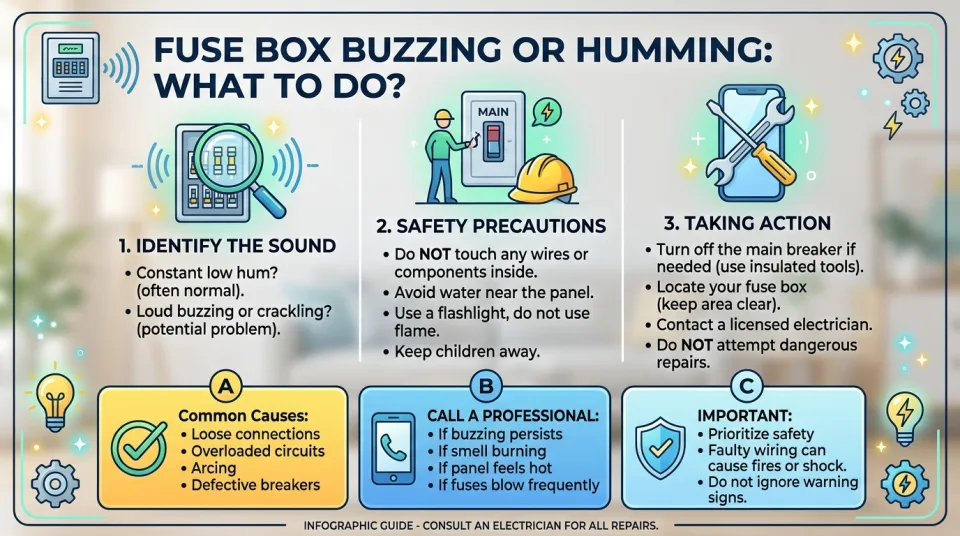
Quick answer
5 steps — read this before anything else
-
1
If you smell burning or see sparks or smoke, call emergency services immediately.
-
2
Do not touch the fuse box; keep everyone away from it.
-
3
If safe, turn off the main power switch using a dry wooden stick or plastic tool.
-
4
Call a licensed electrician to inspect the fuse box.
-
5
Do not use the electrical system until it has been checked.
Warning
A buzzing fuse box can be a fire hazard. If you see sparks, smoke, or flames, call emergency services immediately and evacuate.
Important — please read
This content is general educational and informational only, and is not a substitute for professional medical advice, diagnosis or treatment. Always seek the advice of a qualified health provider with any questions you may have about a medical condition. Never disregard or delay seeking professional medical care because of something you read here. In an emergency or life-threatening situation, call your local emergency services (police, fire or ambulance) immediately.
A fuse box (or consumer unit) that buzzes or hums is not something to ignore. While a faint hum from a transformer or a breaker can be normal, a loud or persistent buzz often indicates a loose connection, an overloaded circuit, or a failing component. These can lead to overheating, arcing, and fire. This guide explains what to do and what not to do.
What is happening
Electrical buzzing or humming in a fuse box usually comes from one of these causes:
- Loose connections: Wires or terminals that are not tight can arc and buzz.
- Overloaded circuits: Too many devices drawing power can cause breakers or fuses to hum.
- Failing breaker or fuse: A worn-out breaker may buzz or chatter.
- Transformer hum: A faint, steady hum from the box itself can be normal, but any new or loud noise is a concern.
Because electricity is involved, treat any unusual noise as a potential emergency until proven otherwise.
Emergency warning
If you see sparks, smoke, flames, or smell burning, call your local emergency services immediately. Do not attempt to fight an electrical fire with water. If it is safe to do so, turn off the main power at the fuse box using a dry, non-conductive object (such as a wooden broom handle) and evacuate the building.
What to do first
- Stay calm and keep others away. Do not touch the fuse box or any electrical equipment if you suspect danger.
- Check for signs of fire or smoke. If present, call emergency services and evacuate.
- Turn off power if safe. If there is no fire and you can safely reach the main switch, turn off the main power using a dry wooden or plastic tool. Do not use your bare hands if the box is buzzing loudly or feels hot.
- Call a licensed electrician. Even if the noise stops after turning off the power, have the system inspected before using it again.
- Do not reset breakers repeatedly. If a breaker trips, leave it off until an electrician checks it.
What NOT to do
- Do not ignore the noise. A buzzing fuse box can be a fire hazard.
- Do not touch the fuse box with wet hands or while standing on a wet floor.
- Do not open the fuse box cover unless you are qualified and the power is off.
- Do not use water on an electrical fire. Use a fire extinguisher rated for electrical fires (Class C) only if you are trained and it is safe.
- Do not replace fuses or breakers with higher-rated ones to stop the buzzing; this can cause overheating and fire.
- Do not attempt DIY repairs inside the fuse box. Only a licensed electrician should do this work.
When to call for help
Call emergency services if you see smoke, flames, or sparks, or if the fuse box is hot to the touch or smells like burning plastic. Call a licensed electrician for any persistent buzzing, humming, or if a breaker keeps tripping. If you are unsure, err on the side of caution and call a professional.
What to monitor
After the power is off and you are waiting for help, monitor for any signs of smoke or heat. Do not re-energize the system until an electrician has inspected it. If the electrician finds a problem, follow their recommendations for repair or replacement.
How to prevent it
Regular electrical inspections by a licensed electrician can catch loose connections and worn components early. Avoid overloading circuits, and never ignore unusual noises or smells from your electrical panel. If your fuse box is old, consider having it evaluated for replacement.
This information is for general guidance only and is not a substitute for professional advice. In an emergency, always call your local emergency services.
Sources & references
Spotted an error? Report it — we correct factual mistakes promptly.
Read next
What Should You Do If Your Dishwasher Leaves Dishes Dirty?
A dirty dishwasher load is usually a loading, water, or filter problem. Work through these 10 practical fixes in order before calling a technician.
What to Do If Your Landlord Refuses to Make Repairs
Learn how to document issues, notify your landlord formally, and explore legal options if essential rental repairs are ignored.
What to Do If You Receive an Eviction Notice
Receiving an eviction notice can be stressful, but you have rights and options. Learn how to review the document, gather records, and secure legal assistance.
What to Do If Your Landlord Increases Your Rent
Receiving a rent increase notice can be challenging. Learn how to verify notice legality, evaluate local rent laws, negotiate effectively, and protect your tenant rights.
Related handy tools
Checklists, decision guides, scenarios and quizzes for the same situation.