Fridge freezes food at the back: what to do?
If your refrigerator is freezing food near the back wall, it is usually a sign of blocked airflow, a faulty thermostat, or a misadjusted temperature setting. Here is how to diagnose and fix the problem safely.
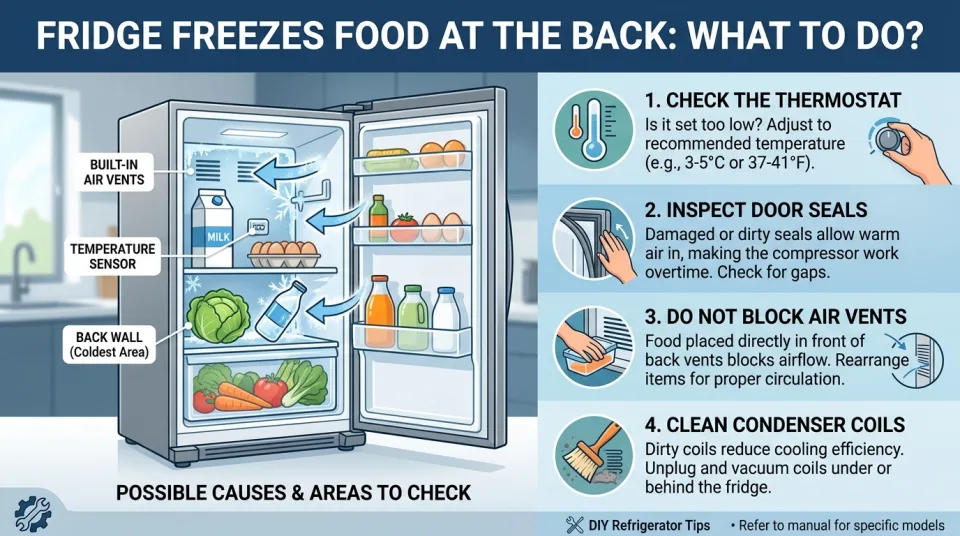
Quick answer
4 steps — read this before anything else
-
1
Check the temperature setting and adjust it to the recommended range (usually 37-40°F / 3-4°C).
-
2
Rearrange food to keep it a few inches away from the back wall and vents.
-
3
Clear any blocked air vents inside the fridge and ensure the door seals properly.
-
4
If the problem persists, call a qualified appliance technician to inspect the thermostat and defrost system.
If you notice that food near the back of your refrigerator is freezing while the rest of the fridge seems fine, you are not alone. This is a common issue that usually points to an airflow or temperature control problem. The good news is that many causes are simple to fix yourself. This guide explains the likely reasons and what you can do safely.
What is happening
Your fridge is designed to maintain a consistent temperature, typically between 37°F and 40°F (3°C and 4°C). When cold air from the freezer or evaporator coils is not circulating properly, or when the thermostat is malfunctioning, the area near the back wall can drop below freezing. This can ruin food and waste energy.
What to do first
- Check the temperature setting. Look for the thermostat dial or digital control inside the fridge. If it is set too cold, adjust it to the recommended range (consult your manual; often 37-40°F / 3-4°C). Give it 24 hours to stabilize.
- Rearrange your food. Move items away from the back wall and the vents. Leave a few inches of space around the vents so air can circulate freely.
- Inspect the door seals. Close the door on a piece of paper; if it slides out easily, the seal may be faulty, letting warm air in and causing the compressor to overwork.
- Clear blocked vents. Make sure no containers or shelves are blocking the air vents inside the fridge and freezer compartments.
- Defrost the freezer if needed. If you have a manual-defrost freezer, excessive frost can block airflow. Follow your manual's instructions for defrosting.
What NOT to do
- Do not ignore the problem. Freezing food can lead to spoilage and wasted money, and it may indicate a larger issue.
- Do not adjust the thermostat drastically. Make small changes and wait a day to see the effect.
- Do not block vents with food or containers. This is a common cause of uneven cooling.
- Do not attempt to repair internal components yourself unless you are qualified. Refrigerant and electrical parts can be dangerous.
When to call a professional
If you have tried the steps above and the problem persists, or if you notice other symptoms such as the fridge not cooling at all, unusual noises, or water leaks, it is time to call a qualified appliance technician. They can check the thermostat, defrost timer, and evaporator fan for faults.
How to prevent it
- Keep the fridge temperature set correctly and check it occasionally with a thermometer.
- Organize food so it does not touch the back wall or block vents.
- Clean the door seals regularly and replace them if worn.
- Defrost manual-defrost freezers before frost builds up.
By following these steps, you can often solve the problem of food freezing at the back of your fridge. If not, a professional can help you get your appliance back to normal.
Spotted an error? Report it — we correct factual mistakes promptly.
Read next
What Should You Do If Your Refrigerator Stops Working and Food Starts Spoiling?
When your fridge fails, act fast to save what you can and avoid foodborne illness. Follow these steps to assess the situation, keep food safe, and decide what to toss.
What Should You Do If Your Dishwasher Leaves Dishes Dirty?
A dirty dishwasher load is usually a loading, water, or filter problem. Work through these 10 practical fixes in order before calling a technician.
What to Do If Your Landlord Refuses to Make Repairs
Learn how to document issues, notify your landlord formally, and explore legal options if essential rental repairs are ignored.
What to Do If You Receive an Eviction Notice
Receiving an eviction notice can be stressful, but you have rights and options. Learn how to review the document, gather records, and secure legal assistance.
Related handy tools
Checklists, decision guides, scenarios and quizzes for the same situation.