Flat tire while driving: what to do?
A flat tire at speed can be dangerous. Learn how to stay in control, get to safety, and handle the situation calmly.
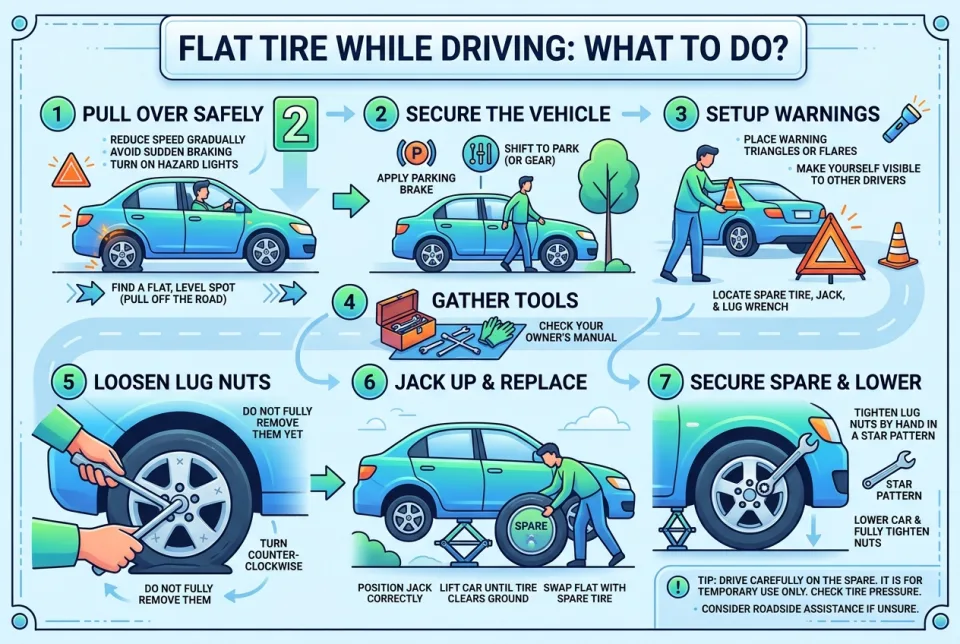
Quick answer
5 steps — read this before anything else
-
1
Grip the wheel firmly and keep the car going straight.
-
2
Ease off the gas and let the car slow down gradually.
-
3
Pull over to a safe spot away from traffic, such as the shoulder or an exit.
-
4
Turn on your hazard lights and set out a warning triangle if you have one.
-
5
Call for roadside assistance or change the tire yourself if it is safe to do so.
Warning
A flat tire at high speed can cause loss of control. Do not brake suddenly or jerk the wheel. Pull over safely and call for help if you are in a dangerous location.
A flat tire while driving can be startling, but staying calm and following a few key steps will help you stay safe. The most important thing is to maintain control of your vehicle and get off the road as soon as possible.
What to do first
- Keep a firm grip on the steering wheel. Do not jerk the wheel. Hold it steady with both hands.
- Ease off the accelerator. Let the car slow down naturally. Do not slam on the brakes, as this can cause a loss of control, especially if a front tire is flat.
- Steer straight. Keep the car going in a straight line until you have slowed down significantly.
- Turn on your hazard lights to warn other drivers.
- Pull over to a safe location. Look for a flat, straight section of the shoulder, a parking lot, or an exit. Avoid stopping on a curve, hill, or in a narrow lane if possible. If you are on a highway, try to get as far away from traffic as you can.
Once you are stopped
- Turn off the engine and set the parking brake.
- If you have a warning triangle, place it behind your car (at least 50 feet back on a regular road, or farther on a highway if safe to do so).
- Keep your hazard lights on.
- Stay in your car if it is not safe to exit, especially on a busy highway. Call for help from inside.
- If you have passengers, keep them inside the vehicle with seatbelts on until help arrives.
Changing the tire yourself
Only attempt to change the tire if you are in a safe spot away from traffic and you have the necessary tools (spare tire, jack, lug wrench) and feel confident. Follow the instructions in your owner's manual. Never get under the car while it is on a jack. If you are unsure or the location feels unsafe, call for roadside assistance.
What NOT to do
- Do not brake hard. Sudden braking can cause the car to skid or spin.
- Do not swerve sharply. This can lead to a rollover or collision.
- Do not continue driving on a flat tire. This can damage the wheel and make the car harder to control.
- Do not stand behind or next to your car in traffic. Stay inside if it is not safe to be outside.
When to call for help
Call emergency services if you are in a dangerous position, such as blocking a lane on a busy highway, or if anyone is injured. Otherwise, call a roadside assistance service or a tow truck. If you are a member of an auto club, use their number.
How to prevent flat tires
- Check your tire pressure regularly (at least once a month) and before long trips.
- Inspect tires for tread wear, cuts, or bulges.
- Rotate tires as recommended by your vehicle manufacturer.
- Avoid driving over debris or potholes when possible.
Remember, the key is to stay calm, keep control, and get to safety. With these steps, you can handle a flat tire confidently.
Spotted an error? Report it — we correct factual mistakes promptly.
Read next
Key locked inside the car: what to do?
Stay calm, check all doors, and call a professional locksmith or roadside service. Avoid breaking windows unless there is an emergency.
Accident in a rental car abroad: what to do?
A step-by-step guide to handling a rental car accident in a foreign country, from securing the scene to notifying the rental company and your insurer.
Car smells of burning rubber: what to do?
A burning rubber smell in your car can signal a serious hazard like an overheating engine, a slipping belt, or an electrical fault. Learn how to respond safely and when to get professional help.
Headlights stopped working at night: what to do?
Driving with no headlights at night is extremely dangerous. Learn how to stop safely, make yourself visible, and get help without causing a crash.
Related handy tools
Checklists, decision guides, scenarios and quizzes for the same situation.