Car smells of burning rubber: what to do?
A burning rubber smell in your car can signal a serious hazard like an overheating engine, a slipping belt, or an electrical fault. Learn how to respond safely and when to get professional help.
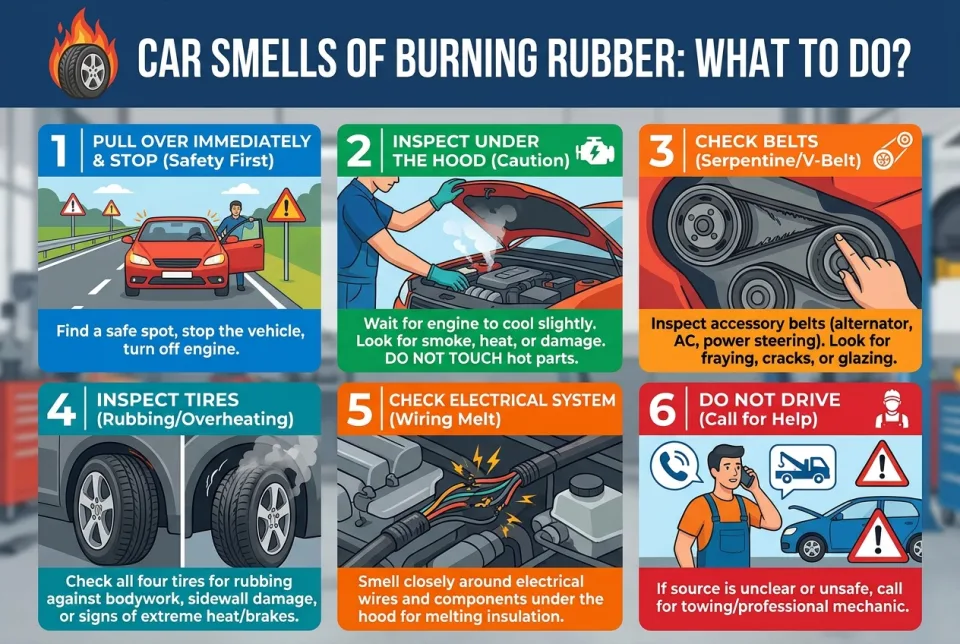
Quick answer
5 steps — read this before anything else
-
1
Pull over safely and turn off the engine.
-
2
Evacuate the vehicle and move at least 100 feet away.
-
3
Call emergency services if you see smoke or flames.
-
4
Do not open the hood if you suspect a fire.
-
5
Have the vehicle towed to a mechanic for inspection.
Warning
If you see smoke or flames, evacuate the vehicle immediately and call emergency services. Do not open the hood or attempt to fight the fire yourself.
Important — please read
This content is general educational and informational only, and is not a substitute for professional medical advice, diagnosis or treatment. Always seek the advice of a qualified health provider with any questions you may have about a medical condition. Never disregard or delay seeking professional medical care because of something you read here. In an emergency or life-threatening situation, call your local emergency services (police, fire or ambulance) immediately.
A burning rubber smell in your car is a warning sign that should never be ignored. It often indicates that a rubber component is overheating, rubbing against a moving part, or that an electrical fault is causing insulation to melt. In some cases, it can be an early sign of a fire. This guide explains what to do, what not to do, and when to seek professional help.
What is happening?
The smell of burning rubber typically comes from one of these sources:
- Drive belts (serpentine or V-belts) that are slipping, misaligned, or worn, causing friction and heat.
- Hoses (coolant, power steering, or brake lines) that are rubbing against something hot or moving.
- Brake pads or shoes that are dragging or overheated, especially after aggressive driving or a stuck caliper.
- Electrical wiring with insulation that is melting due to a short circuit or overload.
- Tires rubbing against the wheel well or suspension components, often after a collision or improper installation.
- Clutch (in manual cars) that is slipping and overheating.
Because some of these can lead to fire or loss of control, treat the smell as a potential emergency until you know otherwise.
Emergency warning
If you see smoke or flames, or if the smell is accompanied by a burning sensation in your eyes or throat, pull over immediately, turn off the engine, evacuate the vehicle, and call your local emergency services. Do not attempt to fight a fire yourself. Even without visible smoke, a burning rubber smell can indicate a serious problem that may worsen quickly.
What to do first
- Pull over safely. Signal, move to the shoulder or a safe spot away from traffic, and stop the car.
- Turn off the engine and remove the key. This stops the engine and many electrical systems.
- Evacuate all occupants and move at least 100 feet away from the vehicle, especially if you suspect a fire.
- Assess for smoke or flames. If you see any, call emergency services immediately and keep others away.
- If there is no smoke or fire, you may carefully inspect for obvious signs: look under the car for dripping fluids, check the tires for flat spots or rubbing, and look for loose belts or hoses. Do not touch hot components.
What NOT to do
- Do not open the hood if you see smoke or flames; a rush of air can feed a fire.
- Do not continue driving hoping the smell will go away. It may lead to a breakdown or fire.
- Do not touch belts, hoses, or electrical components until the engine has cooled completely.
- Do not use water on an electrical or fuel fire.
- Do not ignore the smell even if it is intermittent; it may indicate a developing problem.
When to call for help
Call emergency services (fire department) if you see smoke, flames, or if the smell is accompanied by a burning sensation or difficulty breathing. If there is no immediate danger, call a tow truck or a mobile mechanic to have the vehicle inspected. Do not drive the car further until a professional has checked it.
What to monitor
After the vehicle has been towed to a repair shop, the mechanic will inspect belts, hoses, brakes, tires, and wiring. Monitor for recurring smells, unusual noises, or warning lights. If the problem is fixed, keep an eye on fluid levels and belt condition as part of routine maintenance.
How to prevent it
- Follow the manufacturer's maintenance schedule for belt and hose replacement.
- Check belts for cracks, glazing, or fraying during oil changes.
- Address any fluid leaks promptly.
- Avoid riding the brakes or clutch.
- Have the undercarriage inspected after any collision or off-road driving.
In summary, a burning rubber smell is a serious warning. Stop safely, evacuate if needed, and call emergency services if there is any sign of fire. Otherwise, have the car towed to a qualified mechanic. This information is general and not a substitute for professional automotive advice.
Spotted an error? Report it — we correct factual mistakes promptly.
Read next
What should you do after a car accident?
A step-by-step guide to staying safe, getting help, and handling the aftermath of a car accident, from securing the scene to exchanging information.
Accident in a rental car abroad: what to do?
A step-by-step guide to handling a rental car accident in a foreign country, from securing the scene to notifying the rental company and your insurer.
Gasoline smell in the garage: what to do?
A strong gasoline smell in your garage is a fire and health hazard. Act quickly to eliminate ignition sources, ventilate, and find the source.
Child car seat recall notice: what to do?
A recall means your child's car seat may not protect them in a crash. Here is how to check, register, and get a safe replacement or repair.
Related handy tools
Checklists, decision guides, scenarios and quizzes for the same situation.