Engine oil warning light stays on: what to do?
If your engine oil warning light stays on, it means low oil pressure or low oil level. Stop driving safely and check the oil level. Do not ignore it.
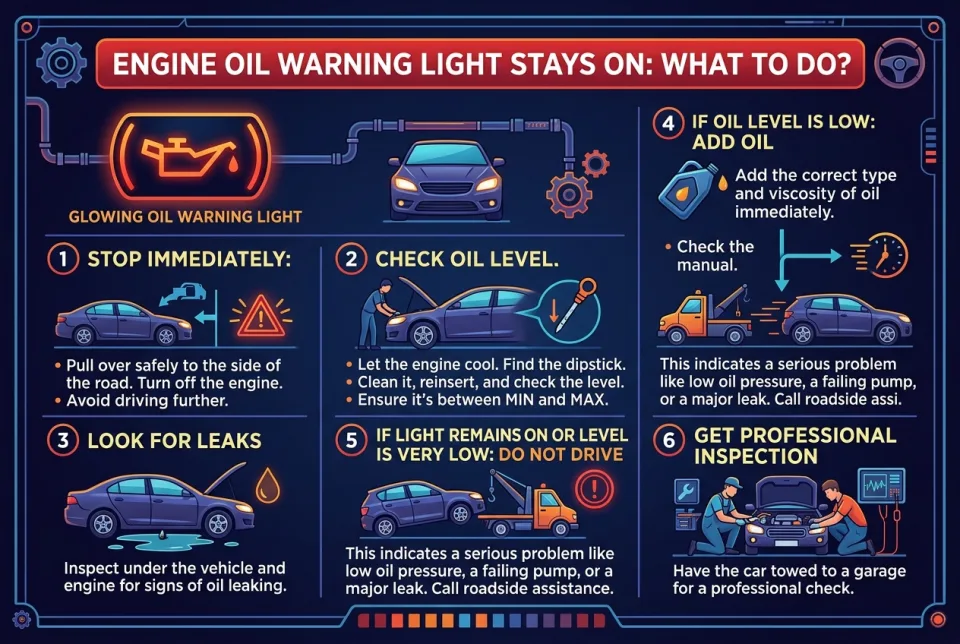
Quick answer
5 steps — read this before anything else
-
1
Pull over safely and turn off the engine as soon as possible.
-
2
Wait a few minutes, then check the oil level with the dipstick.
-
3
If the oil level is low, add the recommended oil to the correct level.
-
4
If the light stays on after adding oil, do not drive. Have the vehicle towed to a mechanic.
-
5
If you are unsure or the light is red, treat it as an emergency and stop driving.
Warning
If the oil warning light is red or stays on, stop driving immediately. Continuing to drive can cause severe engine damage or failure, leading to a crash. Do not ignore it.
When your engine oil warning light stays on, it is a serious signal that your engine may not be getting enough oil pressure or that the oil level is too low. Ignoring it can lead to severe engine damage. The light is usually red or orange and may be accompanied by a message such as "Oil Pressure Low" or "Check Oil Level."
What the light means
The oil warning light indicates low oil pressure. This can be caused by low oil level, a faulty oil pump, a blocked oil filter, or a bad oil pressure sensor. A red light is more urgent than an orange one, but both require immediate attention. If the light stays on while the engine is running, stop driving as soon as it is safe to do so.
What to do first
- Pull over safely. Turn on your hazard lights and move to a safe location away from traffic.
- Turn off the engine. Continuing to drive with low oil pressure can destroy the engine within minutes.
- Wait a few minutes. Let the oil drain back into the pan for an accurate reading.
- Check the oil level. With the engine off, remove the dipstick, wipe it clean, reinsert it fully, and check the level. It should be between the minimum and maximum marks.
- Add oil if needed. If the level is below the minimum, add the type of oil recommended in your owner's manual. Add a little at a time and recheck.
- Check for leaks. Look under the car for fresh oil spots. If you see a major leak, do not drive.
What NOT to do
- Do not ignore the light or assume it will go away. It will not fix itself.
- Do not keep driving to "see if it clears." This can cause irreversible engine damage.
- Do not overfill the oil. Too much oil can also cause problems.
- Do not open the oil filler cap or check oil while the engine is hot or running.
- Do not use the wrong oil type. Always follow the manufacturer's recommendation.
When to call for help
If the light remains on after you have added oil and the level is correct, or if you notice knocking noises, smoke, or a burning smell, do not drive. Call a tow truck or a mechanic. If you are on a busy road or in an unsafe location, call emergency services or a roadside assistance service immediately.
What to monitor
After adding oil, start the engine and watch the light. If it goes out and stays off, you may be able to drive to a mechanic for a proper check. If it comes back on, stop the engine and seek professional help. Also monitor for unusual noises, reduced power, or smoke from the exhaust.
How to prevent it
- Check your oil level regularly, at least once a month and before long trips.
- Follow the manufacturer's oil change schedule and use the recommended oil type.
- Address small leaks promptly.
- Do not ignore warning lights; have them diagnosed by a qualified mechanic.
In summary, if your engine oil warning light stays on, stop safely, check the oil level, and add oil if needed. If the light persists, do not drive and get professional help. Your engine's health depends on quick action.
Spotted an error? Report it — we correct factual mistakes promptly.
Read next
What Should You Do If Your Car Makes a Strange Noise? 11 Warning Signs You Shouldn’t Ignore
Unusual car noises can signal anything from a loose heat shield to a failing brake system. Learn the 11 sounds you should never ignore and the safe steps to take when you hear them.
Accident in a rental car abroad: what to do?
A step-by-step guide to handling a rental car accident in a foreign country, from securing the scene to notifying the rental company and your insurer.
Car smells of burning rubber: what to do?
A burning rubber smell in your car can signal a serious hazard like an overheating engine, a slipping belt, or an electrical fault. Learn how to respond safely and when to get professional help.
Headlights stopped working at night: what to do?
Driving with no headlights at night is extremely dangerous. Learn how to stop safely, make yourself visible, and get help without causing a crash.
Related handy tools
Checklists, decision guides, scenarios and quizzes for the same situation.