Dog terrified of fireworks: calming strategies
Fireworks can cause extreme fear in dogs. Learn how to create a safe space, use calming techniques, and when to seek professional help.
Quick answer
5 steps — read this before anything else
-
1
Create a safe, escape-proof room with white noise and closed curtains.
-
2
Stay calm and comfort your dog; do not punish fear.
-
3
Distract with a long-lasting chew or puzzle toy.
-
4
Consult your vet for anxiety medication if needed.
-
5
Ensure ID tag and microchip are up to date.
Warning
Never punish a frightened dog. Punishment increases fear and can lead to aggression or injury. If your dog is in immediate danger, call your local emergency veterinary service.
Many dogs are terrified of fireworks. The loud noises and bright flashes can trigger a fight-or-flight response. While you cannot eliminate the fear entirely, you can reduce your dog's distress with preparation and calm support.
What is happening
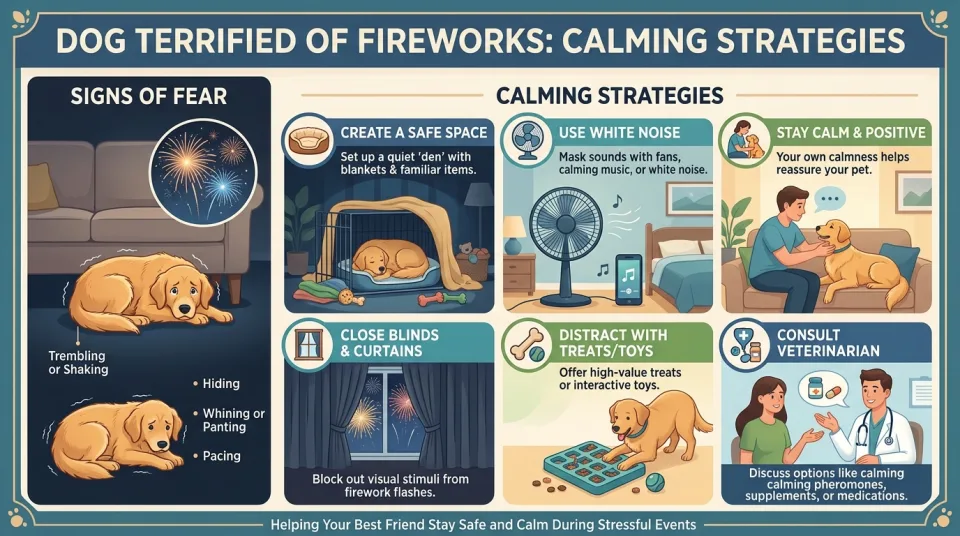
Fireworks produce sudden, unpredictable sounds that hurt a dog's sensitive ears. Dogs may pant, tremble, hide, pace, bark, or try to escape. This is a fear response, not disobedience. Never punish a frightened dog; punishment worsens anxiety.
Emergency warning
If your dog is in immediate danger (e.g., running into traffic, overheating, or having a seizure), call your local emergency veterinary service right away. For severe anxiety that risks self-injury, seek urgent veterinary care.
What to do first
- Stay calm yourself. Dogs sense your emotions. Speak softly and move slowly.
- Create a safe space. Choose an interior room with no windows or close curtains. Add a bed, blankets, and a worn piece of your clothing. Let the dog hide there if it chooses.
- Mask the noise. Use white noise, a fan, or soft classical music. Close windows and doors.
- Comfort your dog. If your dog seeks you out, gently pet and reassure it. Do not force interaction if it prefers to be alone.
- Provide a distraction. Offer a long-lasting chew, puzzle toy, or frozen treat. Licking and chewing can be calming.
What NOT to do
- Do not punish, scold, or force your dog out of hiding.
- Do not take your dog to fireworks displays.
- Do not leave your dog alone outdoors or tethered.
- Do not use human medications without veterinary advice.
When to seek professional care
If your dog's fear is severe (e.g., destructive behavior, self-injury, not eating for hours), consult your veterinarian. They can discuss behavior modification, pheromone products, or prescription anti-anxiety medication. A qualified animal behaviorist can also help with desensitization training.
What to monitor
Watch for signs of overheating (heavy panting, drooling), injury from trying to escape, or extreme lethargy. If your dog is not recovering within a few hours after the noise stops, call your vet.
How to prevent it
- Plan ahead: check local fireworks schedules.
- Ensure your dog has a collar with ID tag and a microchip with current contact info.
- Use a leash even in a fenced yard during fireworks season.
- Try counter-conditioning: play firework sounds at low volume while giving treats, gradually increasing volume over weeks.
With patience and preparation, you can help your dog feel safer during fireworks. If fear persists, work with your vet to create a long-term plan.
This is general information and not a substitute for professional veterinary advice. In an emergency, call your local emergency veterinary service.
Sources & references
Spotted an error? Report it — we correct factual mistakes promptly.
Read next
Senior pet quality of life: what to do?
Learn how to assess and improve your senior pet's quality of life with practical steps and when to involve your veterinarian.
Aquarium fish dying one after another: what to do?
When multiple fish die in quick succession, act fast to protect the survivors. Learn the likely causes and the safe steps to take.
Dog limping after intense play: what to do?
A limping dog after intense play may have a strain, sprain, or more serious injury. Learn safe first steps, what to avoid, and when to see a vet.
Cat stopped eating: when to worry
A cat that stops eating can become seriously ill within days. Learn the warning signs, what to do first, and when to call your vet.
Related handy tools
Checklists, decision guides, scenarios and quizzes for the same situation.