Cat stopped eating: when to worry
A cat that stops eating can become seriously ill within days. Learn the warning signs, what to do first, and when to call your vet.
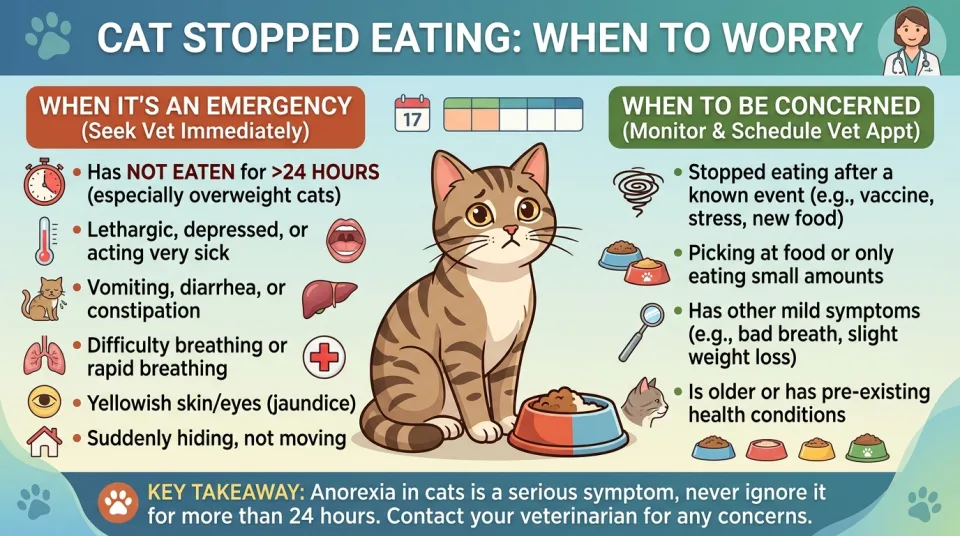
Quick answer
5 steps — read this before anything else
-
1
If your cat has not eaten for 24 hours, call your veterinarian.
-
2
If your cat has not eaten for 48 hours, seek emergency veterinary care.
-
3
Never force-feed your cat or give human food or medications without veterinary advice.
-
4
Keep your cat warm, quiet, and away from other pets, and offer fresh water.
-
5
Watch for lethargy, vomiting, diarrhea, or hiding, and report these to your vet.
Warning
A cat that has not eaten for 24 hours is at risk of serious complications. Call your veterinarian. If your cat has not eaten for 48 hours, seek emergency veterinary care immediately.
Important — please read
This content is general educational and informational only, and is not a substitute for professional medical advice, diagnosis or treatment. Always seek the advice of a qualified health provider with any questions you may have about a medical condition. Never disregard or delay seeking professional medical care because of something you read here. In an emergency or life-threatening situation, call your local emergency services (police, fire or ambulance) immediately.
When a cat stops eating, it can be a sign of a minor issue or a serious medical problem. Cats are not designed to go without food for long. Unlike humans, a cat that does not eat for even a few days can develop a dangerous liver condition called hepatic lipidosis. That is why it is important to know when to worry and when to act.
What is happening?
A cat may stop eating for many reasons. Common causes include stress (such as a new pet, moving, or changes in routine), dental pain, gastrointestinal upset, kidney disease, diabetes, hyperthyroidism, cancer, or infections. Sometimes the cause is obvious, like a new food your cat dislikes. Other times, it is hidden.
The key fact is this: a cat that eats nothing for 24 hours is a concern, and after 48 hours the risk of serious complications rises quickly. Do not wait to see if your cat will "snap out of it."
Emergency warning
If your cat has not eaten for 24 hours, call your veterinarian. If your cat has not eaten for 48 hours, or if you see any of the following, seek emergency veterinary care immediately:
- Vomiting or diarrhea that does not stop
- Extreme lethargy or weakness
- Difficulty breathing
- Jaundice (yellowing of the skin, gums, or eyes)
- Collapse or seizures
What to do first
- Assess the timeline. Note when your cat last ate a full meal. Even partial eating matters. If it has been 24 hours with no food, call your vet.
- Check for other signs. Look for vomiting, diarrhea, hiding, changes in water intake, or pain when touching the mouth. Report these to your vet.
- Offer fresh water. Dehydration is a risk. Do not force water.
- Try a small amount of a strong-smelling food. If your cat is not eating at all, do not wait. Call your vet for advice.
- Keep your cat comfortable. Provide a quiet, warm space away from other pets and children.
What NOT to do
- Do not force-feed your cat. This can cause choking or aspiration pneumonia.
- Do not give human medications. Many are toxic to cats. Never give pain relievers like ibuprofen or acetaminophen.
- Do not wait more than 24 hours if your cat is not eating at all.
- Do not change foods abruptly without veterinary guidance, as this can worsen stomach upset.
When to call for help
Call your veterinarian if your cat:
- Has not eaten for 24 hours
- Is eating less than half of normal for more than 2 days
- Shows signs of pain, such as drooling or pawing at the mouth
- Has vomiting or diarrhea that lasts more than 24 hours
- Is hiding or seems depressed
Seek emergency care if your cat has not eaten for 48 hours, or if you see any of the emergency signs listed above.
What to monitor
While you are waiting for your vet appointment, monitor:
- Food intake: Keep a log of what and how much your cat eats.
- Water intake: Note if your cat stops drinking.
- Litter box use: Check for diarrhea or constipation.
- Behavior: Watch for lethargy, hiding, or irritability.
- Physical signs: Look for jaundice, weight loss, or dehydration (tacky gums, skin that does not spring back).
How to prevent it
Not all cases can be prevented, but you can reduce the risk:
- Feed a balanced diet and avoid sudden food changes.
- Keep stress low: provide safe spaces and gradual introductions to new pets.
- Schedule regular veterinary check-ups, especially for senior cats.
- Watch for subtle signs of illness, such as changes in appetite or water intake.
If your cat has stopped eating, do not wait. Call your veterinarian today. Early intervention can make a big difference.
This is general information and not a substitute for professional veterinary advice. In an emergency, call your veterinarian or an emergency animal hospital immediately.
Sources & references
Spotted an error? Report it — we correct factual mistakes promptly.
Read next
What Should You Do If Your Dog Is Sprayed by a Skunk?
Skunk spray is oily and stubborn, but a simple homemade rinse works far better than plain water. Here is how to safely de-skunk your dog without irritating its skin or eyes.
What Should You Do If You Find an Injured Wild Animal in Your Yard?
An injured wild animal in your yard needs calm, safe handling and professional help. Here is how to protect yourself, the animal, and get the right rescue involved.
What Do I Do If I Can't Find Pet-Friendly Housing?
Finding a rental that welcomes pets can be tough, but a clear plan, solid references, and a pet resume can open more doors than you expect.
What Should I Do If My Pet Has a Chronic Illness?
Caring for a pet with a chronic illness requires a long-term partnership with your veterinarian, careful monitoring, and daily management to keep your pet comfortable and maintain quality of life.
Related handy tools
Checklists, decision guides, scenarios and quizzes for the same situation.