Damp smell and stains in the attic: what to do?
A musty smell or water stains in the attic usually point to a leak, condensation, or poor ventilation. Here is how to find the cause and fix it safely.
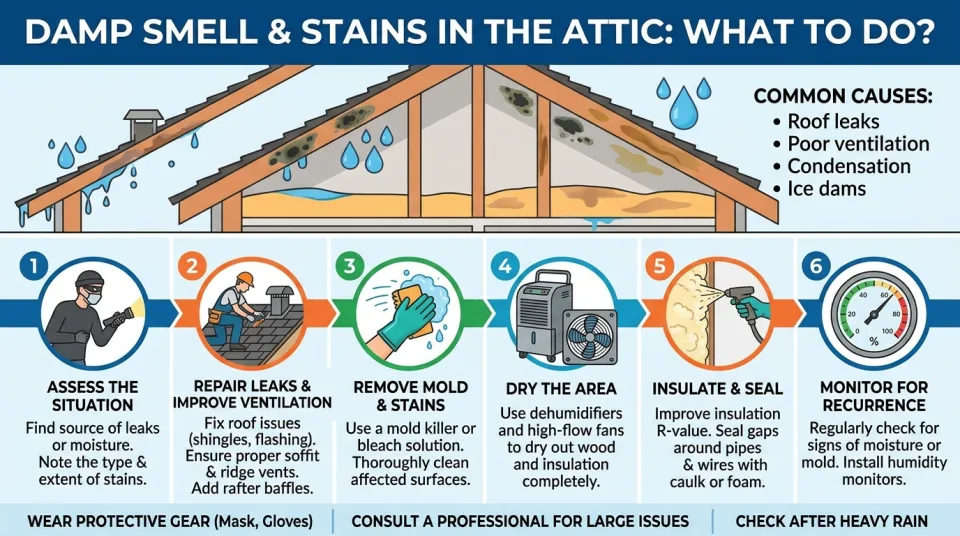
Quick answer
4 steps — read this before anything else
-
1
Stay out of the attic if you see sagging ceilings, wet insulation, or exposed wiring near water; call a professional.
-
2
Photograph the stains and note the smell; check for roof leaks after rain and condensation on cold surfaces.
-
3
Improve ventilation and fix any leaks; do not cover stains with paint or insulation until the source is fixed.
-
4
Replace damaged insulation and dry wet areas within 24-48 hours to prevent mould.
Warning
Do not enter the attic if there is sagging, wet wiring, or a spreading leak. Water near electricity can cause shock or fire. Call a professional.
A damp, musty smell or dark stains on the attic ceiling or rafters is a common warning sign. It usually means water is getting in where it should not, or moist air is trapped and condensing on cold surfaces. Left alone, dampness can rot timber, ruin insulation, and lead to mould. The good news is that most causes are findable and fixable.
What is happening
Attic dampness typically comes from one of three sources: a roof or flashing leak, condensation from warm moist air rising from the house, or water entering through vents, chimneys, or damaged roofing felt. Stains that appear or grow after rain point to a leak. A musty smell that is worse in cold weather often points to condensation.
Emergency warning
If you see a sagging ceiling, water dripping near electrical wiring, or a large wet patch that is spreading, do not enter the attic. Water and electricity are a dangerous combination. Turn off power to affected circuits at the breaker if it is safe to do so, and call a qualified electrician or roofer. For any structural concern, contact a professional.
What to do first
- Stay safe. Use a sturdy ladder, wear gloves and a mask if you suspect mould, and take a torch. Do not walk on damaged or wet ceiling boards.
- Look and note. Photograph stains and check whether they are wet or dry. Note the smell and when it is strongest.
- Check after rain. Go up during or just after heavy rain to see if water is actively entering. Look at the roof underside, around the chimney, and at vents.
- Look for condensation. If surfaces are wet but there is no rain, check for cold pipes, single-glazed windows, or poor ventilation. Condensation often forms on the coldest surfaces.
- Dry the area. If it is safe, remove wet insulation and dry the space with ventilation or a dehumidifier. Do not seal up damp areas.
What NOT to do
- Do not paint over stains or cover them with new insulation before the source is fixed. It will come back and hide the problem.
- Do not ignore a musty smell. It usually means mould is growing.
- Do not block soffit, ridge, or roof vents with insulation or stored items.
- Do not use a normal vacuum to clean up mould without proper protection; disturbing mould can release spores.
When to call a professional
Call a roofer for any active leak, missing or damaged flashing, or stained roof timbers. Call a ventilation or insulation specialist if condensation is the cause. Call an electrician if wiring is wet or you see scorch marks. If mould covers more than a small patch, or you have breathing problems, seek advice from a qualified mould remediator.
What to monitor
Check the attic after every major storm and at the start of each season. Watch for new stains, a returning smell, or soft, spongy timber. Keep a note of when problems appear so you can link them to weather.
How to prevent it
Keep gutters clear and check roof tiles and flashing annually. Make sure the attic is well ventilated: do not block vents, and consider adding ridge or eaves ventilation if condensation is a recurring problem. Seal gaps around loft hatches and pipes to stop warm moist air from the house entering the attic. Use extractor fans in bathrooms and kitchens, and avoid drying laundry indoors without ventilation.
Act on the first sign of damp. Find the source, fix it, dry the area, and only then repair the damage. If you are unsure, get a professional inspection before the problem spreads.
Spotted an error? Report it — we correct factual mistakes promptly.
Read next
What to Do If Your Clothes Smell Bad After Washing?
Clothes that smell musty or sour after washing usually mean detergent residue, a dirty machine, or slow drying. Here are 8 practical tricks to fix it.
What to Do If You Can't Pay Your Rent in Canada
If you cannot pay rent in Canada, take immediate action by contacting your landlord, understanding your provincial tenancy rights, and seeking local financial support.
Solar panels damaged after a hailstorm: what to do?
Hail can crack solar panel glass and void warranties, but the system may still be live. Learn how to stay safe, document damage, and get repairs without risking shock or further loss.
Boiler pressure too low or too high: what to do?
Boiler pressure problems can stop your heating or damage the system. Learn safe steps to diagnose and correct low or high pressure, and when to call a professional.
Related handy tools
Checklists, decision guides, scenarios and quizzes for the same situation.