Clothes dryer not drying: what to do?
If your dryer runs but clothes stay damp, the cause is often a clogged lint filter or vent. Learn safe steps to diagnose and fix the problem, and when to call a professional.
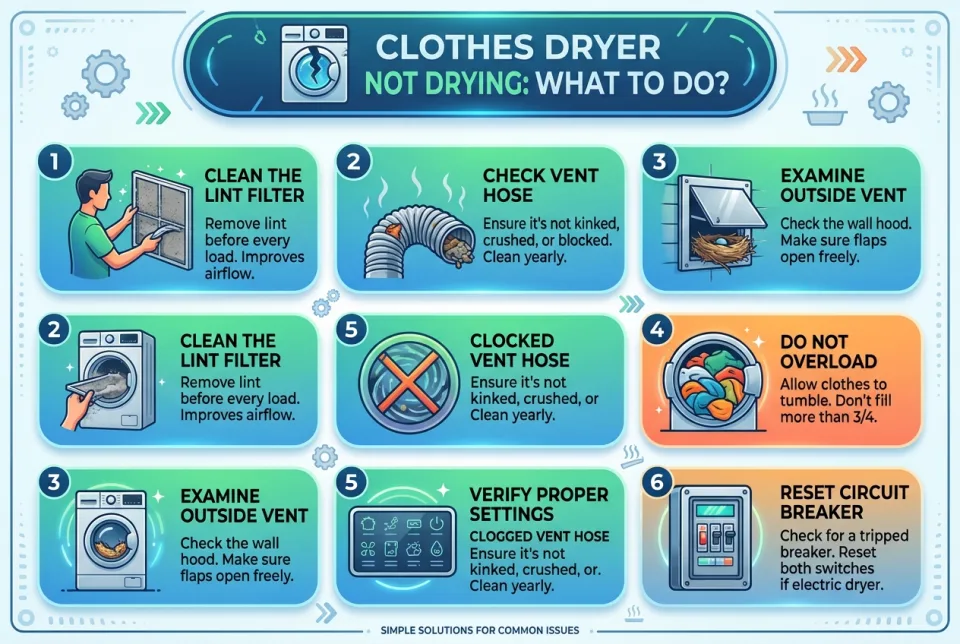
Quick answer
5 steps — read this before anything else
-
1
Unplug the dryer or turn off the circuit breaker before inspecting.
-
2
Clean the lint filter and check the vent for blockages.
-
3
Verify the dryer is not overloaded and the cycle settings are correct.
-
4
Inspect the vent hood outside for lint buildup or damage.
-
5
If the problem persists, call a qualified appliance technician.
Warning
Dryer fires can occur from lint buildup. If you smell burning or see smoke, stop the dryer immediately, unplug it or turn off the circuit breaker, and call emergency services if there is a fire.
When your clothes dryer runs but fails to dry clothes properly, it is usually due to restricted airflow or a mechanical fault. Addressing the issue promptly can restore performance and reduce fire risk.
What is happening
A dryer that tumbles but leaves clothes damp often suffers from reduced airflow caused by lint buildup, a crushed or blocked vent, or a faulty component such as a heating element, thermostat, or moisture sensor. Overloading and incorrect settings can also play a role.
Emergency warning
If you smell burning, see smoke, or notice sparking, stop the dryer immediately, unplug it or turn off the circuit breaker, and call emergency services if there is a fire. Dryer fires are often caused by lint accumulation, so never ignore unusual noises, smells, or overheating.
What to do first
- Disconnect power. Unplug the dryer or switch off the dedicated circuit breaker before any inspection.
- Clean the lint filter. Remove and wash the filter with warm, soapy water if it is clogged with fabric softener residue, then dry it completely before reinstalling.
- Check the vent. Disconnect the duct from the back of the dryer and inspect for lint blockages. Also check the outdoor vent hood for obstructions or damage.
- Review the load and settings. Ensure the dryer is not overloaded (typically no more than half full) and that the cycle matches the fabric type. Use the moisture sensor setting if available.
- Inspect the vent duct. If the duct is crushed, kinked, or made of flammable material (such as plastic or foil), replace it with rigid or semi-rigid metal duct.
What NOT to do
- Do not operate the dryer with a clogged lint filter or vent. This is a leading cause of dryer fires.
- Do not use a plastic or foil vent duct. These are more prone to sagging, crushing, and catching fire.
- Do not ignore the problem. Continued use can worsen airflow issues and increase fire risk.
- Do not attempt electrical repairs unless you are qualified and confident. Incorrect repairs can be dangerous.
When to call for help
If cleaning the lint filter and vent does not solve the problem, or if you suspect a faulty heating element, thermostat, or moisture sensor, contact a qualified appliance technician. Also call a professional if the vent duct is long, concealed, or difficult to access, as specialized tools may be needed for thorough cleaning.
What to monitor
After cleaning, run a small load and observe drying time. Clothes should dry within the expected cycle time. If drying still takes unusually long, or if the dryer overheats or shuts off mid-cycle, further diagnosis is needed. Regularly check the vent hood outside for lint accumulation.
How to prevent it
- Clean the lint filter before or after every load.
- Inspect and clean the vent duct and outdoor hood at least once a year, or more often if you dry many loads.
- Avoid overloading the dryer and use the correct cycle for each fabric type.
- Ensure the vent duct is as short and straight as possible, with minimal bends.
By following these steps, you can often resolve drying issues safely. If problems persist, seek professional help to ensure your dryer operates efficiently and safely.
This is general information and not a substitute for professional appliance repair advice. Always prioritize safety and consult a qualified technician for complex issues.
Sources & references
Spotted an error? Report it — we correct factual mistakes promptly.
Read next
What to Do If Your Clothes Smell Bad After Washing?
Clothes that smell musty or sour after washing usually mean detergent residue, a dirty machine, or slow drying. Here are 8 practical tricks to fix it.
What to Do If White Clothes Turn Yellow? 9 Ways to Restore Their Brightness
Yellowing on white clothes is usually caused by body oils, deodorant residue, hard water minerals, or heat damage. These nine methods can restore brightness safely.
What to Do If You Spill Red Wine on Clothes: 8 Stain-Removal Tips to Try Quickly
Act fast when red wine hits fabric: blot, flush, and choose the right stain remover for the material. Here are eight practical tips to lift the stain before it sets.
Burned socket smell in the wall: what to do?
A burning smell from a wall socket is a serious fire hazard. Act quickly to cut power and get professional help.
Related handy tools
Checklists, decision guides, scenarios and quizzes for the same situation.