Check engine light blinking: what to do?
A blinking check engine light signals a serious engine or emissions problem that can cause costly damage. Learn the safe steps to take immediately.
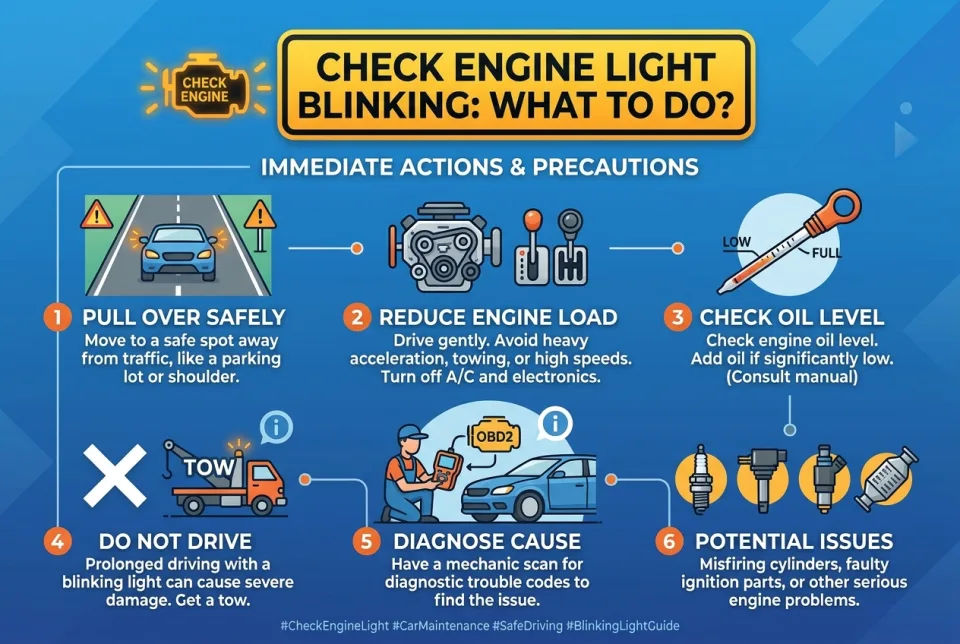
Quick answer
5 steps — read this before anything else
-
1
Pull over safely and turn off the engine.
-
2
Do not continue driving; a blinking light indicates a severe malfunction.
-
3
Call for a tow truck to take your vehicle to a repair shop.
-
4
If you must move the car, drive only a short distance at low speed to a safe spot.
-
5
Avoid revving the engine or trying to diagnose the problem yourself.
Warning
A blinking check engine light indicates a severe malfunction that can cause engine damage or unsafe driving conditions. Stop driving immediately and seek professional help.
A blinking check engine light is different from a steady one. While a steady light often indicates a minor issue, a blinking light signals a serious malfunction, typically a misfire that can damage the catalytic converter and other expensive components. Ignoring it can lead to costly repairs and unsafe driving conditions.
What Is Happening?
The check engine light is part of your vehicle's onboard diagnostics (OBD) system. When it blinks, the engine computer has detected a problem that could cause immediate damage, such as a misfire, a fuel system issue, or a sensor failure. Continuing to drive can worsen the problem and increase repair costs.
What to Do First
- Pull over safely: As soon as it is safe, move to the shoulder or a parking lot. Turn on your hazard lights.
- Turn off the engine: Shut off the engine to prevent further damage.
- Do not continue driving: A blinking light means the vehicle is not safe to drive. Call a tow truck or a mobile mechanic.
- Check for obvious issues: If you are stopped in a safe place, you can check the gas cap (a loose cap can cause a steady light, but rarely a blinking one). Do not attempt repairs yourself unless you are experienced.
- Seek professional help: Have the vehicle towed to a qualified mechanic or dealership. They will use a diagnostic scanner to read the error codes and determine the exact cause.
What NOT to Do
- Do not ignore the blinking light and keep driving, even if the car seems to run fine.
- Do not rev the engine or try to "clear" the light by disconnecting the battery.
- Do not continue driving to a repair shop if the light is blinking; towing is safer and cheaper in the long run.
- Do not use over-the-counter engine additives as a quick fix; they can cause more harm.
When to Call for Help
If the blinking light is accompanied by other symptoms such as loss of power, strange noises, smoke, or a burning smell, pull over immediately and call for assistance. If you are on a highway or in an unsafe location, call roadside assistance or emergency services if you are in danger.
What to Monitor
After the vehicle is repaired, pay attention to any recurrence of the light. Keep track of when it blinks (e.g., during acceleration, at idle) to help the mechanic diagnose the issue. Also monitor fluid levels and engine temperature regularly.
How to Prevent It
Regular maintenance is key: follow the manufacturer's schedule for spark plug replacement, fuel system cleaning, and oil changes. Use the correct grade of fuel and address any steady check engine light promptly before it escalates.
Remember, a blinking check engine light is a serious warning. Taking immediate action can save you from expensive repairs and keep you safe on the road.
This information is for general guidance only. For specific vehicle issues, consult a certified mechanic.
Spotted an error? Report it — we correct factual mistakes promptly.
Read next
Car smells of burning rubber: what to do?
A burning rubber smell in your car can signal a serious hazard like an overheating engine, a slipping belt, or an electrical fault. Learn how to respond safely and when to get professional help.
Headlights stopped working at night: what to do?
Driving with no headlights at night is extremely dangerous. Learn how to stop safely, make yourself visible, and get help without causing a crash.
Brake failure while driving: what to do?
Brake failure at speed is a true emergency. Stay calm, pump the pedal, downshift, and use the handbrake or road friction to slow down safely.
Windshield cracked by a stone: what to do?
A stone hit can turn into a dangerous crack fast. Learn how to stay safe, assess the damage, and get it fixed properly.
Related handy tools
Checklists, decision guides, scenarios and quizzes for the same situation.