Bad reference from former employer: what to do?
A negative reference can derail a job offer. Learn how to respond, what your rights are, and how to protect your job search.
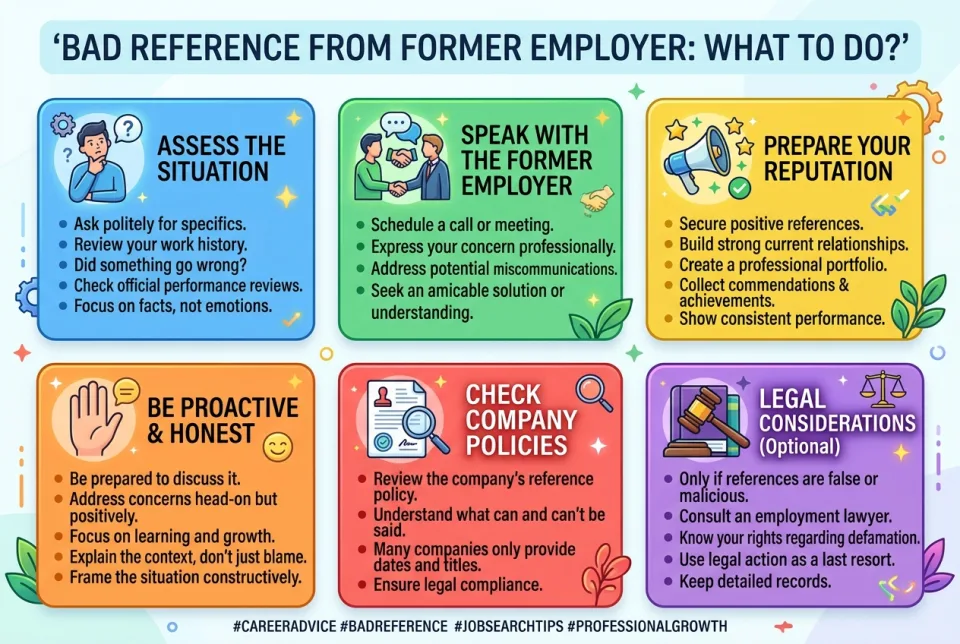
Quick answer
5 steps — read this before anything else
-
1
Stay calm and gather facts: ask the prospective employer what was said, if possible.
-
2
Request a copy of your personnel file and any reference your former employer gave.
-
3
Check your employment contract and company policy on references.
-
4
Consider asking a different former colleague to serve as a reference.
-
5
If the reference was false or malicious, seek legal advice about defamation or negligent misrepresentation.
Important — please read
This content is general educational and informational only, and is not a substitute for professional medical advice, diagnosis or treatment. Always seek the advice of a qualified health provider with any questions you may have about a medical condition. Never disregard or delay seeking professional medical care because of something you read here. In an emergency or life-threatening situation, call your local emergency services (police, fire or ambulance) immediately.
You have applied for a job, and the offer is withdrawn after a reference check. Or a recruiter hints that your former employer said something negative. A bad reference can feel like a career setback, but there are practical steps you can take to understand what happened, protect your reputation, and move forward.
What is happening
Most employers give references in good faith, often limited to confirming job title and dates of employment. However, some give detailed opinions or even false statements. In many countries, employers have a legal duty to be accurate and fair when giving references, but the specifics vary by jurisdiction. This guide is general information, not legal advice.
What to do first
- Find out what was said. If the prospective employer is willing, ask for details about the negative reference. They may not share it, but it is worth asking politely.
- Request your personnel file. In many places, you have a right to see your employment records. Look for any documented warnings, performance issues, or reference letters.
- Review your contract and company policy. Check if there is a reference policy or a clause about references. Some companies only confirm basic facts.
- Ask a different reference. If possible, use a former manager, colleague, or client who can speak positively about your work. You are not obligated to use the same reference again.
- Document everything. Keep a record of dates, names, and what you were told. This will help if you need to take further action.
What NOT to do
- Do not confront your former employer aggressively. It could make things worse and may be used against you.
- Do not lie or exaggerate on your CV or application. It can justify a negative reference and damage your credibility.
- Do not assume the worst without evidence. Sometimes the issue is a misunderstanding or a mix-up with another candidate.
- Do not post about it on social media. Public complaints can harm your professional image.
When to seek professional advice
Consider consulting a lawyer if you believe the reference was false, malicious, or breached a legal duty. In some jurisdictions, you may have a claim for defamation or negligent misrepresentation if the reference caused you financial loss. Legal aid or a local employment rights organization can help if cost is a concern.
How to prevent it
- Ask before you leave. When leaving a job, ask your manager what kind of reference they would give. If they seem reluctant, ask a colleague instead.
- Keep a record of your achievements. Save positive emails, performance reviews, and thank-you notes. These can support your case if a reference is challenged.
- Choose references wisely. Pick people who know your work well and have agreed to be a reference.
A bad reference is not the end of your career. Focus on what you can control: your skills, your network, and your next application. If you suspect illegal conduct, get legal advice promptly.
This is general information and not a substitute for professional legal advice. If you are in immediate danger or need emergency help, call your local emergency services.
Spotted an error? Report it — we correct factual mistakes promptly.
Read next
What Should You Do If You Work From Home and Can't Focus?
Losing focus while working from home is common. These 10 practical, evidence-informed tricks can help you regain concentration without relying on willpower alone.
Identity documents needed for a new job: what to do?
Starting a new job often means proving who you are and your right to work. Here is how to prepare your documents, what to expect, and how to handle common problems.
Sudden layoff: what to do?
A sudden layoff is stressful, but a clear plan helps you protect your finances and move forward. Here is what to do first and how to handle the next steps.
Harassment at work: what to do?
Workplace harassment is illegal in many countries. Learn the practical steps to document incidents, report safely, and protect your rights.
Related handy tools
Checklists, decision guides, scenarios and quizzes for the same situation.