Sudden layoff: what to do?
A sudden layoff is stressful, but a clear plan helps you protect your finances and move forward. Here is what to do first and how to handle the next steps.
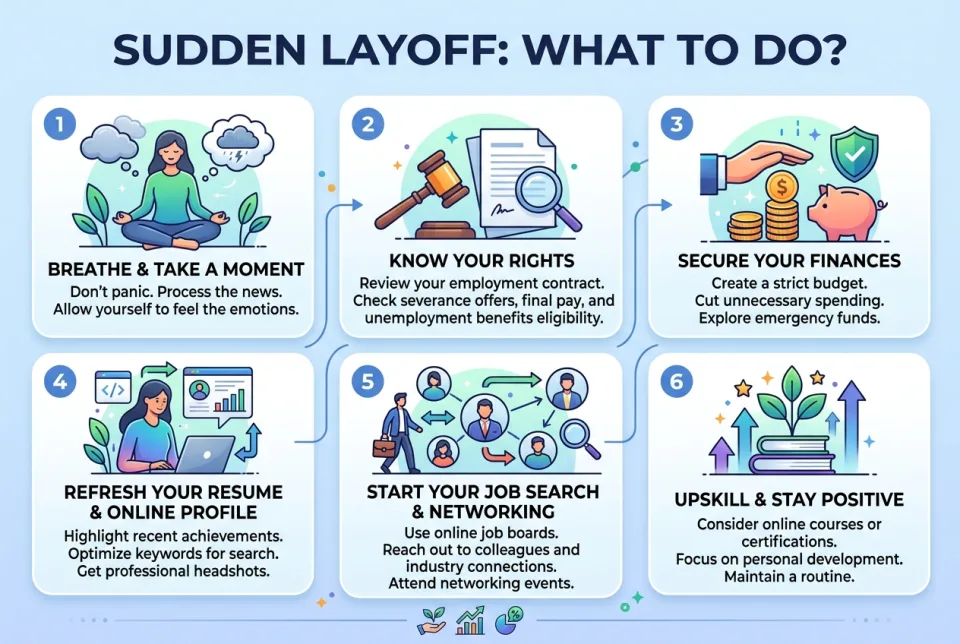
Quick answer
5 steps — read this before anything else
-
1
Stay calm and ask for the layoff terms in writing, including severance and last day.
-
2
File for unemployment benefits as soon as you are eligible.
-
3
Review your budget and cut non-essential spending immediately.
-
4
Gather work documents and contacts before your last day.
-
5
Start networking and updating your resume right away.
Important — please read
This content is general educational and informational only, and is not a substitute for professional medical advice, diagnosis or treatment. Always seek the advice of a qualified health provider with any questions you may have about a medical condition. Never disregard or delay seeking professional medical care because of something you read here. In an emergency or life-threatening situation, call your local emergency services (police, fire or ambulance) immediately.
A sudden layoff can feel overwhelming, but taking a few clear steps can help you regain control. This guide covers what to do in the first hours and days, how to manage your finances, and how to move forward with your job search.
What to do first
- Get the details in writing. Ask your employer for a written summary of your layoff terms: last day of work, severance pay (if any), continuation of health insurance (COBRA or similar), and payment for unused vacation time. Keep a copy for your records.
- File for unemployment benefits. Apply as soon as you are eligible, even if you expect severance. Many states allow you to file immediately, and benefits may start after severance ends. Check your state unemployment office website for exact rules.
- Collect important documents. Before your last day, download or print your performance reviews, pay stubs, and any work samples you are allowed to keep. Save contact information for colleagues and managers who can serve as references.
- Review your finances. List your essential monthly expenses (housing, food, utilities, insurance, minimum debt payments). Compare that to your available savings and any severance. Identify non-essential spending you can pause immediately.
- Check your health insurance options. If you had employer coverage, find out when it ends. You may be able to continue it through COBRA or enroll in a plan through the Health Insurance Marketplace. Losing job-based coverage typically opens a special enrollment period.
What NOT to do
- Do not sign anything immediately. If your employer offers a severance agreement, take time to read it. You may want to consult an employment attorney before signing, especially if it includes a release of claims.
- Do not make large financial decisions in the first week. Avoid taking on new debt or cashing out retirement accounts unless absolutely necessary. Give yourself a few days to assess your situation.
- Do not burn bridges. Stay professional with your employer and colleagues. You may need references or future opportunities from them.
- Do not isolate yourself. Reach out to your network early. Many jobs are found through personal connections.
Managing your finances during the transition
Create a bare-bones budget that covers only essentials. Prioritize housing, food, utilities, and health insurance. Contact your lenders or service providers if you might miss a payment; many offer hardship programs. If you have an emergency fund, use it to cover essential expenses while you look for work. Avoid using credit cards for living expenses if possible.
Your job search plan
Update your resume and LinkedIn profile right away. Set a daily schedule that includes job applications, networking, and skill-building. Consider temporary or freelance work to bring in income while you search. Many states offer free job training and placement services through their unemployment offices.
When to seek professional advice
If your severance agreement is complex, if you suspect discrimination or retaliation, or if you are facing financial hardship, consider consulting an employment attorney or a financial advisor. Many offer free initial consultations. Your state bar association may have a lawyer referral service.
Take things one step at a time. Focus on the actions you can control today, and reach out for support when you need it.
Sources & references
Spotted an error? Report it — we correct factual mistakes promptly.
Read next
Identity documents needed for a new job: what to do?
Starting a new job often means proving who you are and your right to work. Here is how to prepare your documents, what to expect, and how to handle common problems.
Recognizing workplace discrimination: what to do?
Learn to identify unlawful workplace discrimination, document incidents, and take safe, effective steps to address it, including when to seek legal help.
Quitting a job the professional way: what to do?
Resigning professionally protects your reputation and references. Learn the steps to give notice, communicate respectfully, and leave on good terms.
Harassment at work: what to do?
Workplace harassment is illegal in many countries. Learn the practical steps to document incidents, report safely, and protect your rights.
Related handy tools
Checklists, decision guides, scenarios and quizzes for the same situation.