Harassment at work: what to do?
Workplace harassment is illegal in many countries. Learn the practical steps to document incidents, report safely, and protect your rights.
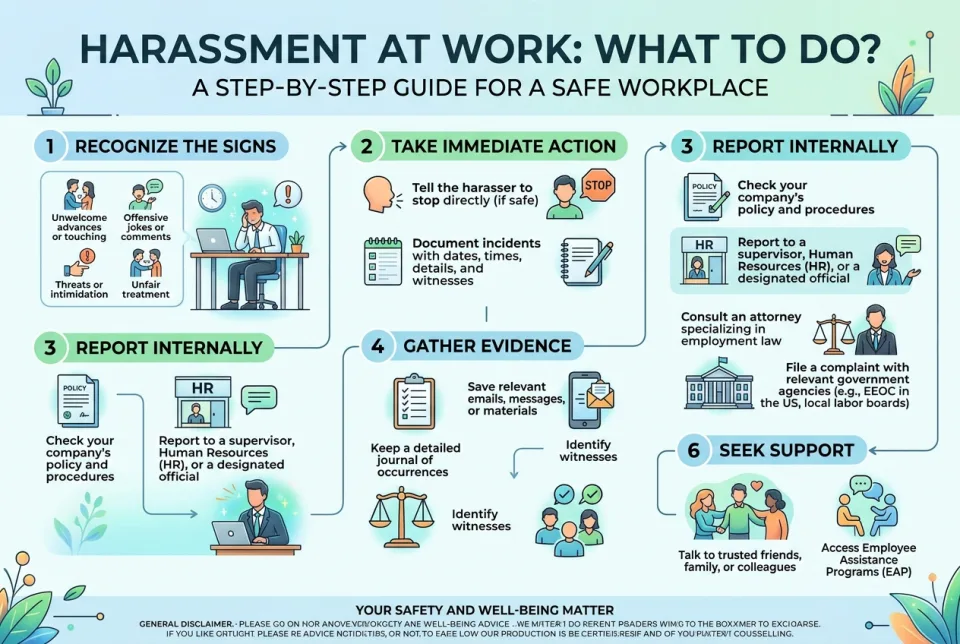
Quick answer
5 steps — read this before anything else
-
1
Document every incident: date, time, location, what was said or done, and any witnesses.
-
2
Check your employer's anti-harassment policy and follow the internal complaint procedure.
-
3
Report the harassment to your manager, HR, or a designated contact, in writing if possible.
-
4
Keep copies of all communications and records in a safe place outside work.
-
5
If internal steps fail or you feel unsafe, seek advice from a lawyer, union, or workplace rights agency.
Warning
If you are threatened, physically harmed, or feel in immediate danger, call your local emergency services.
Important — please read
This content is general educational and informational only, and is not a substitute for professional medical advice, diagnosis or treatment. Always seek the advice of a qualified health provider with any questions you may have about a medical condition. Never disregard or delay seeking professional medical care because of something you read here. In an emergency or life-threatening situation, call your local emergency services (police, fire or ambulance) immediately.
Workplace harassment can take many forms: unwelcome comments, threats, exclusion, or repeated unwanted advances. It is not your fault, and in many countries it is against the law. Taking structured steps helps protect your wellbeing and your rights.
What counts as harassment?
Harassment is unwelcome conduct that creates a hostile or intimidating work environment. It can be based on sex, race, age, disability, religion, or other protected characteristics, but it can also be general bullying. It may be verbal, written, physical, or online. You do not need to prove intent: what matters is how the behaviour affects you.
Step by step: what to do
- Document everything. Keep a detailed log: date, time, location, what happened, who was involved, and any witnesses. Save emails, messages, and screenshots. Store copies outside work systems, for example on a personal email account or a printed file at home.
- Review your employer's policy. Most organisations have an anti-harassment or grievance policy. It explains how to report and what support is available. Follow it, but you can also ask for a copy if you cannot find it.
- Report internally. Tell your manager, HR, or a designated person. Put your complaint in writing and keep a copy. Be specific: include dates, examples, and the impact on your work. Ask what steps will be taken and when you can expect a response.
- Seek support. Talk to a trusted colleague, a union representative, or an employee assistance programme if available. They can help you decide next steps and provide emotional support.
- Consider external options. If internal reporting does not stop the harassment or you fear retaliation, you may be able to file a complaint with a workplace rights agency or consult a lawyer. Deadlines can apply, so act promptly.
What NOT to do
- Do not ignore it and hope it will stop. Unchecked harassment often continues.
- Do not confront the harasser alone if you feel unsafe or if the behaviour is threatening.
- Do not delete messages or evidence, even if they are upsetting.
- Do not wait too long: legal time limits can be short.
- Do not blame yourself. Harassment is about the behaviour of others, not about you.
When to seek professional help
If you experience threats, physical contact, stalking, or severe distress, contact local emergency services or the police. For legal advice, consult a lawyer or a free legal advice service. If your mental health is affected, speak to a doctor or a mental health professional.
Protecting yourself
Keep records of all meetings and communications about your complaint. Note any changes to your workload, schedule, or treatment that could be retaliation. Retaliation for reporting harassment is often illegal, so document it.
Remember: this is general information, not legal advice. Laws vary by country and region. For advice on your specific situation, consult a qualified professional.
Spotted an error? Report it — we correct factual mistakes promptly.
Read next
What Should You Do If You Work From Home and Can't Focus?
Losing focus while working from home is common. These 10 practical, evidence-informed tricks can help you regain concentration without relying on willpower alone.
What Should You Do If You Feel Unmotivated at Work?
Feeling unmotivated at work is common and usually temporary. These nine practical steps can help you rebuild momentum without burning out.
What Should I Do If There Are No Advancement Opportunities at Work?
Feeling stuck in your career can be frustrating and demotivating. Learn practical steps to assess your situation, create growth opportunities, and decide when it's time to move on.
What to Do If You Have No Work Experience
No work experience does not mean no chance. Learn how to build relevant skills, present yourself confidently, and find opportunities that welcome beginners.
Related handy tools
Checklists, decision guides, scenarios and quizzes for the same situation.