What to Do If You Lock Your Keys Inside Your Car
You've just closed the door, heard that solid click, and then the sinking feeling hits. Your keys are sitting on the passenger seat, and the car is locked. It happens more often than you'd think, and it almost always happens at the worst possible time.
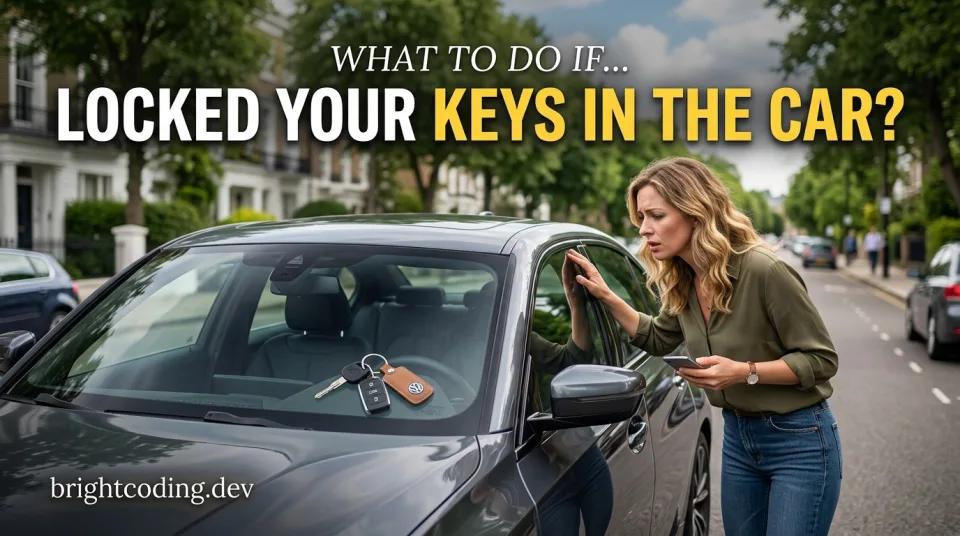
You've just closed the door, heard that solid click, and then the sinking feeling hits. Your keys are sitting on the passenger seat, and the car is locked. It happens more often than you'd think, and it almost always happens at the worst possible time.
Take a breath. This is annoying, but it's rarely an emergency, and there are several ways out. The right move depends on whether you're in a parking lot on a mild afternoon or on a highway shoulder in freezing rain, so let's walk through it.
First, Are You Actually in Danger?
Before anything else, check where you are and what's around you. If you're stranded in traffic, on a dark road, or in extreme heat or cold, your safety matters more than the car. Get yourself to a safe spot, call someone you trust, and deal with the keys after you're out of harm's way.
If a child or a pet is locked inside the car, this is now a genuine emergency. Call your local emergency number immediately. Don't wait to see if they seem okay. On a warm day, a car interior can reach dangerous temperatures within minutes. You can find the right number for your country in this emergency numbers by country list.
For everyone else: nobody is in danger, and the car isn't going anywhere. You have time to pick the best option instead of the fastest one.
Why Do We Lock Keys in Cars So Often?
Modern cars are designed to prevent this, which makes it even more frustrating when it happens anyway. Push-button start means you never pull a key out of the ignition, so there's no physical reminder to grab it. You toss the fob in your bag or cupholder, shut the door, and the auto-lock does the rest.
The classic triggers are almost always the same: your hands are full with groceries, you're rushing to a meeting, or you're dropping a kid at school and the door gets shut on a reflex. It's rarely carelessness. It's autopilot, and autopilot fails when you're stressed or distracted.
If you have kids in the car regularly, it's worth reading up on family safety habits that reduce these split-second mistakes.
Your Options, Ranked by Realism
Here's the honest menu. None of these is right for every situation, so match the option to your circumstances rather than to whatever comes first.
Call a locksmith
A professional automotive locksmith is usually the safest and most reliable route. They have the tools to open the door without damaging the lock, and many can also cut or program a replacement key if yours is truly gone.
Expect to pay somewhere in the range of $50 to $150 for a standard car opening, though prices vary a lot by region, time of day, and vehicle type. Luxury and newer cars with complex electronics often cost more. Call ahead, ask for a total price, and confirm they're licensed. Avoid anyone who won't quote you a number before they arrive.
Best for: most people, most of the time. A reputable local provider is worth having saved in your phone before you need one. Our directory of trusted local providers can point you in the right direction.
Call roadside assistance
If you have AAA, a credit card benefit, or a car manufacturer's roadside program, this may be free or heavily discounted. Coverage varies wildly, so check what your plan actually includes before you assume it covers lockouts.
Best for: anyone who already pays for it. It's often the cheapest call you can make.
Use a spare key
If someone can bring you a spare, this is the simplest solution of all. The catch is distance and time. A spare in a drawer across town is great; a spare in another state is not.
Best for: when help is genuinely close, and you can wait.
Call the police or a tow service
In some places, non-emergency police lines will help with a lockout. In many others, they won't. It depends entirely on your location and how busy they are. Call the non-emergency line, never 911, and don't be surprised if they refer you elsewhere.
A tow company may also open your car, sometimes for less than a locksmith. But they're not always gentle, and a bad job can damage weather stripping or a window.
Best for: when nothing else is available and you're in a safe location.
DIY methods you've seen online
You've probably watched a video involving a shoelace, a wedge, or a coat hanger. Here's the truth: on older cars with manual locks, some of these occasionally work. On most modern cars, they're more likely to scratch paint, bend door frames, or break a window seal than to open anything.
If you damage your car trying a trick from a video, you've turned a $100 problem into a $1,000 one. I'd skip it.
Break a window (last resort)
If a child or pet is inside and in danger, break a window. Use a window on the opposite side from the person if possible, aim for a corner rather than the center, and cover your hand and eyes. This is a genuine emergency measure, not a convenience shortcut. A replacement window on a modern car can easily run several hundred dollars.
Which Option Fits Your Situation?
There's no single best answer, because the right choice depends on four things: your safety, whether someone is in danger, how much time you have, and what you're willing to spend.
If you're safe and patient, roadside assistance or a locksmith is the way. If someone is trapped inside, call emergency services and break glass if you must. If you're in an unsafe location, get to safety first and sort the car out second. If a spare key is ten minutes away, that beats every paid option.
The one thing I'd avoid in almost every case is improvising with tools. It feels proactive. It usually just costs more.
Step-by-Step: What to Actually Do
Here's the sequence I'd follow, in order.
- Check for danger first. Traffic, weather, location. If you're not safe, move.
- Check for anyone inside. A child or pet changes everything. If so, call emergency services now.
- Confirm the car is really locked. Try every door, including the trunk and any rear hatch. Sometimes one is open.
- Check for a spare. Call whoever has one and ask how fast they can get to you.
- Call your roadside assistance if you have it. Ask about lockout coverage.
- Call a licensed locksmith if roadside isn't an option. Get a total price up front.
- Stay with the car unless you're in danger. Don't wander off and leave it unattended.
- Once it's open, deal with the root cause. Move your spare somewhere accessible and save a locksmith's number for next time.
If you want to build a small "just in case" kit for your car and home, the practical guides section has ideas that take ten minutes to set up.
Mistakes That Make It Worse
- Calling 911 for a routine lockout. This ties up emergency lines. Use the non-emergency number or a locksmith instead.
- Trying a coat hanger or shoelace trick. Fix: skip it. The damage almost always costs more than the locksmith.
- Leaving the car unattended in a risky area. Fix: stay with the vehicle, or move to safety and call for help from there.
- Hiring the first person who answers without a quote. Fix: ask for a total price and confirm they're licensed before they come out.
- Assuming your insurance covers it. Fix: check your policy or roadside plan before you assume.
- Ignoring a child or pet inside because they "seem fine." Fix: treat it as an emergency, every time.
The One Thing to Remember
The single most useful habit you can build is to keep a spare key somewhere you can actually reach, and to save a locksmith and your roadside number in your phone. That's it. Most lockouts are solved by a phone call, not a heroics.
The second thing: if a person or animal is locked inside, stop reading and call for help. Everything else can wait.
FAQ
How much does it cost to get keys out of a locked car?
Typically $50 to $150 for a standard locksmith opening, but prices vary by location, time, and vehicle. Roadside assistance may cover it for free if you already have a plan.
Can I unlock my car with my phone?
Some newer cars with connected apps let you unlock remotely. Most cars don't. Check your manufacturer's app before assuming it will work.
Will the police unlock my car?
Sometimes, depending on your location and how busy they are. Call the non-emergency line, never 911, and be ready for them to refer you to a locksmith.
Is it safe to break a window to get in?
Only if a person or animal is trapped inside and in danger. Otherwise, a locksmith is far cheaper than a replacement window.
How do I stop this from happening again?
Keep a spare key accessible, use a keychain that stays on your person, and save a locksmith's number now rather than later. The practical-knowledge blog has more everyday prep ideas like this.
This article offers general information for common situations and isn't a substitute for professional advice. If anyone is in danger, contact your local emergency services right away.
Written by
Mohamed IDBRAHIM
I oversee the platform's development, content strategy, quality standards, and overall user experience. My goal is to make WhatToDoInCaseOf.com a reliable and practical resource where people can quickly find clear, useful information about what to do when facing everyday problems, unexpected situations, important decisions, and life challenges. I work to ensure that the platform remains easy to use, accessible, informative, and continuously improved with helpful guides, tools, calculators, and practical resources. Through a focus on clarity, usefulness, and innovation, I am committed to building a platform that helps people better understand their options and take the next step with confidence.
View profileSpotted an error? Report it — we correct mistakes promptly.
Keep reading
Related articles
What to Do If Your Car Battery Dies - 8 Steps to Get Back on the Road
You turn the key. Instead of the engine catching, you get a slow, sickly groan, then a click, then nothing. The dashboard lights dim. Somewhere in the back of your mind you already know: the battery is dead, and you're stuck.
What to Do If Your Check Engine Light Comes On
You're driving along, everything's fine, and then that little amber engine icon lights up on your dashboard. Your stomach drops a bit. Is the car about to die? Are you about to be handed a four-figure repair bill?

How can I immigrate to Canada - Quietest Border Crossing in the World
Canada welcomed 500,000 newcomers in 2026, but the rules have changed. Here's the real, step-by-step guide to immigrating through Express Entry and Provincial Nominee Programs — with actual costs, timelines, and the one strategy that actually works.
Related guides
Check engine light blinking: what to do?
A blinking check engine light signals a serious engine or emissions problem that can cause costly damage. Learn the safe steps to take immediately.
Dead car battery: what to do?
A dead car battery can leave you stranded. Learn how to safely jump-start your car, avoid dangerous mistakes, and know when to call for help.
What to Do If Your Computer Crashes
Learn immediate troubleshooting steps to handle a computer crash safely, recover unsaved work, and resolve system freezes.