Severe sunburn at the beach: treating it right
Severe sunburn needs immediate cooling, pain relief, and protection from further sun. Learn the safe steps and when to get medical help.
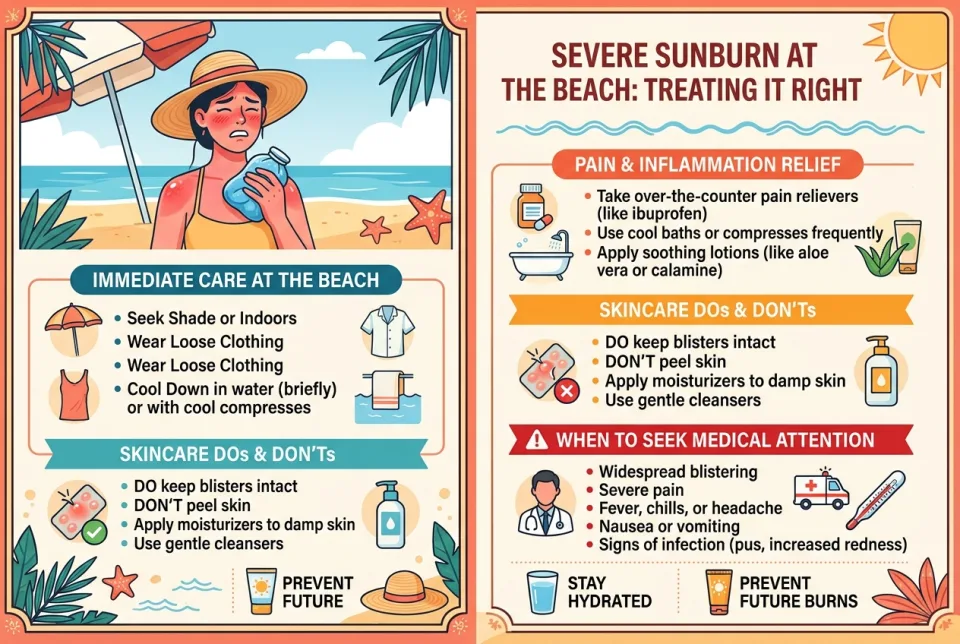
Quick answer
5 steps — read this before anything else
-
1
Get out of the sun and into shade or indoors immediately.
-
2
Cool the skin with cool (not ice-cold) water or compresses for 10-15 minutes.
-
3
Apply a gentle moisturizer or aloe vera gel if available; avoid lotions with alcohol or fragrance.
-
4
Drink water to stay hydrated and take an over-the-counter pain reliever if needed.
-
5
Seek medical care if you have blisters over a large area, fever, chills, or signs of infection.
Warning
Call emergency services if severe sunburn is accompanied by confusion, fainting, high fever, or extensive blistering, as these can indicate heat stroke or serious complications.
Important — please read
This content is general educational and informational only, and is not a substitute for professional medical advice, diagnosis or treatment. Always seek the advice of a qualified health provider with any questions you may have about a medical condition. Never disregard or delay seeking professional medical care because of something you read here. In an emergency or life-threatening situation, call your local emergency services (police, fire or ambulance) immediately.
Severe sunburn is more than a minor inconvenience: it is a real injury that can cause significant pain, blistering, and systemic symptoms. At the beach, your priority is to stop further exposure, cool the skin safely, and know when to get professional help.
What is happening
Sunburn is damage to the skin from ultraviolet (UV) radiation. In severe cases, the skin may blister, swell, and become very tender. You may also experience headache, fever, chills, nausea, or dizziness, which can indicate heat exhaustion or dehydration. These symptoms mean you should seek medical attention.
Emergency warning
Call local emergency services immediately if you or someone else has severe sunburn with confusion, fainting, rapid breathing, or a high fever, or if sunburn covers a large portion of the body with extensive blistering. These can be signs of heat stroke or serious complications.
What to do first
- Get out of the sun. Move to shade, indoors, or an air-conditioned space. Do not stay on the beach.
- Cool the skin. Use cool (not ice-cold) water from a shower, bath, or clean cloths. Avoid ice packs directly on the skin, as this can cause further damage. Cool for 10-15 minutes at a time.
- Hydrate. Drink water or an electrolyte drink to replace fluids lost through sweating and to support healing.
- Soothe the skin. Apply a gentle moisturizer, aloe vera gel, or a cool compress. Avoid products containing alcohol, fragrance, or numbing agents like benzocaine, which can irritate the skin.
- Relieve pain. An over-the-counter pain reliever such as ibuprofen or acetaminophen can help with pain and inflammation. Follow the label instructions and do not exceed the recommended dose.
- Protect blisters. Do not pop blisters. Cover them loosely with a clean, dry dressing to prevent infection.
What NOT to do
- Do not apply ice directly to the skin.
- Do not use petroleum jelly, butter, or oil-based products on a fresh sunburn.
- Do not pop blisters or peel skin.
- Do not drink alcohol, which can worsen dehydration.
- Do not expose the burned area to more sun until it is fully healed.
When to seek professional care
Seek medical attention if you have:
- Blisters covering a large area or on the face, hands, or genitals
- Fever, chills, headache, confusion, or nausea
- Signs of infection such as increasing redness, warmth, pus, or swelling
- Severe pain that is not relieved by over-the-counter medication
- Sunburn that does not improve after a few days
What to monitor
Watch for worsening symptoms over the next 24-48 hours. Check for increased blistering, spreading redness, or systemic symptoms like dizziness or rapid heartbeat. Keep the burned area clean and moisturized, and stay hydrated.
How to prevent it
Prevention is far better than treatment. Use a broad-spectrum sunscreen with SPF 30 or higher, reapply every two hours and after swimming or sweating. Wear protective clothing, a wide-brimmed hat, and sunglasses. Seek shade during peak UV hours (10 a.m. to 4 p.m.). Avoid tanning beds and never let sunburn happen intentionally.
If you are unsure about the severity of a sunburn, err on the side of caution and contact a healthcare provider. For emergencies, call your local emergency number.
This is general information and not a substitute for professional medical advice. In an emergency, call your local emergency services immediately.
Sources & references
Spotted an error? Report it — we correct factual mistakes promptly.
Read next
Beating jet lag quickly: what actually works?
Jet lag is a temporary sleep disorder caused by rapid travel across time zones. Learn evidence-based strategies to adjust your body clock faster and reduce symptoms.
Wallet stolen while traveling: what to do?
If your wallet is stolen while traveling, act quickly to cancel cards, report the theft, and secure your identity. Follow these steps to minimize disruption and protect your finances.
Lost debit card abroad: what to do?
Losing your debit card while traveling can be stressful. Follow these steps to secure your money, get a replacement, and access cash.
Airline cancelled my flight: what are my rights?
When your flight is cancelled, you have rights to rebooking or refund, and sometimes compensation. Learn what to do and how to claim.
Related handy tools
Checklists, decision guides, scenarios and quizzes for the same situation.