Beating jet lag quickly: what actually works?
Jet lag is a temporary sleep disorder caused by rapid travel across time zones. Learn evidence-based strategies to adjust your body clock faster and reduce symptoms.
Quick answer
5 steps — read this before anything else
-
1
Adjust your sleep schedule gradually before travel if possible.
-
2
Upon arrival, expose yourself to daylight during local daytime hours.
-
3
Stay hydrated and avoid alcohol and caffeine close to bedtime.
-
4
Set your watch to the destination time immediately and eat meals on local schedule.
-
5
Use short naps strategically but avoid long ones that interfere with nighttime sleep.
Warning
Do not drive or operate heavy machinery if you are excessively sleepy from jet lag. Take a short nap or rest first.
Jet lag happens when your internal body clock (circadian rhythm) is out of sync with the local time after crossing multiple time zones. It can cause fatigue, insomnia, digestive issues, and difficulty concentrating. While there is no magic cure, certain strategies can help you adjust faster.
What is happening
Your body has an internal clock that regulates sleep, alertness, hunger, and hormone release. When you travel rapidly across time zones, this clock remains set to your home time, causing a mismatch with the external environment. The severity of jet lag depends on the number of time zones crossed, the direction of travel (eastward usually causes more difficulty), and individual factors.
What to do first
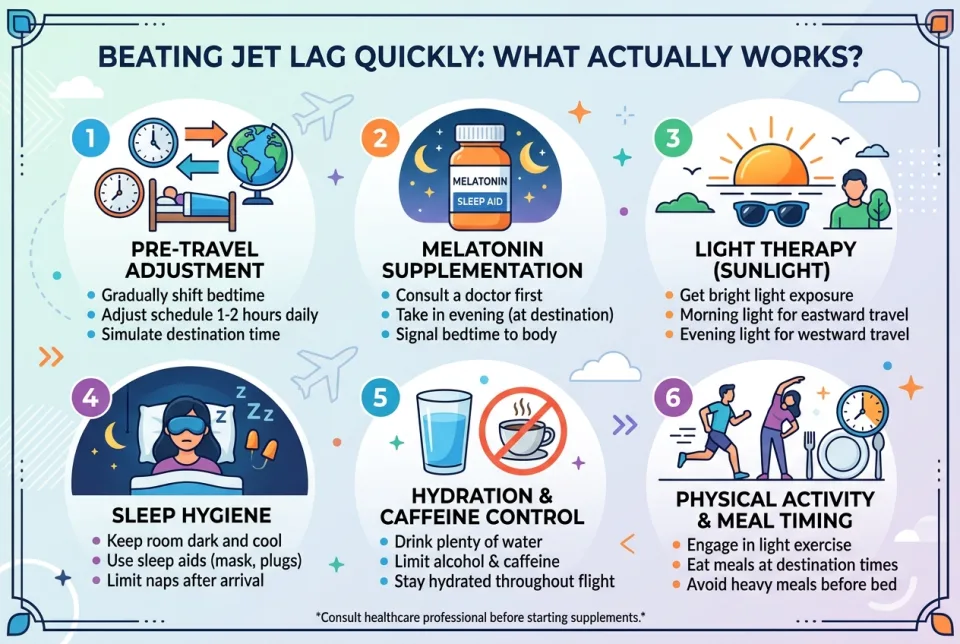
- Before travel: If possible, gradually shift your sleep and meal times toward the destination schedule a few days before departure. For example, if traveling east, go to bed and wake up earlier; if traveling west, later.
- During flight: Stay hydrated by drinking water, avoid alcohol and caffeine, and try to sleep if it is nighttime at your destination. Use earplugs and an eye mask to create a restful environment.
- Upon arrival: Immediately adopt the local time. Set your watch and devices to the destination time. Eat meals at local mealtimes, even if you are not hungry, to help reset your digestive clock.
- Get daylight exposure: Spend time outdoors during daylight hours, especially in the morning if you traveled east. Light is the strongest signal for resetting your circadian rhythm. If you traveled west, seek light in the late afternoon or evening.
- Stay active: Light exercise during the day can help you stay awake and adjust faster. Avoid intense workouts close to bedtime.
- Nap wisely: If you are extremely tired, take a short nap (20-30 minutes) early in the afternoon. Avoid long naps or napping late in the day, as this can make it harder to sleep at night.
- Sleep environment: Keep your bedroom dark, quiet, and cool. Avoid screens before bed as blue light can interfere with melatonin production.
What NOT to do
- Do not rely on alcohol to help you sleep; it disrupts sleep quality and worsens dehydration.
- Do not consume caffeine after midday if you are sensitive to its effects, as it can prevent you from falling asleep at the local bedtime.
- Do not force yourself to stay awake if you are dangerously sleepy, especially when driving or operating machinery. Take a short nap or rest instead.
- Do not take melatonin without consulting a healthcare professional, especially if you are pregnant, breastfeeding, or taking other medications.
When to seek professional care
Jet lag usually resolves within a few days. However, consult a healthcare professional if symptoms are severe, last more than a week, or significantly interfere with your daily functioning. Also seek advice if you have underlying health conditions or are taking medications that affect sleep.
What to monitor
Pay attention to your sleep patterns, energy levels, and mood. If you experience persistent insomnia, excessive daytime sleepiness, or other concerning symptoms, seek medical advice.
How to prevent it
While you cannot completely prevent jet lag, you can minimize its impact by planning ahead: choose flights that arrive in the evening if traveling east (so you can go to bed soon after arrival), or in the morning if traveling west (to expose yourself to daylight). Stay hydrated and move around during the flight to reduce stiffness and fatigue.
Remember that this is general information and not a substitute for professional medical advice. If you have a medical condition or are unsure about any strategy, consult a healthcare provider.
Sources & references
Spotted an error? Report it — we correct factual mistakes promptly.
Read next
What to Do in Case of a Delayed Flight
Learn what immediate steps to take when your flight is delayed, including how to check your rights, secure food or lodging vouchers, and arrange rebooking.
What to Do in Case of a Canceled Flight
Learn the immediate steps to take when your flight is canceled, from rebooking quickly to understanding your compensation and accommodation rights.
What to Do If You Miss Your Flight
Missing a flight is stressful, but taking quick action increases your chances of getting rebooked promptly while protecting the rest of your travel itinerary.
Vacation rental turned out to be a scam: what to do?
If you arrive at a vacation rental that does not exist or was misrepresented, act quickly to protect your money and find safe lodging. Here is a step-by-step guide to reporting the scam and recovering what you can.
Related handy tools
Checklists, decision guides, scenarios and quizzes for the same situation.