Job contract red flags to check before signing
Before you sign an employment contract, review these common red flags that could affect your pay, rights, and career. Learn what to check and when to seek legal advice.
Quick answer
5 steps — read this before anything else
-
1
Read the entire contract, including any documents it refers to.
-
2
Check that pay, hours, leave, and notice periods match what you were offered.
-
3
Look for vague or one-sided clauses that give the employer broad discretion.
-
4
Ask for unclear terms to be explained or changed before signing.
-
5
Consider having a lawyer review the contract if anything seems unusual.
Important — please read
This content is general educational and informational only, and is not a substitute for professional medical advice, diagnosis or treatment. Always seek the advice of a qualified health provider with any questions you may have about a medical condition. Never disregard or delay seeking professional medical care because of something you read here. In an emergency or life-threatening situation, call your local emergency services (police, fire or ambulance) immediately.
Signing an employment contract is a significant commitment. While most contracts are straightforward, some contain clauses that can disadvantage you. This guide highlights common red flags to watch for. It is general information, not legal advice. Employment laws vary by country and region, so consider consulting a qualified employment lawyer for advice on your specific situation.
What to Check Before You Sign
Start by reading the entire contract carefully, including any documents it refers to, such as a handbook or policy. Make sure you understand every clause. If something is unclear, ask for an explanation in writing.
Common Red Flags
Vague or Missing Terms
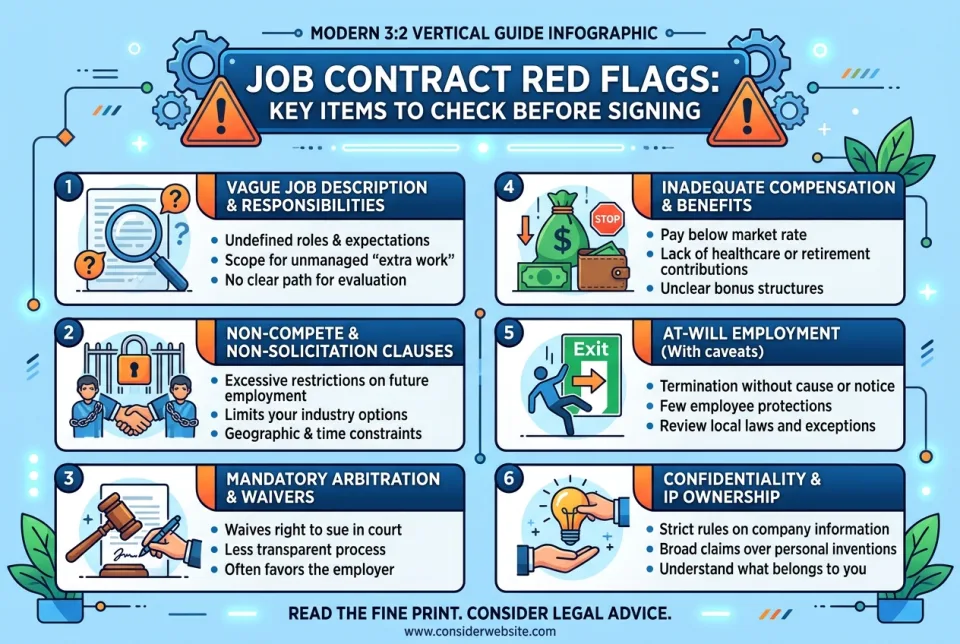
Be wary if key details are missing or vague, such as your job title, duties, salary, working hours, or place of work. A contract that says "duties as assigned" without a job description may allow your role to change significantly.
Unclear Pay and Benefits
Check that the salary, overtime pay, bonuses, and benefits are clearly stated. Watch for clauses that allow the employer to change your pay or benefits unilaterally. Also, confirm when and how you will be paid.
Excessive or Unclear Working Hours
Look for clauses that require long hours without extra pay, or that say you may be required to work "as needed" without limits. Ensure the contract states your normal working hours and any overtime arrangements.
Restrictive Covenants
Non-compete, non-solicitation, and confidentiality clauses can limit your future job options. Check the scope, duration, and geographic area. Overly broad restrictions may be unenforceable, but you should understand them before signing.
Probationary Periods and Notice
Check the length of any probationary period and your rights during it. Also, review the notice periods for both you and the employer. A much longer notice period for you than for the employer may be unfair.
Deductions and Penalties
Watch for clauses that allow the employer to deduct money from your pay for things like training costs, uniforms, or mistakes. In many places, such deductions are heavily regulated or prohibited.
Dispute Resolution and Governing Law
Some contracts require you to resolve disputes through arbitration or in a distant location. This can make it harder to enforce your rights. Check which country's laws govern the contract.
Training Bonds or Repayment Clauses
If the employer pays for training, they may require you to stay for a certain period or repay the cost if you leave. Understand the terms and whether they are reasonable.
Confidentiality and Intellectual Property
Ensure these clauses are clear and do not claim ownership of work you create outside your job. Overly broad clauses could affect your side projects.
What NOT to Do
- Do not sign immediately without reading the contract thoroughly.
- Do not rely on verbal promises; get everything in writing.
- Do not assume standard terms apply; check every clause.
- Do not ignore clauses that seem irrelevant; they may matter later.
When to Seek Professional Advice
If you encounter any of these red flags or feel pressured to sign quickly, consider consulting an employment lawyer. They can review the contract and advise you on your rights and options.
Next Steps
Before signing, negotiate any unclear or unfair terms. Ask for changes in writing and keep a copy of the final contract. Remember, this is general information and not a substitute for legal advice.
Spotted an error? Report it — we correct factual mistakes promptly.
Frequently asked questions
Read next
What Should You Do If You Feel Job Insecure on a Fixed-Term or Freelance Contract?
Job insecurity from fixed-term contracts and freelancing is common, but you can reduce the financial and emotional impact with practical steps. Learn how to prepare, protect your income, and build stability.
How Do You Reorient After a Professional Failure?
A professional setback, such as a lost job, failed venture or missed promotion, is painful but rarely final. Here is a calm, practical way to steady yourself, learn what is useful and choose your next move.
Identity documents needed for a new job: what to do?
Starting a new job often means proving who you are and your right to work. Here is how to prepare your documents, what to expect, and how to handle common problems.
Bad reference from former employer: what to do?
A negative reference can derail a job offer. Learn how to respond, what your rights are, and how to protect your job search.
Related handy tools
Checklists, decision guides, scenarios and quizzes for the same situation.