Extreme cold warning: what to do?
Extreme cold can cause frostbite and hypothermia within minutes. Learn how to stay safe, recognize danger signs, and act fast.
Quick answer
4 steps — read this before anything else
-
1
Stay indoors if possible and avoid travel.
-
2
If you must go out, dress in layers, cover all exposed skin, and limit time outside.
-
3
Watch for signs of frostbite (numbness, white or grayish skin) and hypothermia (shivering, confusion, drowsiness).
-
4
Call local emergency services immediately if someone shows severe symptoms like confusion, slurred speech, or unconsciousness.
Warning
Extreme cold can cause frostbite and hypothermia within minutes. If someone shows confusion, slurred speech, or unconsciousness, call emergency services immediately.
Important — please read
This content is general educational and informational only, and is not a substitute for professional medical advice, diagnosis or treatment. Always seek the advice of a qualified health provider with any questions you may have about a medical condition. Never disregard or delay seeking professional medical care because of something you read here. In an emergency or life-threatening situation, call your local emergency services (police, fire or ambulance) immediately.
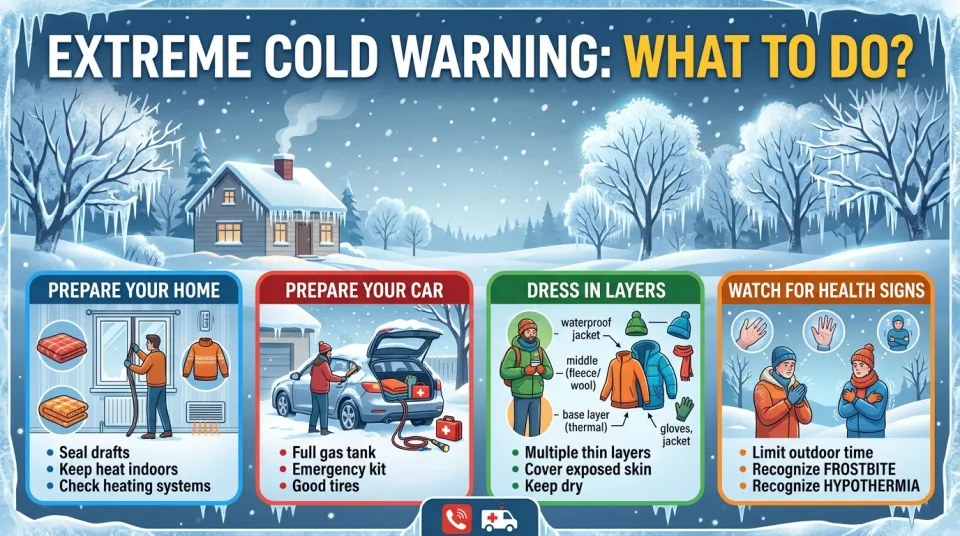
An extreme cold warning means temperatures or wind chills are dangerously low, often cold enough to cause frostbite on exposed skin in minutes and hypothermia if you are not properly dressed. The safest action is to stay indoors and avoid unnecessary travel. If you must go outside, take the cold seriously and prepare.
What to do first
- Get indoors and stay there. Cancel or postpone non-essential outings. If you must travel, check road conditions and carry an emergency kit with blankets, extra warm clothing, food, water, a flashlight, and a charged phone.
- Dress in layers if you must go out. Wear a base layer that wicks moisture, an insulating middle layer (fleece or wool), and a windproof and waterproof outer layer. Cover your head, ears, face, and hands. Mittens are warmer than gloves. Wear insulated, waterproof boots.
- Limit time outside. Even brief exposure can be dangerous. Take breaks indoors to warm up. Avoid sweating, which can lead to rapid cooling when you stop moving.
- Keep your home warm and safe. Maintain heat and close off unused rooms. Never use a stove, oven, or outdoor grill to heat your home. If you use a space heater, keep it at least 3 feet from flammable objects and turn it off when you leave the room or sleep. Ensure carbon monoxide detectors are working.
- Check on others. Call or visit vulnerable neighbors, older adults, and those without adequate heating. Bring pets indoors.
What NOT to do
- Do not ignore shivering, numbness, or confusion. These are warning signs of cold-related illness.
- Do not rub frostbitten skin with snow or massage it. Do not walk on frostbitten feet.
- Do not use alcohol or drugs to stay warm. They impair judgment and increase heat loss.
- Do not leave children or pets in a cold vehicle.
- Do not use generators, grills, or camping stoves indoors, in a garage, or near windows. They produce deadly carbon monoxide.
Recognize frostbite and hypothermia
Frostbite causes numbness, tingling, pale or grayish-yellow skin, and firm or waxy skin. It often affects fingers, toes, nose, and ears. Hypothermia causes intense shivering, confusion, slurred speech, drowsiness, and loss of coordination. In severe cases, shivering may stop. Both are medical emergencies.
When to call for help
Call local emergency services immediately if someone shows signs of severe hypothermia (confusion, unconsciousness, very slow breathing) or if frostbite is extensive or the skin is hard and numb. While waiting for help, move the person to a warm place, remove wet clothing, and wrap them in blankets. Do not rub the affected area. For frostbite, warm the area in lukewarm (not hot) water if help is delayed. Do not use direct heat like a heating pad or fire.
Prevent cold-related emergencies
- Check the forecast and wind chill before going out.
- Keep an emergency kit in your home and car.
- Insulate pipes and let faucets drip to prevent freezing.
- Have a safe backup heat source and never burn fuel indoors without proper ventilation.
Stay informed through local weather alerts and take extreme cold warnings seriously. If you suspect hypothermia or frostbite, call emergency services right away. This is general information and not a substitute for professional medical advice. In an emergency, call your local emergency number.
Sources & references
Spotted an error? Report it — we correct factual mistakes promptly.
Read next
What Should You Do If a Tornado Warning Is Issued While You Are at Home?
A tornado warning means a tornado has been detected or is occurring. Know the safest room in your home and act immediately, without waiting to see the storm.
What to Do If You Get Lost While Hiking in Canada
If you lose your trail while hiking in Canada, stop moving immediately and stay calm. Following the STOP protocol increases your chances of a quick rescue.
What to Do If You Receive an Emergency Evacuation Order
Receiving an emergency evacuation order means you must leave immediately. Learn the critical steps to evacuate safely, protect your family, and avoid hazards.
What to Do If You Lose Electricity During Winter
Essential safety steps to retain heat, prevent carbon monoxide poisoning, and protect your home during a cold-weather power outage.
Related handy tools
Checklists, decision guides, scenarios and quizzes for the same situation.