Driver fatigue on a long trip: what to do?
Fatigue behind the wheel is a serious hazard. Learn the safe, proven steps to manage tiredness on a long drive and when to stop for good.
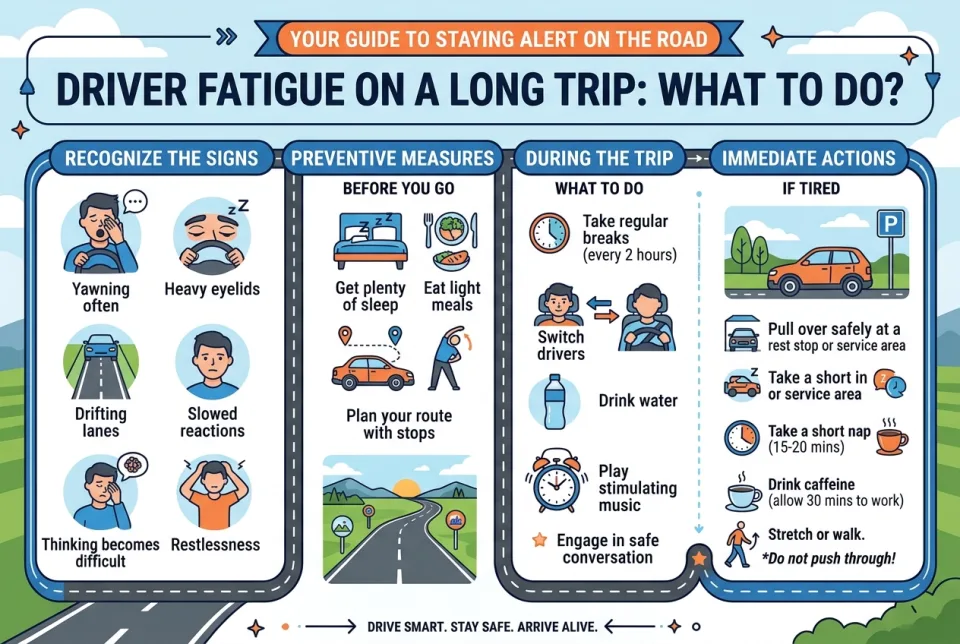
Quick answer
5 steps — read this before anything else
-
1
Pull over safely as soon as you notice signs of fatigue.
-
2
Take a short nap (15-20 minutes) or switch drivers.
-
3
Avoid relying on caffeine or loud music to stay awake.
-
4
Plan regular breaks every 2 hours on long trips.
-
5
If fatigue persists, stop driving and rest properly.
Warning
Driving while fatigued is dangerous and can be fatal. If you feel sleepy, pull over safely immediately and rest. Do not continue driving.
Driver fatigue is a major cause of road crashes. It slows reaction times, impairs judgment, and can lead to microsleeps, brief moments of sleep you may not even notice. On a long trip, it is essential to recognize the signs of fatigue and act quickly to stay safe.
What is happening
Fatigue is more than feeling a bit tired. It is a state of reduced alertness that affects your ability to drive safely. Common signs include heavy eyelids, frequent yawning, difficulty concentrating, drifting out of your lane, and trouble remembering the last few miles. If you experience any of these, you are already at risk.
What to do first
- Pull over safely: As soon as you notice signs of fatigue, find a safe place to stop, such as a rest area, service station, or parking lot. Do not wait for a "better spot."
- Take a short nap: A 15-20 minute nap can significantly improve alertness. Set an alarm and sleep in your parked car with doors locked.
- Switch drivers: If another licensed driver is with you, swap seats and let them take over.
- Drink caffeine (if needed): A cup of coffee or tea can help temporarily, but it is not a substitute for sleep. Caffeine takes about 30 minutes to kick in, so drink it before your nap for a combined effect.
- Resume only when alert: Do not start driving again until you feel genuinely refreshed. If you still feel tired, do not drive.
What NOT to do
- Do not rely on loud music, open windows, or cold air: These may give a brief boost but do not address the underlying fatigue.
- Do not ignore the signs: Pushing through fatigue increases the risk of a crash.
- Do not drive after drinking alcohol or taking sedating medications: These worsen fatigue and impair driving.
- Do not stop on the hard shoulder of a highway unless it is an emergency: It is dangerous. Use designated rest areas instead.
When to stop for good
If you have tried a nap and caffeine but still feel drowsy, or if you are yawning repeatedly, blinking frequently, or having trouble keeping your eyes open, it is time to stop driving for the day. Find a safe place to rest or stay overnight. Do not attempt to continue the journey.
How to prevent driver fatigue
- Plan ahead: Schedule regular breaks every 2 hours or 100 miles (160 km).
- Get enough sleep: Aim for 7-9 hours of sleep before a long trip.
- Avoid driving during peak sleepiness times: Typically late at night to early morning (2-6 AM) and mid-afternoon (2-4 PM).
- Share the driving: If possible, rotate drivers every few hours.
- Stay hydrated and eat light meals: Heavy meals can make you drowsy.
Remember, fatigue is a serious risk. If you feel tired, stop and rest. It is better to arrive late than not at all.
Sources & references
Spotted an error? Report it — we correct factual mistakes promptly.
Read next
What should you do after a car accident?
A step-by-step guide to staying safe, getting help, and handling the aftermath of a car accident, from securing the scene to exchanging information.
What to Do If You Lose Your Driver's License
Losing your driver's license can lead to identity theft and legal trouble if you drive without it. Follow these steps to secure your identity and get a replacement.
Accident in a rental car abroad: what to do?
A step-by-step guide to handling a rental car accident in a foreign country, from securing the scene to notifying the rental company and your insurer.
Car smells of burning rubber: what to do?
A burning rubber smell in your car can signal a serious hazard like an overheating engine, a slipping belt, or an electrical fault. Learn how to respond safely and when to get professional help.
Related handy tools
Checklists, decision guides, scenarios and quizzes for the same situation.