Child touched something hot: what to do?
A child who touches something hot can get a painful burn. Quick, calm first aid can limit the damage and ease the pain. Learn the right steps and when to get medical help.
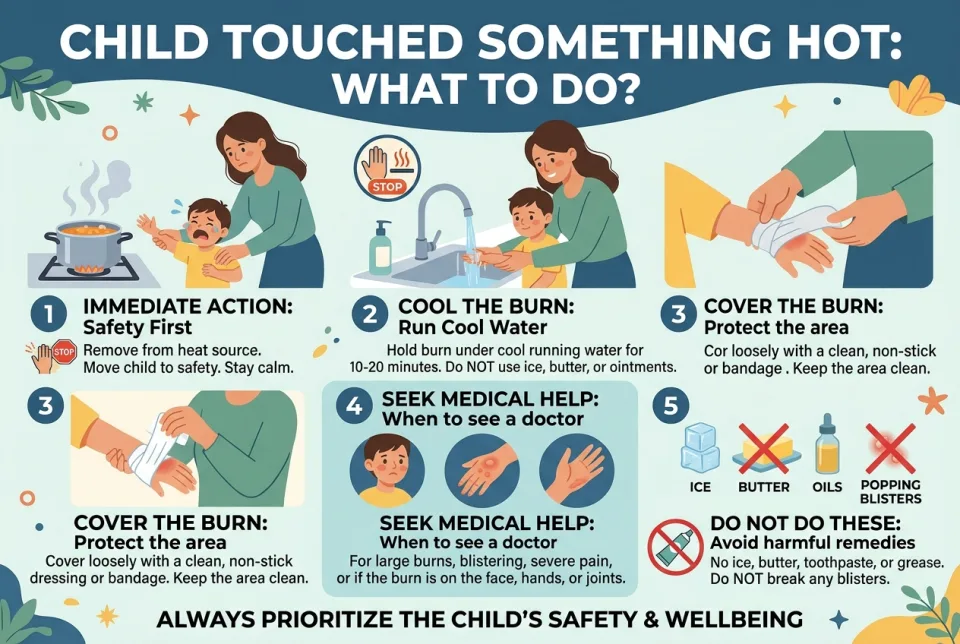
Quick answer
5 steps — read this before anything else
-
1
Remove the child from the heat source and remove any clothing or jewelry near the burn, unless it is stuck to the skin.
-
2
Cool the burn under cool running water for 20 minutes.
-
3
Cover the burn loosely with a clean, non-stick dressing or cling film.
-
4
Do not apply ice, butter, ointments, or toothpaste.
-
5
Seek medical help for large, deep, or blistering burns, or burns on the face, hands, feet, joints, or genitals.
Warning
If the burn is large, deep, or on the face, hands, feet, joints, or genitals, or if the child has trouble breathing, call emergency services right away.
Important — please read
This content is general educational and informational only, and is not a substitute for professional medical advice, diagnosis or treatment. Always seek the advice of a qualified health provider with any questions you may have about a medical condition. Never disregard or delay seeking professional medical care because of something you read here. In an emergency or life-threatening situation, call your local emergency services (police, fire or ambulance) immediately.
A child touching a hot object is a common accident. The right first aid in the first few minutes can reduce pain and help the burn heal. Stay calm and act quickly.
What to do first
- Stop the burning. Remove the child from the heat source. Take off any clothing or jewelry near the burn, but do not pull off anything stuck to the skin.
- Cool the burn. Hold the burned area under cool (not cold) running water for 20 minutes. If running water is not available, apply a cool, wet cloth and change it often. Do not use ice.
- Keep the child warm. While cooling the burn, cover the rest of the child with a blanket to prevent chilling.
- Cover the burn. After cooling, cover the burn loosely with a clean, non-stick dressing or cling film. Do not wrap tightly.
- Give pain relief if needed. If the child is in pain, you can give the recommended dose of children's paracetamol or ibuprofen for their age and weight. Always follow the package instructions and check with a pharmacist if unsure.
What NOT to do
- Do not apply ice, iced water, butter, oils, ointments, or toothpaste to the burn.
- Do not burst any blisters.
- Do not use adhesive dressings directly on the burn.
- Do not delay cooling while you look for other remedies.
When to get medical help
Call your local emergency number or go to an emergency department if the burn:
- Is larger than the child's palm.
- Looks white, brown, or charred, or is painless (may indicate a deep burn).
- Is on the face, hands, feet, joints, or genitals.
- Causes blistering.
- Is caused by electricity or chemicals.
- Is accompanied by smoke inhalation, difficulty breathing, or a persistent cough.
For smaller, superficial burns that do not blister, you can usually care for them at home. Keep the area clean and covered, and watch for signs of infection such as increasing redness, swelling, pus, or fever.
What to monitor
After the initial first aid, check the burn daily for signs of infection. Also monitor the child's pain level and general well-being. If the child develops a fever or the burn seems to be getting worse, contact a healthcare professional.
How to prevent burns
- Keep hot drinks and cooking pots out of reach of children.
- Turn pot handles inward on the stove.
- Use childproof locks on oven doors and keep irons and hair straighteners out of reach.
- Set your water heater to a safe temperature (below 49°C or 120°F).
- Teach children about hot objects and supervise them closely.
This is general information and not a substitute for professional medical advice. In an emergency, call your local emergency services immediately.
Sources & references
Spotted an error? Report it — we correct factual mistakes promptly.
Read next
What to Do in Case of Premature Labor
Premature labor occurs when contractions begin before 37 weeks of pregnancy. Learn the critical signs and immediate safety steps to take.
What to Do If You Suspect a Miscarriage
A miscarriage requires prompt medical evaluation and gentle physical and emotional care. Learn the immediate steps to take and when to seek urgent emergency assistance.
Child got sunburnt: what to do?
Sunburn in children needs prompt cooling, fluids and pain relief, plus watching for signs of heat illness. Learn the safe steps and when to get medical help.
Child having an asthma attack at school: what to do?
Learn how to recognize an asthma attack in a child at school and respond quickly with the right steps, including when to call emergency services.
Related handy tools
Checklists, decision guides, scenarios and quizzes for the same situation.