ATM kept your card: what to do?
If an ATM retains your card, stay calm and follow these steps to secure your account and retrieve your card safely.
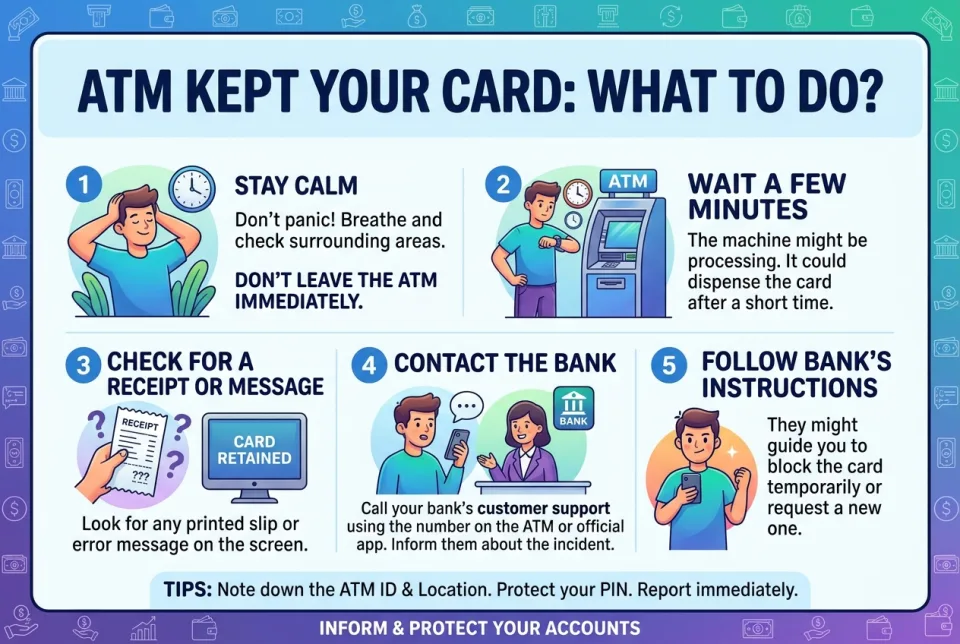
Quick answer
5 steps — read this before anything else
-
1
Do not leave the ATM area immediately; check the screen for messages.
-
2
Contact your bank using the number on the ATM or the back of your card (if you have it) or from your bank's official app.
-
3
If the machine is at a branch, go inside and ask staff for help.
-
4
Monitor your account for unauthorized transactions and report any immediately.
-
5
If you cannot retrieve the card, request a replacement from your bank.
Warning
Never share your PIN with anyone. If you suspect fraud, contact your bank immediately.
Important — please read
This content is general educational and informational only, and is not a substitute for professional medical advice, diagnosis or treatment. Always seek the advice of a qualified health provider with any questions you may have about a medical condition. Never disregard or delay seeking professional medical care because of something you read here. In an emergency or life-threatening situation, call your local emergency services (police, fire or ambulance) immediately.
It can be alarming when an ATM keeps your card, but it is a common issue that can usually be resolved quickly. Here is what to do to protect your money and get your card back.
What is happening
ATMs may retain cards for various reasons: the machine may be out of service, there may be a technical fault, or the card may have been reported lost or stolen. Sometimes the ATM retains the card as a security measure if the PIN is entered incorrectly multiple times. Knowing the cause can help you respond appropriately.
What to do first
- Stay calm and check the screen. The ATM may display a message explaining why the card was retained. Note any error codes or instructions.
- Do not force the card out. Trying to pull the card or insert tools can damage the machine or your card.
- Contact your bank immediately. Use the phone number displayed on the ATM (many have a customer service line) or the number on the back of your card if you have it. If you don't have the card, use your bank's official mobile app or website to find the contact number. Report that your card was retained and ask for guidance.
- If the ATM is at a bank branch, go inside. Staff may be able to retrieve the card if it is during business hours. Have your ID ready.
- If you cannot retrieve the card, request a replacement. Your bank will typically cancel the retained card and issue a new one. Ask about temporary access to funds if needed.
What NOT to do
- Do not leave the ATM without contacting your bank; the card could be retrieved by someone else if the machine is faulty.
- Do not share your PIN with anyone, including bank staff or callers claiming to be from the bank.
- Do not attempt to open or tamper with the ATM.
- Do not use another ATM immediately if you suspect fraud; check with your bank first.
When to call for help
If you suspect fraud or unauthorized transactions, call your bank's fraud hotline immediately. If the ATM is in a remote or unsafe location, leave and contact the bank from a safe place. In case of emergency (e.g., if you are threatened or the ATM is damaged), call local emergency services.
What to monitor
After the incident, regularly check your account statements and online banking for any unauthorized transactions. Report any suspicious activity to your bank right away.
How to prevent it
- Memorize your PIN and shield the keypad when entering it.
- Use ATMs at bank branches or well-lit, busy locations.
- Check the card slot for unusual attachments before inserting your card.
- Keep your bank's contact information handy.
By acting quickly and contacting your bank, you can minimize inconvenience and protect your finances. If you have not already done so, call your bank now.
Spotted an error? Report it — we correct factual mistakes promptly.
Read next
What to Do If You Lose Your Job and Have No Savings
Losing your job without a financial safety net is challenging, but taking swift, structured actions can help stabilize your situation. Learn how to secure emergency aid, manage urgent bills, and protect your essentials.
What to Do If You Can't Pay Your Bills
Facing overdue bills can be overwhelming, but taking immediate, structured action helps protect your essential living needs and credit. Learn how to prioritize expenses and communicate with creditors effectively.
Lost debit card abroad: what to do?
Losing your debit card while traveling can be stressful. Follow these steps to secure your money, get a replacement, and access cash.
Credit score dropped suddenly: what to do?
A sudden credit score drop can be alarming, but it is often fixable. Learn the common causes and the steps to take to identify and address the issue.
Related handy tools
Checklists, decision guides, scenarios and quizzes for the same situation.