Vacation rental turned out to be a scam: what to do?
If you arrive at a vacation rental that does not exist or was misrepresented, act quickly to protect your money and find safe lodging. Here is a step-by-step guide to reporting the scam and recovering what you can.
Quick answer
5 steps — read this before anything else
-
1
Do not send more money or share additional personal information with the host.
-
2
Secure safe lodging for the night and keep all receipts.
-
3
Report the fraud to the platform where you booked and to your payment provider immediately.
-
4
File a report with local police and a national fraud reporting agency.
-
5
Document everything: photos, messages, listing screenshots, and payment records.
Warning
If you feel unsafe or threatened at any point, leave the location and call local emergency services immediately. Do not confront the host in person.
Important — please read
This content is general educational and informational only, and is not a substitute for professional medical advice, diagnosis or treatment. Always seek the advice of a qualified health provider with any questions you may have about a medical condition. Never disregard or delay seeking professional medical care because of something you read here. In an emergency or life-threatening situation, call your local emergency services (police, fire or ambulance) immediately.
Discovering that your vacation rental is a scam is stressful, especially if you are far from home. The most important steps are to stop further losses, secure safe accommodation, and report the fraud through the right channels. This guide covers what to do first, what to avoid, and how to pursue a refund.
What is happening
Vacation rental scams typically involve fake listings, bait-and-switch tactics, or hosts who demand payment outside the platform and then disappear. You may arrive to find the property does not exist, is not available, or is drastically different from what was advertised. Scammers often pressure victims to pay by wire transfer, gift card, or cryptocurrency, which are hard to reverse.
What to do first
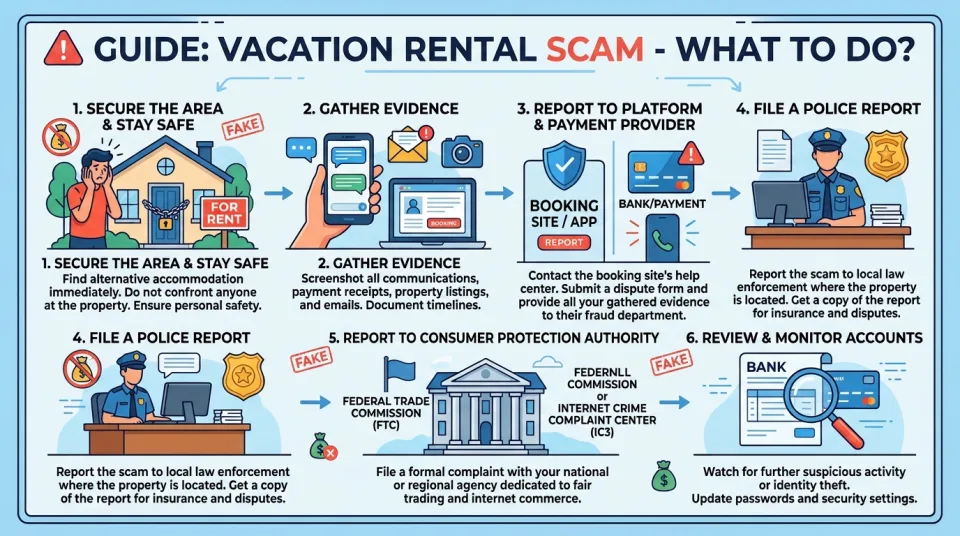
- Stop all payments and communication. Do not send any more money, even if the host claims it is for a deposit, cleaning fee, or “insurance.” Do not share additional personal or financial information.
- Secure safe lodging for the night. If you are stranded, contact local authorities or a trusted friend or family member for help finding a safe place. Keep all receipts for emergency accommodation, as they may support your claim.
- Document everything. Take screenshots of the listing, all messages with the host, payment confirmations, and any photos of the property (or lack thereof). Note dates, times, and names.
- Report to the booking platform. Use the platform’s official reporting or resolution center. Provide your documentation and request a refund. Most major platforms have policies against off-platform payments and may offer protection if you followed their rules.
- Contact your payment provider. If you paid by credit card, call the card issuer to dispute the charge. If you paid by wire transfer, bank transfer, or cryptocurrency, recovery is much harder, but report it immediately to your bank or the crypto exchange.
- File a police report. Local police may take a report, especially if you are at the location. Also report to your country’s national fraud reporting center (for example, the FTC in the US, Action Fraud in the UK, or the ACCC’s Scamwatch in Australia).
What NOT to do
- Do not confront the host in person. If you are at the property and feel unsafe, leave and call the police. Do not attempt to resolve the situation face-to-face.
- Do not pay by gift card, wire transfer, or cryptocurrency if you are asked to do so after the scam is discovered. These methods are preferred by scammers because they are difficult to trace and reverse.
- Do not delete messages or evidence. Even if the host becomes threatening or apologetic, keep all records.
- Do not book a replacement rental without verifying it. Use reputable platforms, pay through the platform, and confirm the property’s existence through independent sources (such as a video call or a call to a local property manager).
When to seek professional help
If you have lost a significant amount of money, consider consulting a consumer protection lawyer or a fraud recovery specialist. Be wary of anyone who promises to recover your money for an upfront fee, as this is a common secondary scam. If you are stranded and cannot afford alternative lodging, contact local social services or your embassy or consulate for assistance.
How to prevent it next time
- Book through established platforms and pay only through their official payment system.
- Research the property and host: look for reviews, reverse-image search the photos, and verify the address on mapping services.
- Be suspicious of prices that are far below market rate or hosts who pressure you to act quickly.
- Never send money to a stranger without a written contract and a verified booking confirmation.
Acting quickly and keeping good records improves your chances of a refund and helps authorities catch the scammer. Start with the platform and your payment provider, then file official reports. Stay safe, and do not let the stress push you into another risky transaction.
Sources & references
Spotted an error? Report it — we correct factual mistakes promptly.
Read next
What to Do If You Lose Your Credit Card While Traveling
Losing a credit card abroad requires quick action. Follow these essential steps to lock your account, secure emergency funds, and prevent fraud.
What to Do in Case of a Lost Passport
If you lose your passport while traveling, act quickly to search your belongings, report the loss to police, and contact your embassy for an emergency replacement.
What to Do in Case of a Delayed Flight
Learn what immediate steps to take when your flight is delayed, including how to check your rights, secure food or lodging vouchers, and arrange rebooking.
What to Do in Case of a Canceled Flight
Learn the immediate steps to take when your flight is canceled, from rebooking quickly to understanding your compensation and accommodation rights.
Related handy tools
Checklists, decision guides, scenarios and quizzes for the same situation.