Pet escaped from the yard: the search plan
A lost pet is stressful, but a calm, systematic search greatly improves your chances of a safe reunion. Follow this step-by-step plan to find your pet quickly.
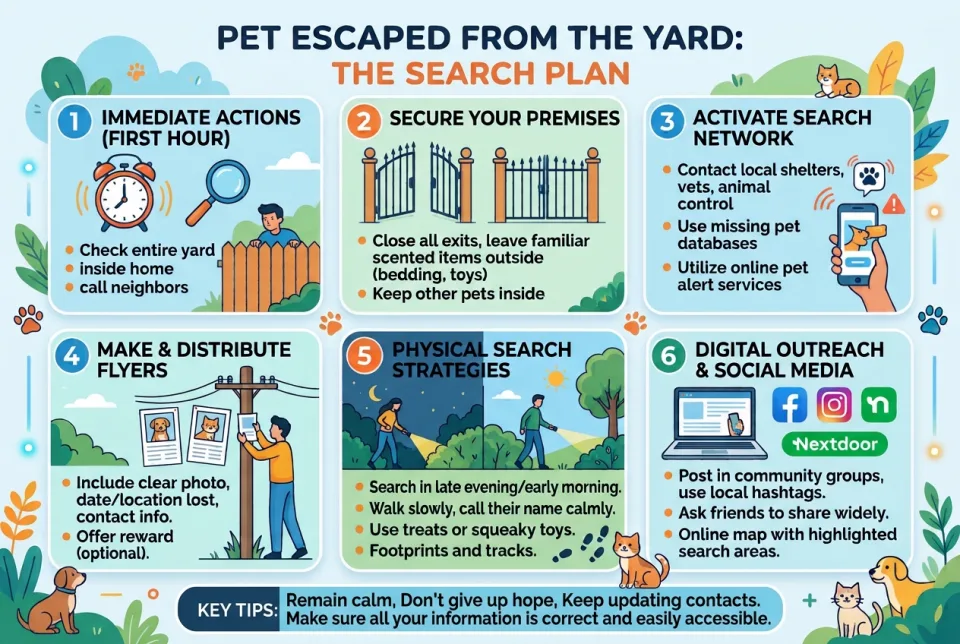
Quick answer
5 steps — read this before anything else
-
1
Search your home and yard thoroughly first, as pets often hide nearby.
-
2
Create a missing pet flyer with a clear photo, description, and your phone number.
-
3
Alert neighbors, local shelters, and animal control immediately.
-
4
Post on local social media groups and lost pet registries.
-
5
Set up a humane trap or feeding station near your home if your pet is shy.
Warning
Never approach a frightened or injured pet aggressively; they may bite out of fear. Call animal control for help.
When a pet escapes from the yard, every minute counts. But panic can lead to mistakes. Stay calm and follow a structured search plan to maximize the chances of a safe return.
What to do first
- Check your home and yard thoroughly. Pets often hide in garages, sheds, under decks, or in dense bushes. Call your pet's name calmly and listen for a response.
- Secure the escape route. Close gates and doors to prevent further escape, but do not block your pet's way back in.
- Gather a recent photo and description. Note distinguishing features, collar, tags, and microchip number if applicable.
- Create a missing pet flyer. Include a clear photo, your pet's name, breed, color, size, and your phone number. Do not include your address.
- Alert immediate neighbors. Knock on doors and ask them to check their yards, garages, and sheds.
Expand the search
- Contact local animal shelters and animal control. Provide them with your flyer and visit in person to check for your pet.
- Post on social media. Use local community groups, lost pet pages, and apps like Nextdoor. Share the flyer digitally.
- Put up flyers in high-traffic areas within a 1-2 mile radius: intersections, pet stores, vet clinics, and community bulletin boards.
- Search at dawn and dusk. These are quieter times when lost pets are more likely to move. Bring a flashlight and treats.
- Set up a feeding station and humane trap near your home if your pet is shy or skittish. Check the trap frequently and never leave it unattended for long periods.
What NOT to do
- Do not chase a frightened pet. This can push them further away. Instead, sit quietly and let them come to you.
- Do not shout or make loud noises. Use a calm, familiar voice.
- Do not assume your pet will come when called. Fear can override training.
- Do not wait to report your pet missing. Contact shelters and animal control immediately.
- Do not offer a reward in your flyer. It can attract scammers. Share reward details only with legitimate finders.
When to call for help
If your pet is injured, in danger, or trapped in a hard-to-reach place, call your local animal control or emergency services for assistance. Do not put yourself at risk.
What to monitor
- Phone and messages: Answer every call, even unknown numbers.
- Social media: Check for comments and messages with sightings.
- Shelter websites and visits: Check daily, as descriptions may vary.
- Your yard: Look for signs of return, like paw prints or disturbed food.
How to prevent future escapes
- Secure your yard: Check fences for gaps, secure gates with locks, and consider a GPS collar or microchip.
- Supervise outdoor time: Never leave your pet unattended in the yard.
- Use identification: Ensure your pet wears a collar with current tags and is microchipped with up-to-date contact info.
Stay persistent and hopeful. Many lost pets are found within a few days. Keep searching and updating your flyers. For more detailed guidance, consult local lost pet organizations.
Spotted an error? Report it — we correct factual mistakes promptly.
Read next
What Should You Do If You Find an Injured Wild Animal in Your Yard?
An injured wild animal in your yard needs calm, safe handling and professional help. Here is how to protect yourself, the animal, and get the right rescue involved.
Cat stuck in a tree: what to do?
A cat stuck in a tree is usually not an emergency, but you need to act calmly and safely. Learn when to wait, when to call for help, and what never to do.
Dog fight broke out: what to do?
Dog fights are dangerous for both animals and people. Learn safe, effective ways to break up a fight and prevent injuries.
Pet overheat in summer: what to do?
Pets can overheat quickly in hot weather. Learn the signs of heatstroke, immediate first aid steps, and when to call a vet.
Related handy tools
Checklists, decision guides, scenarios and quizzes for the same situation.