Eating in Morocco: avoiding traveler's diarrhea
Traveler's diarrhea is a common risk when eating in Morocco. Learn safe food and water practices to reduce your chances of getting sick.
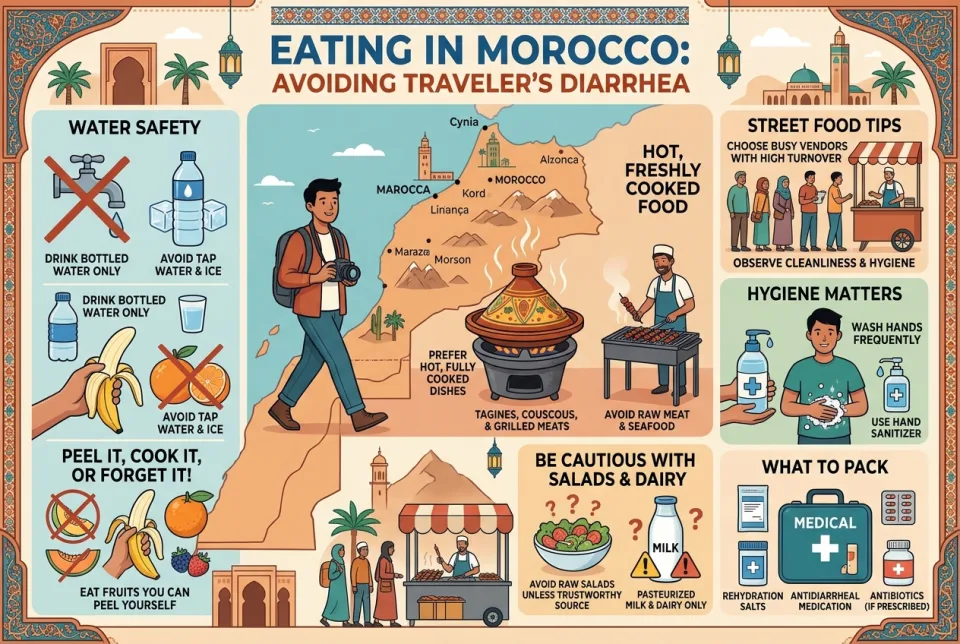
Quick answer
5 steps — read this before anything else
-
1
Drink only bottled or purified water, and avoid ice unless it is made from safe water.
-
2
Eat food that is freshly cooked and served hot.
-
3
Avoid raw or undercooked meat, fish, and eggs.
-
4
Peel fruits and vegetables yourself, or eat them cooked.
-
5
Wash your hands frequently with soap and safe water, or use hand sanitizer.
Warning
Seek medical help if you have signs of severe dehydration, bloody diarrhea, or high fever.
Important — please read
This content is general educational and informational only, and is not a substitute for professional medical advice, diagnosis or treatment. Always seek the advice of a qualified health provider with any questions you may have about a medical condition. Never disregard or delay seeking professional medical care because of something you read here. In an emergency or life-threatening situation, call your local emergency services (police, fire or ambulance) immediately.
Traveler's diarrhea is the most common illness affecting visitors to Morocco. It is usually caused by consuming contaminated food or water. By following a few practical precautions, you can greatly reduce your risk and enjoy your trip.
What is traveler's diarrhea?
Traveler's diarrhea is defined as three or more loose stools in a 24-hour period, often accompanied by abdominal cramps, nausea, and sometimes fever. It typically occurs within the first week of travel and usually resolves on its own within a few days. However, it can ruin a trip, so prevention is key.
Safe drinking water
Tap water in Morocco is not considered safe to drink for most travelers. Stick to bottled water, and make sure the seal is intact before drinking. Avoid ice in drinks unless you are sure it is made from bottled or boiled water. Use bottled water for brushing your teeth as well. Hot beverages like tea and coffee are generally safe because the water has been boiled.
Food safety
Choose food that is freshly cooked and served hot. Avoid dishes that have been sitting out at room temperature for long periods, such as buffets or street food that is not cooked to order. Raw or undercooked meat, fish, and eggs should be avoided. Fruit and vegetables are safe if you peel them yourself or if they are cooked. Salads and raw vegetables may have been washed in tap water, so it is safer to avoid them unless you are confident in their preparation.
Hand hygiene
Wash your hands with soap and water before eating, or use an alcohol-based hand sanitizer if water is not available. This simple step can significantly reduce the risk of ingesting pathogens.
What to do if you get diarrhea
If you develop diarrhea, the most important thing is to stay hydrated. Drink plenty of safe fluids, such as bottled water, oral rehydration solutions, or clear broths. Avoid dairy, caffeine, and alcohol, which can worsen dehydration. Over-the-counter medications like loperamide can reduce symptoms but should not be used if you have a fever or bloody stools. Always consult a healthcare professional before taking any medication.
When to seek medical help
Seek medical attention if you have severe symptoms, such as persistent vomiting, high fever, bloody stools, or signs of dehydration (dry mouth, little urination, dizziness). These could indicate a more serious infection. Do not hesitate to contact a doctor or visit a clinic if you are unsure.
Prevention summary
- Drink bottled or boiled water only.
- Eat hot, freshly cooked food.
- Peel your own fruit and vegetables.
- Wash hands frequently.
- Avoid ice and raw foods.
By following these guidelines, you can minimize the risk of traveler's diarrhea and focus on enjoying the rich cuisine and culture of Morocco. Remember, this is general information and not a substitute for professional medical advice. If you become ill, consult a healthcare provider.
Sources & references
Spotted an error? Report it — we correct factual mistakes promptly.
Read next
What to Do in Case of a Delayed Flight
Learn what immediate steps to take when your flight is delayed, including how to check your rights, secure food or lodging vouchers, and arrange rebooking.
What to Do in Case of a Canceled Flight
Learn the immediate steps to take when your flight is canceled, from rebooking quickly to understanding your compensation and accommodation rights.
What to Do If You Miss Your Flight
Missing a flight is stressful, but taking quick action increases your chances of getting rebooked promptly while protecting the rest of your travel itinerary.
Vacation rental turned out to be a scam: what to do?
If you arrive at a vacation rental that does not exist or was misrepresented, act quickly to protect your money and find safe lodging. Here is a step-by-step guide to reporting the scam and recovering what you can.
Related handy tools
Checklists, decision guides, scenarios and quizzes for the same situation.