Building an emergency backpack for school kids
A practical, age-appropriate emergency kit for school children that covers basic needs, comfort, and communication without unnecessary bulk.
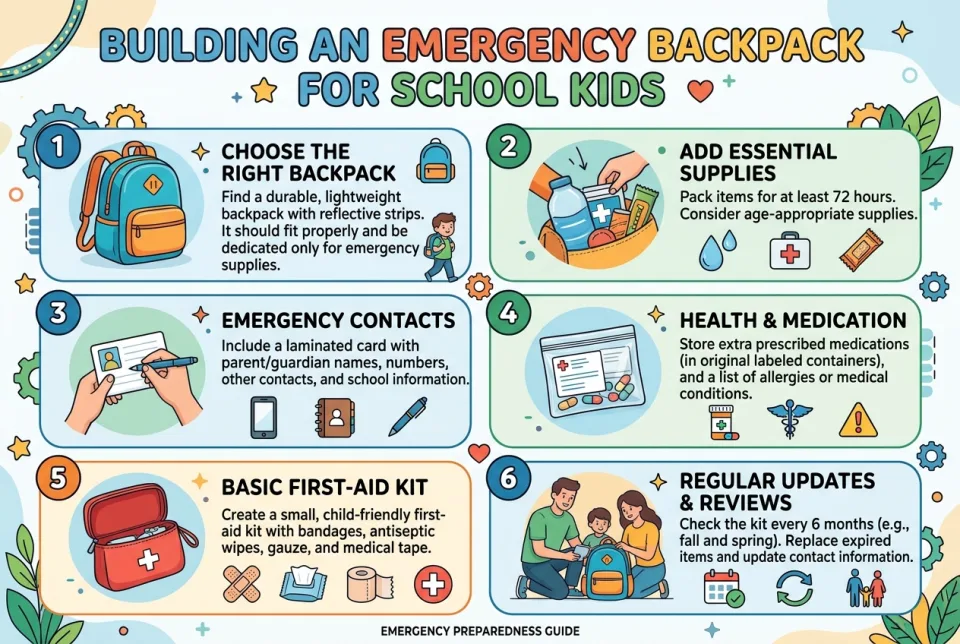
Quick answer
5 steps — read this before anything else
-
1
Choose a small, comfortable backpack your child can carry.
-
2
Include water, non-perishable snacks, a flashlight, and a whistle.
-
3
Add a comfort item, a family contact card, and any necessary medications (with school approval).
-
4
Pack a change of clothes and weather-appropriate gear.
-
5
Check and refresh the kit every school year and at daylight saving time.
Warning
Do not include any items that are banned by your child's school, such as knives, lighters, or matches. Always check with the school before packing medications.
An emergency backpack for a school-aged child should be light enough to carry all day, filled with items that meet basic needs for 24 hours, and simple enough that a child can use it without adult help. The goal is not to prepare for every disaster, but to provide comfort, safety, and a way to communicate if normal routines are disrupted.
What to include
Focus on essentials that are age-appropriate and easy to use. Avoid heavy or complicated gear.
- Water: One or two small, sealed bottles (about 8-16 oz each). Check expiration dates.
- Food: Non-perishable snacks such as granola bars, crackers, or dried fruit. Choose items your child likes and can open independently.
- Light: A small flashlight or headlamp with extra batteries. Avoid candles or matches.
- Communication: A whistle on a lanyard (to signal for help) and a laminated card with family phone numbers and an out-of-area contact.
- Comfort: A small stuffed animal, a family photo, or a favorite small book. These reduce anxiety.
- Clothing: A full change of clothes (underwear, socks, shirt, pants) in a sealed plastic bag, plus a light rain poncho or jacket depending on climate.
- Personal care: Travel-size hand sanitizer, tissues, and a small pack of wet wipes. For older kids, add menstrual supplies if appropriate.
- Medications: Only if your child has a prescribed emergency medication (such as an inhaler or epinephrine auto-injector). Provide a copy to the school nurse and follow school policy. Do not pack over-the-counter medicines without checking school rules.
- Identification: A card with the child's name, school, and emergency contacts, kept inside the bag.
What to leave out
Keep the bag light and safe. Do not include knives, lighters, matches, aerosol sprays, or any item banned by the school. Avoid heavy tools, large first-aid kits, or multiple days of supplies; those belong in a home kit, not a child's backpack.
How to pack it
- Use a small backpack with padded straps and a waist belt if possible. It should weigh no more than about 10-15% of the child's body weight.
- Place heavier items (water, flashlight) close to the back, and lighter items (comfort item, clothes) toward the front.
- Use resealable bags to keep items dry and organized. Label each bag with its contents.
- Show your child what is inside and how to use each item. Practice opening the bag and finding the whistle and contact card.
- Store the bag in a designated spot at home or in the classroom, as allowed by the school.
Maintenance and review
Check the bag at the start of each school year and again at daylight saving time. Replace expired water and food, update contact information, and swap out clothes for the current season. Involve your child in the check so they stay familiar with the contents.
School policies and communication
Ask your school about their emergency plans and whether personal kits are allowed in classrooms. Some schools prefer that all supplies be stored centrally. If your child has a medical condition, work with the school nurse to ensure medications and action plans are on file. Teach your child to follow school staff instructions during an emergency and to use the whistle only if they are lost or need help.
Remember that an emergency backpack is one part of a broader family emergency plan. Practice your family's meeting places and communication methods, and keep a larger kit at home and in the car.
Sources & references
Spotted an error? Report it — we correct factual mistakes promptly.
Read next
What Should You Do If Your Child Is Refused Entry to School Because of Missing Documents?
If your child is turned away from school because of missing paperwork, stay calm and act quickly. This guide explains how to resolve the issue and get your child enrolled.
What Should You Do to Prepare an Emergency Plan for an Older Relative?
A practical guide to creating a clear, actionable emergency plan for an older adult, covering communication, medical needs, evacuation, and local support.
What age can kids stay home alone legally?
There is no single legal age for leaving a child home alone in most places. The law focuses on whether the child is mature enough and the situation is safe.
Child having an asthma attack at school: what to do?
Learn how to recognize an asthma attack in a child at school and respond quickly with the right steps, including when to call emergency services.
Related handy tools
Checklists, decision guides, scenarios and quizzes for the same situation.