Building a family first-aid kit: what to do?
A well-stocked first-aid kit helps you respond quickly to common injuries and emergencies. Learn what to include, how to organize it, and how to keep it ready for use.
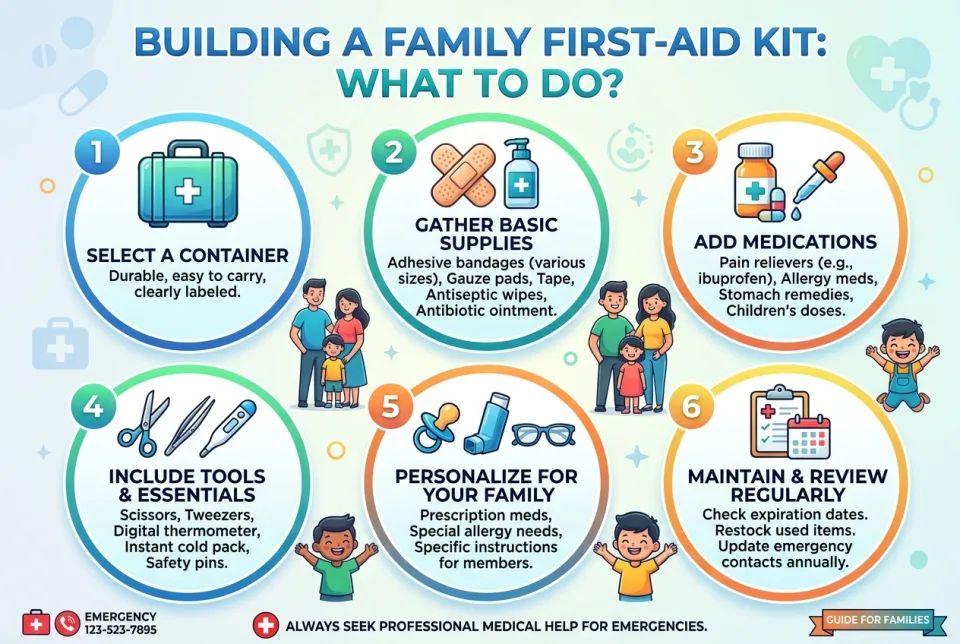
Quick answer
5 steps — read this before anything else
-
1
Choose a sturdy, waterproof container and store it in a cool, dry place that is easy to reach but out of reach of young children.
-
2
Stock basic supplies: adhesive bandages, sterile gauze, medical tape, antiseptic wipes, gloves, scissors, tweezers, and a thermometer.
-
3
Include a first-aid manual, emergency contact numbers, and any personal medications or supplies recommended by your doctor.
-
4
Check the kit every few months and replace expired or used items.
-
5
Consider keeping a smaller kit in your car and a travel kit for trips.
Warning
A first-aid kit is not a substitute for professional medical care. For serious injuries or emergencies, call your local emergency services immediately.
Important — please read
This content is general educational and informational only, and is not a substitute for professional medical advice, diagnosis or treatment. Always seek the advice of a qualified health provider with any questions you may have about a medical condition. Never disregard or delay seeking professional medical care because of something you read here. In an emergency or life-threatening situation, call your local emergency services (police, fire or ambulance) immediately.
A family first-aid kit is an essential part of home safety. It helps you treat minor injuries quickly and can be a lifeline in an emergency. Building one is straightforward: gather the right supplies, store them properly, and check them regularly. This guide explains what to include and how to maintain your kit.
What to Include in a Family First-Aid Kit
Start with the basics recommended by organizations like the American Red Cross. Your kit should contain:
- Adhesive bandages in various sizes, including butterfly closures.
- Sterile gauze pads and rolled gauze for covering wounds.
- Medical tape to secure dressings.
- Antiseptic wipes or solution for cleaning minor cuts and scrapes.
- Disposable gloves (latex-free) to protect you and the injured person.
- Scissors and tweezers for cutting tape or removing splinters.
- Digital thermometer to check for fever.
- Instant cold pack for sprains and bruises.
- CPR face shield or barrier device for rescue breathing.
- First-aid manual with clear instructions.
- Emergency contact list including local emergency numbers, poison control, and your family doctor.
- Personal medications such as prescription drugs, epinephrine auto-injectors, or inhalers, if prescribed by a doctor.
You can also add items like a flashlight, spare batteries, a small notebook and pen, and a space blanket. Avoid including items you don't know how to use.
How to Organize and Store Your Kit
Use a sturdy, waterproof container with a handle, such as a plastic toolbox or a dedicated bag. Store it in a cool, dry place that is easy for adults to reach but out of reach of young children. Consider keeping a smaller kit in your car and a travel kit for trips. Label the kit clearly and make sure all family members know where it is.
Maintaining Your Kit
Check your kit every three to six months. Replace any expired items, restock used supplies, and update emergency contact information. Write the expiration dates on the outside of the container as a reminder. After any use, replenish the kit immediately.
What NOT to Do
- Do not store your kit in a place that is too hot or humid, as this can damage supplies.
- Do not include items you are not trained to use, such as tourniquets, unless you have been trained.
- Do not rely on a first-aid kit to treat serious injuries or illnesses; call emergency services.
- Do not keep medications that have expired or are no longer needed.
When to Call for Help
If someone is seriously injured or ill, call your local emergency services immediately. Signs of a serious emergency include severe bleeding, difficulty breathing, chest pain, loss of consciousness, or a severe allergic reaction. Do not attempt to treat these conditions with only a first-aid kit.
How to Prevent Injuries
While a first-aid kit is important, prevention is better. Keep your home safe by storing dangerous items out of reach, using safety gates, and teaching children about safety. Consider taking a first-aid and CPR course to be prepared.
Building a family first-aid kit is a simple step that can make a big difference. Start today by gathering the supplies and storing them properly. Remember to check your kit regularly and replace items as needed.
This is general information and not a substitute for professional medical advice. In an emergency, call your local emergency services.
Sources & references
Spotted an error? Report it — we correct factual mistakes promptly.
Read next
What Should You Do When You Discover a Family Secret?
Discovering a family secret can be overwhelming. Learn how to process the information, communicate with relatives, and decide what to do next.
What Should I Do When My Family's Expectations Feel Overly High?
When family expectations feel excessive, it can strain your mental health and relationships. Learn practical steps to set boundaries, communicate effectively, and protect your well-being.
What Should I Consider When Comparing an Only Child vs. a Large Family?
There is no single best family size. Research shows that family dynamics, resources, and parenting quality matter far more than the number of siblings.
Car seat safety check: what to do?
A proper car seat check takes minutes and prevents serious injury. Learn the key checks for installation, harness fit, and when to replace a seat.
Related handy tools
Checklists, decision guides, scenarios and quizzes for the same situation.