What to Do If You Accidentally Sent Money to the Wrong Person
You typed a phone number, hit send, and watched the confirmation appear. Then the sinking feeling: that wasn't the right person.
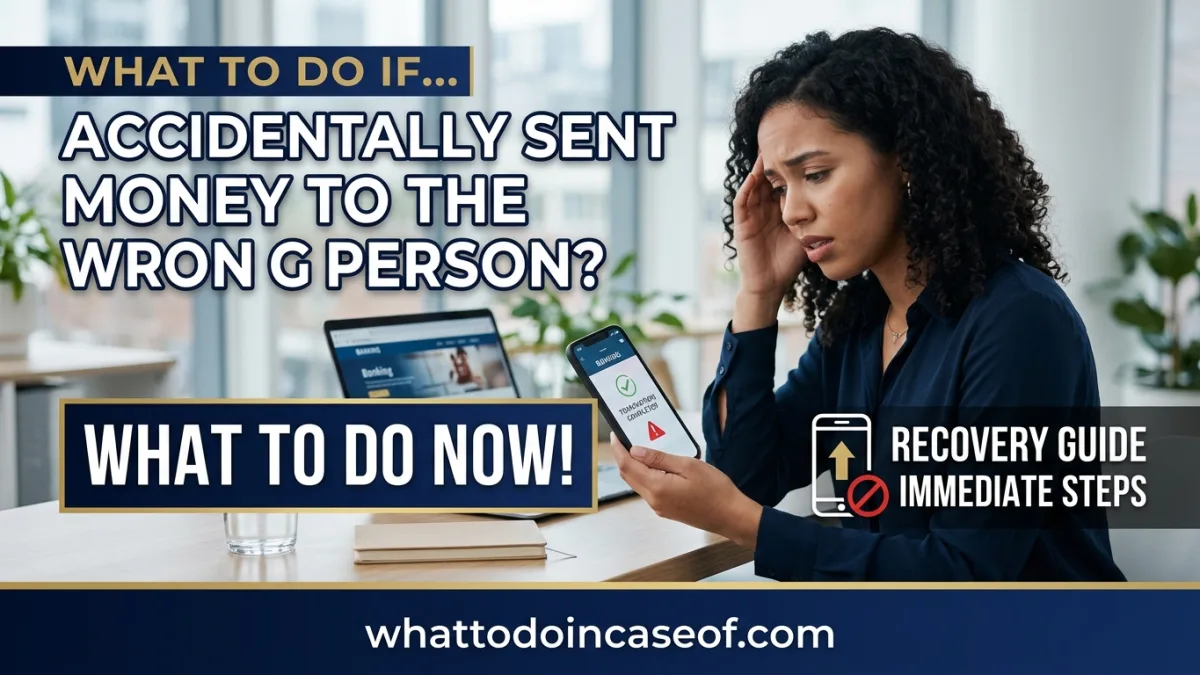
You typed a phone number, hit send, and watched the confirmation appear. Then the sinking feeling: that wasn't the right person.
Maybe the name looked close enough. Maybe you scanned the wrong QR code at a crowded checkout. Maybe you fat-fingered a digit in an account number you've typed a hundred times. Whatever happened, you're not careless — you're human, and this happens to thousands of people every day.
The good news? You have more options than you think, and how fast you act matters far more than how much you panic. This guide walks you through exactly what to do if you accidentally sent money to the wrong person, from the first five minutes to the follow-up calls that actually get results.
First, Take a Breath — Then Check One Thing
Before you call anyone, verify the transfer actually went to the wrong place. Sounds obvious, but a surprising number of "mistakes" turn out to be a delayed payment, a pending hold, or money that landed in an account you forgot you had.
Open your banking app or payment service and confirm three things:
- The recipient's name or handle as it appears on the receipt
- The exact amount and timestamp
- The status — pending, completed, or processing
If it's still pending, you may be able to cancel it outright. That's the single best-case scenario, and it only exists in that narrow window.
If it's completed, keep reading. The clock is now your friend or your enemy, depending on what you do next.
Why Does This Happen So Often?
Payment apps are built for speed. Speed is great until it isn't.
When you send money through a bank transfer, a peer-to-peer app, or a digital wallet, you're often confirming based on a name, a phone number, or a QR code — not a full verified identity. Two people can share the same name. A phone number can be recycled and reassigned. A QR code sticker at a market stall can be swapped out by someone with bad intentions.
Then there's autofill. Your phone remembers a recipient you paid once two years ago, and suddenly that's the top suggestion when you're rushing.
And here's the uncomfortable part: most instant transfers are designed to be irreversible. That's not a bug — it's a feature meant to protect everyone from fraud. It also means reversing a genuine mistake depends on cooperation, not on a magic undo button.
Your Real Options, Ranked by How Well They Work
There's no single fix here, because the right move depends on how you sent the money, how long ago, and whether the recipient is a stranger or someone you know. Let's go through each path honestly.
Option 1: Cancel It Before It Lands
What it is: Using the cancel or recall function while the transfer is still pending.
How it works: Many banks and apps let you cancel a payment that hasn't cleared yet. The window can be minutes or, in some cases, hours.
Advantages: Clean, instant, no awkward conversations. Disadvantages: The window is tiny and varies wildly by provider.
When it makes sense: Always check first. It costs nothing to look.
Option 2: Ask the Recipient Directly
What it is: Contacting the person who received the money and asking them to send it back.
How it works: If you sent it to someone you know, this is usually a quick message and an apology. If it's a stranger, you'll need their contact details — which you may not have.
Advantages: Fast and free when it works, and most people are decent. Disadvantages: A stranger has zero legal obligation to return it in many jurisdictions, and some will simply ignore you.
When it makes sense: Whenever you have a way to reach them. Be polite and specific — send the transaction reference and a screenshot.
Option 3: Report It to Your Bank or Payment Provider
What it is: Filing a formal dispute or "mistaken payment" claim.
How it works: Your provider contacts the receiving institution and requests the funds back. This is a request, not a command — the other side usually has to agree.
Advantages: It puts the request on official record and adds pressure. Disadvantages: It can take weeks, and success isn't guaranteed. Some providers charge a recall fee, often a modest flat amount.
When it makes sense: As soon as you know the money is gone and the recipient won't cooperate.
Option 4: File a Police Report
What it is: Reporting the loss to local law enforcement.
How it works: If the recipient refuses to return money they know isn't theirs, that can cross into theft or fraud in some places. A police report also strengthens your case with your bank.
Advantages: Creates legal leverage and a paper trail. Disadvantages: Police may treat a genuine mistake as a civil matter, and recovery isn't guaranteed.
When it makes sense: When there's clear evidence of refusal or you suspect a scam. Know your local emergency contact details in advance — our emergency numbers by country page is a handy place to bookmark.
Option 5: Small Claims Court
What it is: Suing the recipient for the amount you lost.
How it works: For relatively small sums, small claims court is designed to be navigable without a lawyer.
Advantages: A real legal remedy when other routes fail. Disadvantages: Time, filing fees, and the hassle of enforcing a judgment against someone who won't pay.
When it makes sense: Larger amounts, a clearly identified recipient, and documented refusal.
So Which One Should You Actually Do?
There's no universal answer, and anyone who tells you otherwise is oversimplifying.
If the transfer is still pending, cancel it — that's not a choice, it's just the obvious move. If it's completed and you know the person, a polite message usually solves it within a day. If it's a stranger, your realistic path runs through your bank first, then a police report, then court if the amount justifies it.
The uncomfortable truth: for small amounts sent to an uncooperative stranger, you may not get the money back. That's worth accepting early so you don't burn weeks chasing a few dollars.
For the bigger picture on handling financial and personal mishaps calmly, our practical guides cover the general playbook that applies across all kinds of stressful situations.
Step-by-Step Action Plan
Follow this in order. Don't skip steps.
- Check the status. Pending? Cancel immediately through your app or bank.
- Screenshot everything. The receipt, timestamp, recipient details, and transaction ID. This is your evidence.
- Contact the recipient if you can. Be polite, brief, and specific. Ask for the return within a set timeframe.
- Call your bank or payment provider. Report it as a mistaken payment and ask about a recall. Get a reference number.
- Put the request in writing. Follow up by email or in-app message so there's a record.
- File a police report if the recipient refuses or you suspect fraud.
- Consider small claims court if the amount is significant and you have solid documentation.
- Review your settings. Turn off autofill for payments and add confirmation steps for large transfers.
Common Mistakes to Avoid
Waiting too long. The cancel window closes fast. Fix: act the moment you notice.
Sending more money to "verify" the recipient. This is a classic scam tactic. Fix: never send a second payment to fix the first.
Being aggressive with the recipient. Hostility kills cooperation. Fix: lead with a calm, clear request.
Skipping the paper trail. Verbal requests vanish. Fix: put everything in writing and keep screenshots.
Assuming the bank will just reverse it. They usually can't without the recipient's consent. Fix: treat the bank as one step, not the whole solution.
Not reporting it because you feel embarrassed. Embarrassment costs money. Fix: report it anyway — it's common and staff see it constantly.
A Note on Keeping Your Family Safe
Payment mistakes aren't just an adult problem. Kids with access to a parent's phone can send money accidentally, and scammers target young people through game credits and "free" offers. If you want to reduce the odds of this happening at home, the kids and family safety section has practical guidance worth reading before, not after.
If you ever need help from a professional — a financial advisor, a consumer rights advocate, or a legal aid service — our trusted local provider directory can point you toward legitimate options rather than random search results.
Expert Takeaway
The single most important lesson: speed beats everything else. A transfer you catch in the first few minutes is a non-event. The same transfer discovered a week later becomes a dispute, a report, and possibly a loss. Check your payment settings today, slow down before you hit send, and if you do slip up, act immediately instead of hoping it resolves itself.
FAQ
Can I get my money back if I sent it to the wrong person? Sometimes, but not always. If the transfer is still pending, you can often cancel it. If it's completed, recovery depends on the recipient's cooperation, your bank's recall process, and in some cases legal action.
Will my bank refund a mistaken transfer? Most banks will attempt a recall but won't guarantee a refund, because they can't force the recipient to return funds without consent or legal grounds. Policies vary — ask your provider directly.
What if the recipient refuses to return the money? You can file a police report and, depending on the amount and your jurisdiction, pursue the matter through small claims court. Document everything.
Is it a crime to keep money sent to you by mistake? In many jurisdictions, knowingly keeping funds that aren't yours can be treated as theft or unjust enrichment. Laws differ, so check local rules or consult a legal professional.
How long do I have to dispute a wrong transfer? Timeframes vary by bank and country, but shorter is always better. Report it the same day if possible.
This article is general information, not legal or financial advice. For your specific situation, consult your bank or a qualified professional.
Written by
Mohamed IDBRAHIM
I oversee the platform's development, content strategy, quality standards, and overall user experience. My goal is to make WhatToDoInCaseOf.com a reliable and practical resource where people can quickly find clear, useful information about what to do when facing everyday problems, unexpected situations, important decisions, and life challenges. I work to ensure that the platform remains easy to use, accessible, informative, and continuously improved with helpful guides, tools, calculators, and practical resources. Through a focus on clarity, usefulness, and innovation, I am committed to building a platform that helps people better understand their options and take the next step with confidence.
View profileSpotted an error? Report it — we correct mistakes promptly.
Keep reading
Related articles

10 Money Mistakes That Keep People Poor
Money feels personal, but the mistakes that keep people stuck are surprisingly predictable. Most aren’t about how much you earn. They’re about how you handle what passes through your hands.
Lost Access to Your Crypto Wallet? Don't Panic Here's Your Complete Rescue Guide (2026)
Locked out of your crypto wallet? This friendly, no-panic guide walks you through exactly what to do, from hunting down your seed phrase to spotting recovery scams, plus pro tips to never lose access again.

What to Do If You Lose Your Phone While Traveling
You reach for your pocket at the train station and it's not there. Or you set it down at a café in Lisbon to grab a napkin, turn around, and it's gone. Your stomach drops, and suddenly every plan you made, from the boarding pass to the hotel address to the number for your ride, lives inside a devic…
Related guides
Salary not paid on time: what to do?
Salary not paid on time: the right reflexes in a few simple steps.
Scam investment offer: what to do?
Scam investment offer: the right reflexes in a few simple steps.
Car breakdown on a Moroccan highway: what to do?
Car breakdown on a Moroccan highway: the right reflexes in a few simple steps.