Traveler's diarrhea abroad: managing it
Traveler's diarrhea is common but usually self-limiting. Learn how to stay hydrated, when to use over-the-counter remedies, and when to seek medical care abroad.
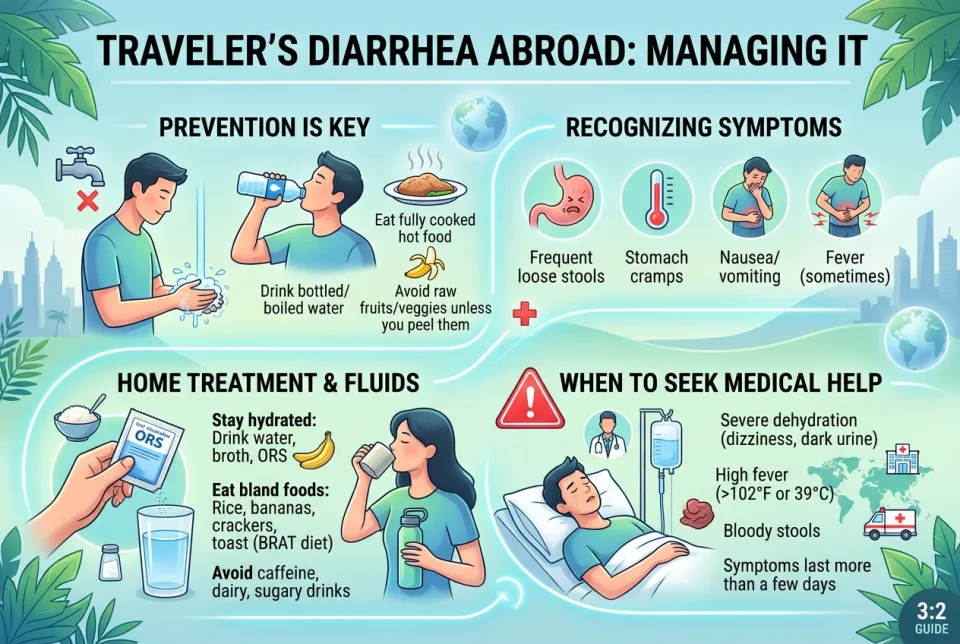
Quick answer
4 steps — read this before anything else
-
1
Drink safe fluids with electrolytes to prevent dehydration.
-
2
Take over-the-counter loperamide for symptom relief if you have no fever or bloody stool.
-
3
Avoid anti-motility drugs if you have high fever or bloody diarrhea.
-
4
Seek medical care if symptoms are severe, last more than 2-3 days, or you show signs of dehydration.
Warning
Do not use anti-diarrheal medication if you have bloody diarrhea or high fever; seek medical care immediately.
Important — please read
This content is general educational and informational only, and is not a substitute for professional medical advice, diagnosis or treatment. Always seek the advice of a qualified health provider with any questions you may have about a medical condition. Never disregard or delay seeking professional medical care because of something you read here. In an emergency or life-threatening situation, call your local emergency services (police, fire or ambulance) immediately.
Traveler's diarrhea is a common illness affecting people who travel to areas with different sanitation standards. It is usually caused by contaminated food or water and typically resolves on its own within a few days. However, proper management is important to prevent dehydration and complications.
What is happening
Traveler's diarrhea is defined as three or more loose stools in 24 hours, often accompanied by nausea, vomiting, abdominal cramps, or fever. It is most often caused by bacteria such as E. coli, but viruses and parasites can also be responsible. The main risk is dehydration, especially in hot climates.
Emergency warning
Call local emergency services immediately if you experience severe dehydration (dizziness, rapid heartbeat, confusion), high fever (above 102°F or 39°C), bloody diarrhea, or severe abdominal pain. These could be signs of a more serious infection or complication.
What to do first
- Stay hydrated. Drink plenty of safe fluids: bottled water, oral rehydration solutions (ORS), clear broths, or diluted juices. Avoid alcohol, caffeine, and sugary drinks, which can worsen dehydration.
- Use over-the-counter remedies if appropriate. Loperamide (Imodium) can reduce diarrhea frequency and is generally safe for adults with mild symptoms and no fever or blood in stool. Bismuth subsalicylate (Pepto-Bismol) may also help but can cause black tongue and stool. Follow package instructions and do not exceed recommended doses.
- Consider antibiotics only if prescribed. In some cases, a doctor may recommend a short course of antibiotics for moderate to severe symptoms. Do not self-medicate with leftover antibiotics.
- Eat bland foods as tolerated. Once you feel able, eat simple foods like crackers, rice, bananas, and toast. Avoid dairy, fatty, spicy, or high-fiber foods until symptoms improve.
What NOT to do
- Do not take anti-motility drugs if you have a high fever or bloody diarrhea. Slowing the gut can trap the infection and worsen it.
- Do not drink tap water or use ice made from tap water in areas where water safety is questionable. Stick to bottled or boiled water.
- Do not ignore signs of dehydration. Seek help early if you cannot keep fluids down.
When to seek professional care
Seek medical attention if diarrhea persists beyond 2-3 days, if you develop a high fever, bloody stools, severe vomiting, or signs of dehydration such as little urine, dry mouth, or dizziness. Also seek care if you have a weakened immune system or chronic conditions.
What to monitor
Keep track of your fluid intake and urine output. Monitor for worsening symptoms such as increasing fever, blood in stool, or severe abdominal pain. If you are traveling with children or elderly companions, watch them closely for dehydration.
How to prevent it
Prevention is key: drink only bottled or boiled water, avoid ice, eat food that is freshly cooked and served hot, peel fruits yourself, and wash hands frequently with soap or use hand sanitizer. These measures reduce the risk of contamination.
Most cases of traveler's diarrhea resolve within a few days with supportive care. Stay hydrated, rest, and seek medical help if symptoms are severe or persistent. Always prioritize safety and consult a healthcare professional when in doubt.
This is general information and not a substitute for professional medical advice. In an emergency, call local emergency services immediately.
Sources & references
Spotted an error? Report it — we correct factual mistakes promptly.
Read next
What to Do in Case of a Lost Passport
If you lose your passport while traveling, act quickly to search your belongings, report the loss to police, and contact your embassy for an emergency replacement.
What to Do in Case of a Delayed Flight
Learn what immediate steps to take when your flight is delayed, including how to check your rights, secure food or lodging vouchers, and arrange rebooking.
What to Do in Case of a Canceled Flight
Learn the immediate steps to take when your flight is canceled, from rebooking quickly to understanding your compensation and accommodation rights.
What to Do If You Miss Your Flight
Missing a flight is stressful, but taking quick action increases your chances of getting rebooked promptly while protecting the rest of your travel itinerary.
Related handy tools
Checklists, decision guides, scenarios and quizzes for the same situation.