Travel insurance claim: what to do?
If your trip is disrupted or you get hurt abroad, a travel insurance claim can recover your costs. Here is how to file one correctly and avoid common mistakes.
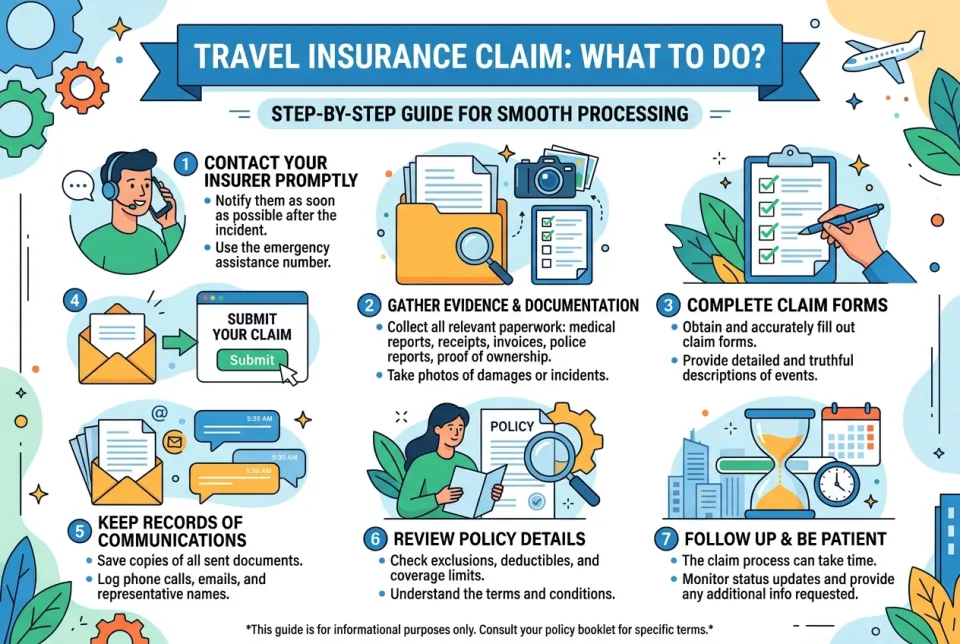
Quick answer
5 steps — read this before anything else
-
1
Contact your insurer's emergency assistance line as soon as the problem happens, before you spend money if possible.
-
2
Collect and keep every receipt, invoice, police report, and medical document.
-
3
Report the incident to local authorities if theft or loss is involved.
-
4
Submit your claim within the deadline stated in your policy, using the method your insurer requires.
-
5
Keep copies of everything you send and note the claim reference number.
Important — please read
This content is general educational and informational only, and is not a substitute for professional medical advice, diagnosis or treatment. Always seek the advice of a qualified health provider with any questions you may have about a medical condition. Never disregard or delay seeking professional medical care because of something you read here. In an emergency or life-threatening situation, call your local emergency services (police, fire or ambulance) immediately.
Travel insurance can cover medical treatment, cancellation, lost baggage, and other problems during a trip. But a claim is only paid if you follow the policy's rules. Acting quickly and keeping good records makes the difference between a smooth payout and a rejected claim.
What to do first
- Call your insurer's emergency line. Most policies require you to contact them before non-emergency medical treatment or before you arrange replacement travel. The number is usually on your policy card or in the confirmation email. If it is a medical emergency, call local emergency services first, then your insurer.
- Get the claim reference. Write down the reference number, the name of the person you spoke to, and what they told you to do. This prevents disputes later.
- Keep every document. Save receipts, invoices, medical reports, police reports, and any written confirmation from airlines or hotels. Take photos of damage or lost items if relevant.
- Report theft or loss to the police. For stolen baggage or valuables, a police report is almost always required. Ask for a copy in English or with a translation.
- Submit the claim within the deadline. Check your policy for the time limit, which may be as short as 14 or 30 days after the incident. Use the method your insurer specifies, such as an online form, email, or post.
What NOT to do
- Do not wait until you get home to report a medical emergency or a serious disruption. Late notification can void a claim.
- Do not pay for expensive replacements or upgrades without checking with your insurer first.
- Do not throw away receipts or boarding passes, even small ones.
- Do not accept a cash settlement from an airline or hotel without understanding how it affects your insurance claim.
- Do not exaggerate or invent details. False information can cancel your whole claim.
When to get help with your claim
If your claim is refused and you believe the decision is wrong, ask your insurer for the reason in writing. You can then follow the insurer's formal complaints procedure. If that fails, contact the financial regulator or ombudsman in your home country for guidance. Keep all correspondence.
What to monitor
Track the status of your claim online or by phone. Respond quickly to any request for more information. Keep a simple log of dates, names, and what was agreed. If your claim is urgent because you are still abroad and need money for treatment or return travel, tell the insurer clearly.
How to prevent problems
- Read the policy's exclusions and limits before you travel, especially for pre-existing conditions, adventure sports, and alcohol-related incidents.
- Save the emergency number in your phone and carry a printed copy.
- Buy insurance that covers the activities you plan to do.
- Check what your home insurance or credit card already covers so you do not pay twice.
Start by calling your insurer's emergency line now, even if you are not sure you will claim. Getting early instructions protects your right to reimbursement.
Spotted an error? Report it — we correct factual mistakes promptly.
Read next
What Should You Do If Your Travel Insurance Refuses to Cover a Medical Emergency?
If your travel insurer denies a medical emergency claim, you can still get care and challenge the decision. Here is a step-by-step guide to handling the denial and protecting your finances.
What to Do If Your Travel Budget Is Running Out: 9 Ways to Cut Costs Fast
When your travel funds are dwindling, quick decisions can stretch your money. Here are 9 practical ways to cut costs immediately without ruining your trip.
What Should You Do If You Have Travel Insurance Issues?
Travel insurance problems can derail your trip. Learn how to handle denied claims, emergency medical coverage, and disputes with your insurer.
What Should You Do If Your Travel Budget Runs Over?
Learn how to handle a travel budget overrun with practical steps to cut costs, track spending, and avoid debt while still enjoying your trip.
Related handy tools
Checklists, decision guides, scenarios and quizzes for the same situation.