Pet vomiting repeatedly: what to do?
Repeated vomiting in pets can be a sign of serious illness. Learn what to do first, what not to do, and when to call your veterinarian.
Quick answer
5 steps — read this before anything else
-
1
Assess for emergency signs: repeated vomiting, blood, lethargy, bloating, or inability to keep water down.
-
2
Call your veterinarian or an emergency animal hospital immediately if any emergency signs are present.
-
3
Withhold food for a short period only if advised by your vet; do not withhold water.
-
4
Do not give human medications or home remedies without veterinary guidance.
-
5
Monitor your pet closely and note the frequency and appearance of vomit.
Warning
Repeated vomiting can be a sign of a life-threatening emergency. Call your veterinarian or an emergency animal hospital immediately if your pet shows signs of bloat, blood in vomit, collapse, or inability to keep water down.
Important — please read
This content is general educational and informational only, and is not a substitute for professional medical advice, diagnosis or treatment. Always seek the advice of a qualified health provider with any questions you may have about a medical condition. Never disregard or delay seeking professional medical care because of something you read here. In an emergency or life-threatening situation, call your local emergency services (police, fire or ambulance) immediately.
Vomiting is a common reflex that helps pets expel harmful substances, but repeated vomiting can quickly lead to dehydration and indicate a serious underlying condition. This guide covers what to do when your pet vomits repeatedly, what to avoid, and when to seek professional help.
What is happening?
Repeated vomiting means your pet is throwing up more than once in a short period, or persistently over hours. It can be caused by dietary indiscretion (eating garbage or rich food), infections, parasites, toxins, foreign body obstruction, pancreatitis, kidney disease, or other systemic illnesses. Unlike regurgitation (passive food return), vomiting involves active abdominal contractions and nausea.
Emergency warning
Call your veterinarian or an emergency animal hospital immediately if your pet shows any of these signs:
- Vomiting more than 3-4 times in a day, or continuous retching
- Blood in the vomit (red or dark brown, coffee-ground appearance)
- Vomiting accompanied by a distended, painful abdomen (possible bloat, a life-threatening emergency)
- Lethargy, weakness, collapse, or pale gums
- Inability to keep water down for more than 12 hours
- Suspected ingestion of a toxin, foreign object, or human medication
- Vomiting in a very young, very old, pregnant, or chronically ill pet
What to do first
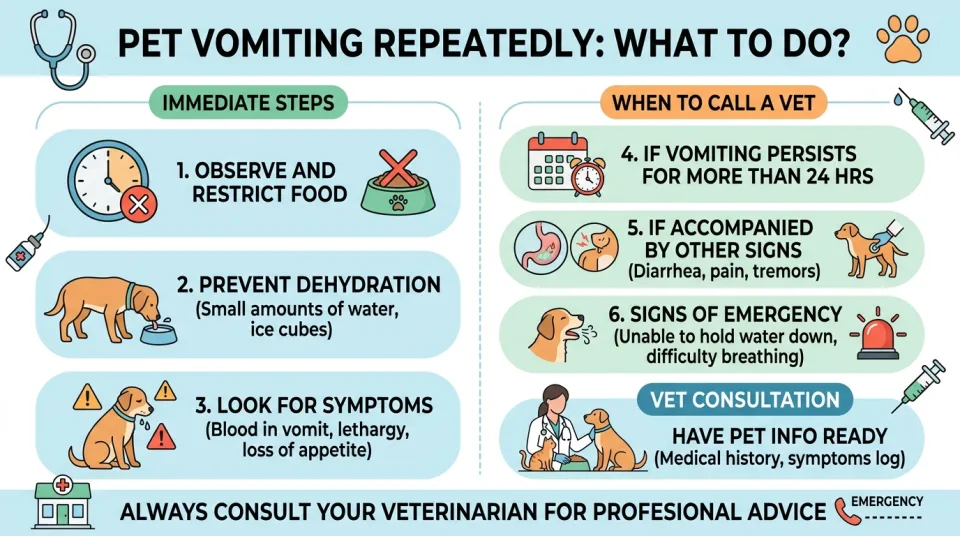
- Stay calm and assess. Check your pet's gums (should be pink, not pale or blue), heart rate, and responsiveness. Note the frequency and appearance of vomit (food, bile, blood, foam).
- Call your vet. Describe the situation and follow their advice. They may ask you to bring your pet in immediately or may give home-care instructions.
- Withhold food temporarily only if advised. A short fast (e.g., 6-12 hours for adult dogs, less for small pets) may be recommended, but never withhold water unless your vet instructs otherwise.
- Offer small amounts of water. Encourage drinking to prevent dehydration, but do not force water.
- Prevent access to garbage, toxins, and foreign objects. Keep your pet confined and calm.
What NOT to do
- Do not give human anti-nausea or pain medications (e.g., ibuprofen, acetaminophen) without veterinary guidance; many are toxic to pets.
- Do not induce vomiting unless specifically instructed by a veterinarian; it can be dangerous if a caustic substance or sharp object was ingested.
- Do not force food or water.
- Do not delay seeking help if emergency signs are present.
When to call for help
Call your veterinarian if vomiting persists beyond 24 hours, if your pet cannot keep water down, if there is blood, or if your pet seems painful or depressed. For any emergency sign listed above, call immediately.
What to monitor
- Frequency and appearance of vomit
- Water intake and urination
- Gum color and capillary refill time (press gum, color should return within 2 seconds)
- Energy level and appetite
- Signs of pain (whining, pacing, hunched posture)
How to prevent it
- Keep garbage, toxins, and small objects out of reach.
- Feed a consistent, high-quality diet and avoid sudden food changes.
- Use parasite prevention as recommended by your vet.
- Schedule regular veterinary check-ups.
Repeated vomiting should never be ignored. Contact your veterinarian promptly for guidance tailored to your pet. This is general information and not a substitute for professional veterinary advice; in an emergency, call your veterinarian or an emergency animal hospital immediately.
Sources & references
Spotted an error? Report it — we correct factual mistakes promptly.
Read next
What Do I Do If I Can't Find Pet-Friendly Housing?
Finding a rental that welcomes pets can be tough, but a clear plan, solid references, and a pet resume can open more doors than you expect.
What Should I Do If an Adoption Is Not Going as Planned?
Adoption delays, changes of heart, or unexpected legal hurdles are common and rarely mean the process is over. Here is how to stabilise the situation, protect your rights, and decide your next step.
What to Do If You Are Stung by a Bee? Essential First Aid Steps
Learn the immediate first aid actions to take after a bee sting to reduce pain, minimize swelling, and recognize severe allergic reactions quickly.
What to Do If a Dog Bites You? Urgent Steps to Avoid Infection
Learn what to do if a dog bites you with this emergency response guide. Proper first aid and immediate medical care prevent dangerous infections and complications.
Related handy tools
Checklists, decision guides, scenarios and quizzes for the same situation.