Nightmares versus night terrors in children
Nightmares and night terrors are different sleep events with different responses. Learn how to tell them apart and what to do safely.
Quick answer
5 steps — read this before anything else
-
1
Stay calm and keep your child safe; do not try to wake a child during a night terror.
-
2
For nightmares, comfort your child and offer reassurance when they wake.
-
3
For night terrors, wait quietly and guide them back to bed if they get up.
-
4
Keep a consistent bedtime routine and ensure your child gets enough sleep.
-
5
Call a doctor if episodes are frequent, cause injury, or your child seems excessively sleepy during the day.
Warning
Never try to wake a child during a night terror or restrain them forcefully; keep the area safe and let the episode pass.
Important — please read
This content is general educational and informational only, and is not a substitute for professional medical advice, diagnosis or treatment. Always seek the advice of a qualified health provider with any questions you may have about a medical condition. Never disregard or delay seeking professional medical care because of something you read here. In an emergency or life-threatening situation, call your local emergency services (police, fire or ambulance) immediately.
Nightmares and night terrors can be frightening for parents, but they are different events with different causes and responses. Knowing which one your child is experiencing helps you react calmly and safely.
What is happening?
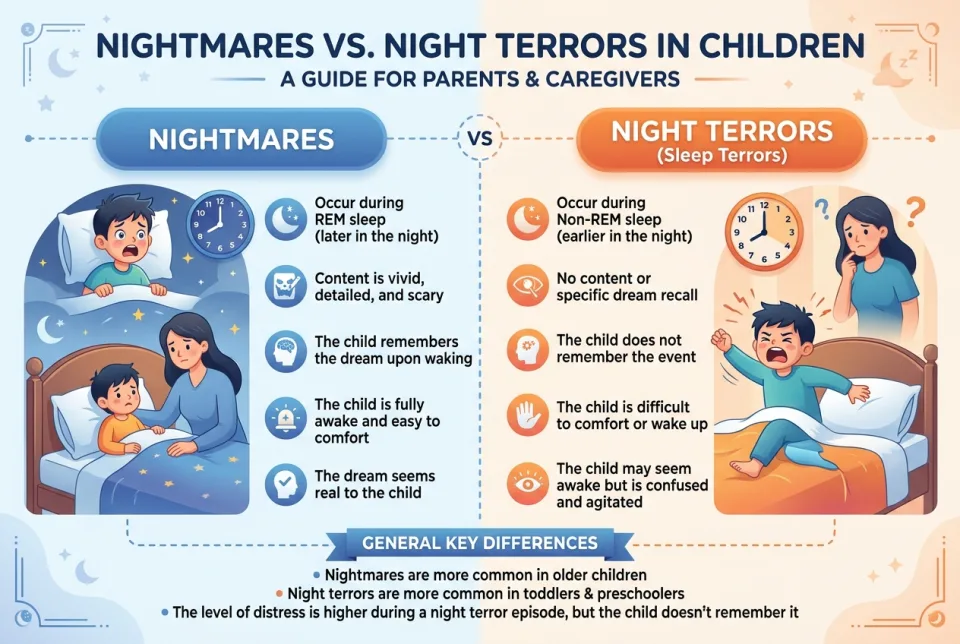
Nightmares are bad dreams that occur during REM sleep, usually in the second half of the night. A child wakes up fully, remembers the dream, and may be upset or afraid. Night terrors happen during deep non-REM sleep, often in the first few hours after falling asleep. During a night terror, a child may scream, thrash, or sit up with eyes open but is not truly awake. They usually do not remember the episode and settle back to sleep without fully waking.
Emergency warning
Call local emergency services immediately if your child is injured, has a seizure, stops breathing, or cannot be woken after a suspected night terror and seems unresponsive. Also seek urgent help if the episode is very different from usual or your child has a medical condition that affects breathing or heart rhythm.
What to do first
If it is a nightmare
- Go to your child and speak calmly. Turn on a dim light if it helps them feel safe.
- Listen to what they remember and reassure them that it was a dream and they are safe.
- Offer comfort, such as a hug or a favorite blanket, and stay until they are calm.
- Help them resettle by keeping the room quiet and dim. Avoid exciting activities or screens.
If it is a night terror
- Do not try to wake your child. Waking them can make the episode worse and confuse them.
- Keep the area safe: move sharp objects, block stairs, and stay close to prevent injury.
- Speak softly and calmly. Do not shake or shout at them.
- Wait for the episode to pass, usually a few minutes. Guide them back to bed if they get up.
- Do not discuss the episode in the morning unless your child brings it up; they likely do not remember it.
What NOT to do
- Do not try to wake a child during a night terror or hold them down forcefully.
- Do not punish or scold a child for either event; they are not doing it on purpose.
- Do not give any medication or herbal remedy without advice from a doctor.
- Do not ignore safety hazards in the bedroom if night terrors are frequent.
When to seek professional care
Contact your child's doctor if nightmares or night terrors happen often, cause injury, disrupt the whole family's sleep, or if your child seems very sleepy or unwell during the day. Also seek advice if your child has new bedwetting, snoring, or breathing pauses during sleep, as these can be linked to sleep problems.
How to prevent it
Keep a regular bedtime and calming routine. Ensure your child gets enough sleep for their age; overtiredness can trigger night terrors. Limit scary media before bed and create a calm sleep environment. For nightmares, gentle reassurance and a nightlight can help.
Most children outgrow these events. Stay calm, keep them safe, and note how often they happen so you can share accurate information with a doctor if needed.
This is general information and not a substitute for professional medical advice. In an emergency, call local emergency services.
Sources & references
Spotted an error? Report it — we correct factual mistakes promptly.
Read next
What Should I Do If I Have a Difficult Relationship With My Step-Parent?
Step-family relationships can be complicated. This guide offers practical steps to reduce conflict, protect your wellbeing, and decide when to seek outside help.
What Should I Do When My Family's Expectations Feel Overly High?
When family expectations feel excessive, it can strain your mental health and relationships. Learn practical steps to set boundaries, communicate effectively, and protect your well-being.
What Should I Consider When Comparing an Only Child vs. a Large Family?
There is no single best family size. Research shows that family dynamics, resources, and parenting quality matter far more than the number of siblings.
What to Do If Your Water Breaks Early
If your water breaks before 37 weeks or before labor begins, immediately contact your midwife or emergency services and follow essential safety steps.
Related handy tools
Checklists, decision guides, scenarios and quizzes for the same situation.