New job probation doubts: what to do?
Feeling unsure during a probation period is common. Learn how to assess the situation, gather feedback, and decide whether to stay, speak up, or plan an exit.
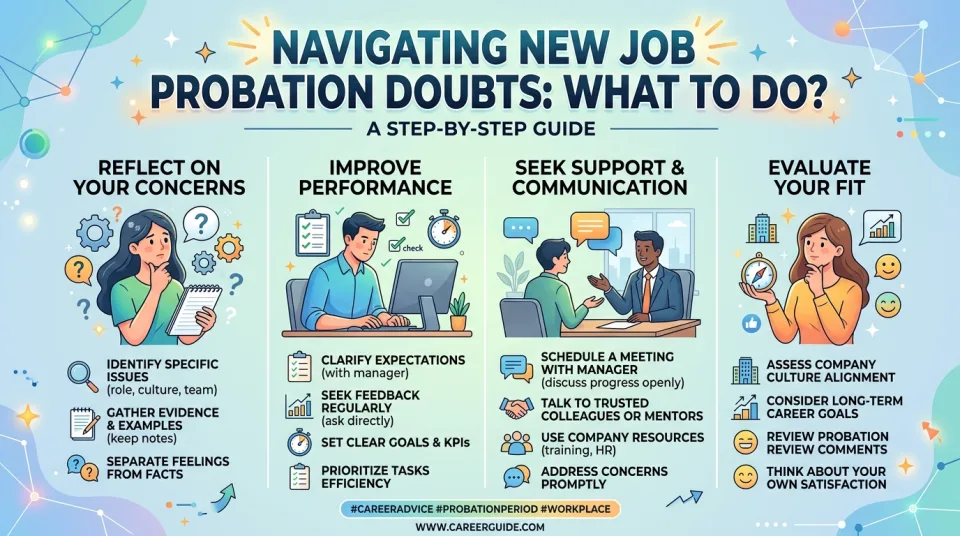
Quick answer
4 steps — read this before anything else
-
1
Write down the specific doubts and what evidence you have for each.
-
2
Ask your manager for a short feedback meeting and clarify expectations.
-
3
Check your contract for notice terms and probation conditions.
-
4
Decide on one next step: request support, adjust your approach, or prepare to leave.
Starting a new job and feeling uncertain during probation is normal. Probation is a trial period for both sides: the employer checks fit and performance, and you check whether the role, team and workload match what you were told. Doubts can come from unclear expectations, a difficult manager, workload shock, or simply the stress of being new. The goal is to turn vague worry into specific information, then act.
What is happening
Probation usually lasts a set period (often 3 to 6 months, but check your contract). During this time, feedback may be informal, and your manager may be watching for reliability, communication and learning speed more than perfect output. Doubts often peak in the first weeks because you lack context and compare yourself to experienced colleagues.
Step by step: what to do first
- Name the doubt. Write one sentence for each concern, for example: "I do not know what 'good' looks like in this role" or "My manager gives no feedback." Vague anxiety is hard to solve; specific problems can be addressed.
- Collect facts for one week. Note what was said in meetings, what tasks you completed, and where you got stuck. This separates a real mismatch from new-job nerves.
- Ask for a short feedback conversation. Request 15 to 20 minutes with your manager. Ask: "What is going well, what should I prioritise, and what would make you confident I am on track?" Listen and take notes.
- Clarify expectations in writing. After the meeting, send a brief summary of what you agreed to focus on. This protects you and shows professionalism.
- Use your support network. Ask a trusted colleague or mentor how the team normally works and what probation reviews look like.
- Check your contract. Confirm the probation length, notice period during probation, and any review process. This tells you what options you have if you decide to leave.
- Decide on one action. Either request specific support (training, clearer priorities, a weekly check-in), adjust your own approach, or start a quiet job search if the mismatch is fundamental.
What NOT to do
- Do not quit in anger on a bad day. Make decisions after you have facts and have slept on them.
- Do not assume silence means failure. Many managers give little feedback unless asked.
- Do not hide problems until the final review. Raising them early is usually better received.
- Do not complain about the role to colleagues before you understand the culture.
- Do not sign anything you do not understand, such as a performance improvement plan, without reading it carefully and asking questions.
When to seek professional advice
If you believe you are being treated unfairly because of a protected characteristic, if you are asked to do something unsafe or illegal, or if you are being pressured to sign documents you do not understand, get advice from a qualified employment lawyer or a relevant workplace authority in your country. Rules vary widely by location, so do not rely on general internet claims.
What to monitor
- Whether feedback becomes clearer after you ask for it.
- Whether your workload and support are changing for better or worse.
- Your own stress and sleep. Persistent anxiety that affects health is a signal to act.
How to prevent future doubt
In your next role, ask about probation reviews, success measures and feedback style during the interview. Request a brief check-in in your first month. Clear expectations early prevent most probation surprises.
Next action: book that feedback meeting this week. One honest conversation usually replaces weeks of guessing.
Spotted an error? Report it — we correct factual mistakes promptly.
Read next
What Should I Do If There Are No Advancement Opportunities at Work?
Feeling stuck in your career can be frustrating and demotivating. Learn practical steps to assess your situation, create growth opportunities, and decide when it's time to move on.
What Should I Do After a Failed Job Interview?
A failed job interview feels awful, but it is not the end of your career. Learn how to process the rejection, extract useful feedback, and turn the experience into a stronger next application.
What Should You Do If You Feel Job Insecure on a Fixed-Term or Freelance Contract?
Job insecurity from fixed-term contracts and freelancing is common, but you can reduce the financial and emotional impact with practical steps. Learn how to prepare, protect your income, and build stability.
What to Do If Your CV Gets Rejected
Having your CV or resume rejected can be discouraging, but it provides an opportunity to optimize your strategy. Learn how to analyze feedback and refine your job applications.
Related handy tools
Checklists, decision guides, scenarios and quizzes for the same situation.