Medical issue on a trip: what to do?
Falling ill or getting hurt while traveling can be stressful. Learn how to assess the situation, get help, and manage your health away from home.
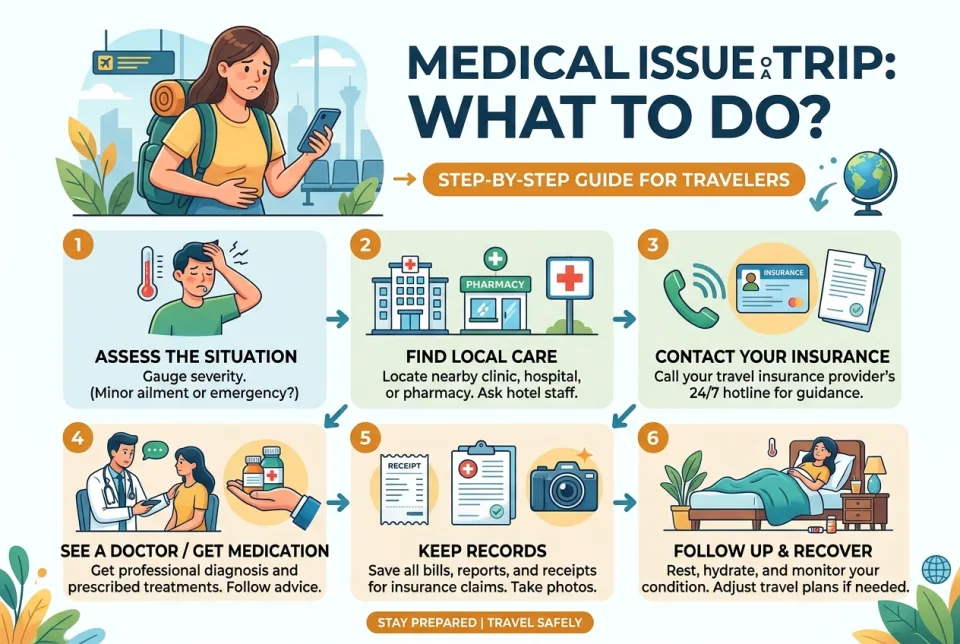
Quick answer
5 steps — read this before anything else
-
1
Assess the severity: if it is life-threatening, call local emergency services immediately.
-
2
Contact your travel insurance or embassy for guidance and local medical referrals.
-
3
Carry a copy of your medical information and medications in case you need care.
-
4
For minor issues, rest, hydrate, and monitor symptoms; seek care if they worsen.
-
5
Know the local emergency number and location of the nearest hospital.
Warning
If you have chest pain, difficulty breathing, severe bleeding, or signs of a stroke, call emergency services immediately. Do not wait.
Important — please read
This content is general educational and informational only, and is not a substitute for professional medical advice, diagnosis or treatment. Always seek the advice of a qualified health provider with any questions you may have about a medical condition. Never disregard or delay seeking professional medical care because of something you read here. In an emergency or life-threatening situation, call your local emergency services (police, fire or ambulance) immediately.
Getting sick or injured while traveling can be frightening, especially in an unfamiliar place. The right steps depend on how serious the problem is. This guide covers general actions for common travel health issues, but it is not a substitute for professional medical advice.
Emergency warning
If you have chest pain, difficulty breathing, severe bleeding, a head injury, signs of a stroke (face drooping, arm weakness, speech difficulty), or any condition that feels life-threatening, call local emergency services immediately. Do not wait to see if it passes. If you are unsure of the number, ask hotel staff or a bystander, or use a mobile phone to dial the international emergency number if available.
What to do first
- Stay calm and assess the situation. Is the person conscious and breathing? Is there severe pain, bleeding, or confusion? If yes, treat as an emergency.
- Call for help if needed. For emergencies, call emergency services. For non-emergencies, contact your travel insurance provider or your embassy for advice on local clinics or English-speaking doctors.
- Get to a safe place. Move away from crowds, heat, or hazards. Sit or lie down if you feel faint.
- Inform someone. Tell a travel companion, hotel staff, or a trusted contact where you are and what is happening.
- Carry your medical information. Keep a list of medications, allergies, and chronic conditions in your wallet or phone in case you need medical care.
Common travel health issues
Diarrhea and dehydration
Traveler's diarrhea is common. Drink plenty of safe fluids and use oral rehydration solutions if available. Seek medical care if you have bloody stools, high fever, or signs of dehydration (dizziness, little urine).
Fever and infection
A fever may signal infection. Rest, hydrate, and monitor your temperature. Seek care if the fever is high, lasts more than a couple of days, or is accompanied by rash, confusion, or breathing problems.
Injury
For minor cuts and sprains, clean the wound and use basic first aid. For suspected fractures, head injuries, or deep wounds, go to a hospital.
What NOT to do
- Do not ignore severe symptoms hoping they will go away.
- Do not take prescription medications without a doctor's advice, especially if you are unsure of the local equivalent.
- Do not drink tap water in areas where it is unsafe; stick to bottled or boiled water.
- Do not delay seeking help because of language barriers; use translation apps or ask for an interpreter.
When to seek professional care
Seek medical attention if you have persistent vomiting, high fever, severe pain, difficulty breathing, confusion, or any symptom that is worsening. If you are unsure, call a health hotline or your insurance provider for guidance.
What to monitor
Keep track of your symptoms, temperature, fluid intake, and urine output. Note any new or worsening signs. If you are alone, check in with someone regularly.
How to prevent issues
- Get recommended vaccines and check travel advisories before you go.
- Carry a basic first-aid kit and any prescription medications in original packaging.
- Practice good hand hygiene and food safety.
- Know the local emergency number and your insurance details.
Remember: this is general information and not a substitute for professional medical advice. In an emergency, call local emergency services immediately.
Sources & references
Spotted an error? Report it — we correct factual mistakes promptly.
Frequently asked questions
Read next
What Should You Do If Your Travel Insurance Refuses to Cover a Medical Emergency?
If your travel insurer denies a medical emergency claim, you can still get care and challenge the decision. Here is a step-by-step guide to handling the denial and protecting your finances.
What Should You Do If You Forget to Pack Something on a Trip?
Forgot an essential item? Use these practical travel hacks to find a replacement quickly, from hotel front desks to local stores and digital workarounds.
What Should You Do If You Have Travel Insurance Issues?
Travel insurance problems can derail your trip. Learn how to handle denied claims, emergency medical coverage, and disputes with your insurer.
Lost debit card abroad: what to do?
Losing your debit card while traveling can be stressful. Follow these steps to secure your money, get a replacement, and access cash.
Related handy tools
Checklists, decision guides, scenarios and quizzes for the same situation.