Gig economy workers: knowing your protections
Gig workers often fall outside traditional employment protections. Learn what rights may apply, how to check your status, and where to get help.
Quick answer
5 steps — read this before anything else
-
1
Check your worker classification: employee, independent contractor, or a third category.
-
2
Review your contract and platform terms for pay, insurance, and dispute resolution clauses.
-
3
Keep records of hours, earnings, expenses, and communications.
-
4
Know the minimum wage, safety, and anti-discrimination laws in your area.
-
5
Contact a local labor authority or legal aid if you believe your rights are violated.
Important — please read
This content is general educational and informational only, and is not a substitute for professional medical advice, diagnosis or treatment. Always seek the advice of a qualified health provider with any questions you may have about a medical condition. Never disregard or delay seeking professional medical care because of something you read here. In an emergency or life-threatening situation, call your local emergency services (police, fire or ambulance) immediately.
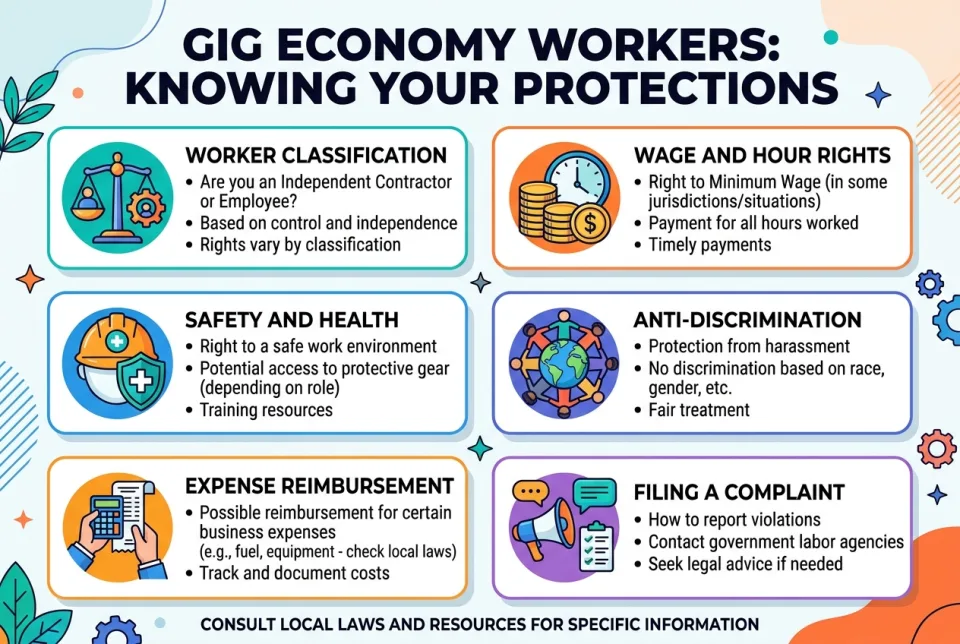
Gig economy workers, from ride-hail drivers to delivery couriers and freelance taskers, often face uncertainty about their legal protections. The rights you have depend heavily on how you are classified and where you work. This guide explains the key issues and practical steps to understand and assert your protections.
What is happening
Many gig platforms classify workers as independent contractors. This can mean you are not entitled to minimum wage, overtime, workers' compensation, unemployment insurance, or paid leave that employees receive. However, some countries and regions have introduced specific protections for gig workers, and courts have sometimes reclassified workers as employees. The landscape is changing, so it is important to check the rules that apply to you.
Step by step: know your status and rights
- Determine your classification. Review your contract and the platform's terms. Look for words like "independent contractor" or "self-employed." In some places, a third category such as "worker" or "dependent contractor" exists, offering some but not all employee rights.
- Check local laws. Search your government's labor department website for "gig worker rights" or "independent contractor protections." Key areas include minimum wage, working time, safety, and anti-discrimination.
- Keep detailed records. Track your hours, earnings, expenses, and any communication with the platform. This evidence is vital if you need to challenge your status or pay.
- Understand your insurance and tax obligations. As a contractor, you may need your own liability insurance, health coverage, and to pay taxes directly. Some platforms provide limited insurance during trips, but check the details.
- Know how to raise a concern. Use the platform's dispute process first, then contact a labor authority, ombudsman, or legal aid organization if unresolved.
What NOT to do
- Do not assume you have no rights. Many basic protections, such as health and safety, anti-discrimination, and freedom from retaliation, may still apply.
- Do not sign a contract without reading it. Look for clauses on pay, termination, and dispute resolution.
- Do not work without understanding your insurance coverage. If you are injured, you may not be covered by the platform.
- Do not ignore warning signs of misclassification, such as being required to follow strict schedules or wear uniforms while being called a contractor.
When to seek professional help
Consider contacting a lawyer, legal aid clinic, or labor union if you face unpaid wages, unsafe working conditions, discrimination, or retaliation for raising concerns. In some places, you can file a complaint with a labor inspectorate or employment tribunal. If you are unsure, a free initial consultation can clarify your options.
How to protect yourself
- Join a gig worker association or union for collective support and advice.
- Set aside money for taxes and insurance.
- Document everything: screenshots of app notifications, payment records, and messages.
- Stay informed about local legal changes affecting gig work.
Your protections as a gig worker are not always clear-cut, but you are not powerless. Start by confirming your classification and the laws in your area, then take action to safeguard your rights. For specific legal advice, consult a qualified professional.
Spotted an error? Report it — we correct factual mistakes promptly.
Read next
What Should You Do If You Feel Burned Out by Your Workload?
Feeling burned out by your workload is common, but it is not something you have to accept. Learn 10 practical ways to set better boundaries and protect your energy.
What to Do If Your CV Gets Rejected
Having your CV or resume rejected can be discouraging, but it provides an opportunity to optimize your strategy. Learn how to analyze feedback and refine your job applications.
What to Do If Nobody Responds to Your Job Applications
If your job applications are getting zero responses, audit your strategy to unblock your search. Learn how to optimize your resume, tailor your outreach, and target hidden opportunities.
Asking for a job reference correctly
A good reference request is specific, well-timed and easy for the other person to say yes to. Here is how to ask, prepare and follow up without damaging the relationship.
Related handy tools
Checklists, decision guides, scenarios and quizzes for the same situation.