Exhaust smoke colors: what do they mean?
The color of your vehicle's exhaust smoke can indicate engine problems. Learn what white, blue, and black smoke mean and when to seek professional help.
Quick answer
5 steps — read this before anything else
-
1
Notice the smoke color: white, blue, or black.
-
2
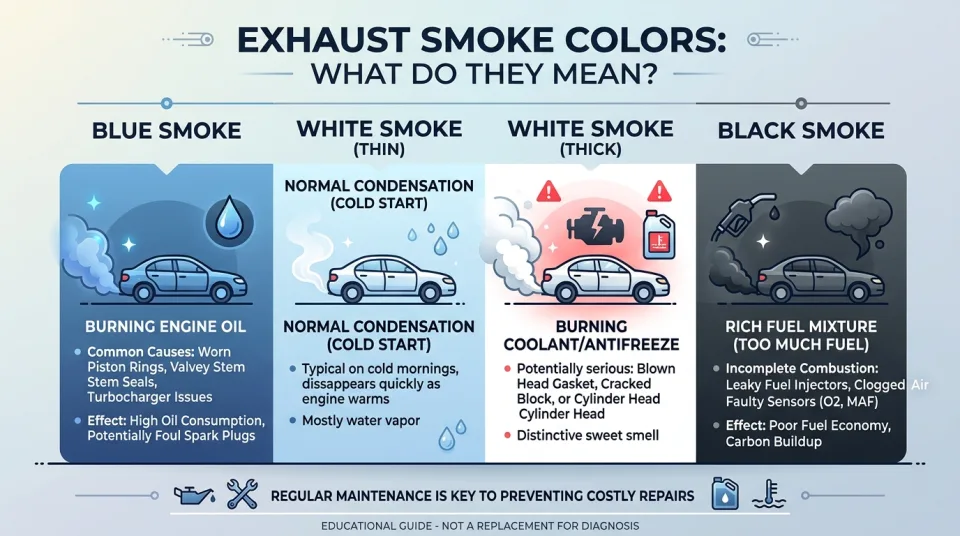
White smoke: may be normal condensation (thin, odorless) or a sign of coolant leak (thick, sweet smell).
-
3
Blue smoke: indicates burning oil, often due to worn piston rings or valve seals.
-
4
Black smoke: indicates rich fuel mixture, often from clogged air filter or faulty fuel injectors.
-
5
If smoke is persistent or accompanied by other symptoms, consult a mechanic.
Warning
If you see thick white smoke with a sweet smell or any smoke accompanied by overheating, stop driving and seek mechanical help immediately to prevent engine damage or fire risk.
Exhaust smoke color can be a useful diagnostic clue for your vehicle's health. While some smoke is normal, especially in cold weather, persistent or unusual colored smoke often signals an engine issue. This guide explains what white, blue, and black exhaust smoke typically indicate and what actions to take.
What is happening?
Exhaust smoke is produced when the engine burns fuel and air. The color of the smoke depends on what is burning alongside the fuel. White smoke is usually water vapor or coolant, blue smoke is oil, and black smoke is excess fuel. Recognizing the color and accompanying symptoms can help you decide whether to see a mechanic.
White smoke
Thin, odorless white smoke on a cold start is often just condensation and is normal. However, thick, persistent white smoke with a sweet smell can indicate a coolant leak into the combustion chamber, possibly from a blown head gasket or cracked cylinder head. This can lead to overheating and engine damage. If you notice thick white smoke, check your coolant level and monitor engine temperature. Avoid driving if the engine overheats.
Blue smoke
Blue or grayish-blue smoke typically means the engine is burning oil. This can be caused by worn piston rings, valve seals, or a faulty PCV valve. You might also notice increased oil consumption. Blue smoke is often more visible during acceleration or after idling. While it may not require immediate breakdown, it should be checked by a mechanic to prevent further damage.
Black smoke
Black smoke indicates an overly rich fuel mixture, meaning there is too much fuel and not enough air. Common causes include a clogged air filter, faulty fuel injectors, or a malfunctioning mass airflow sensor. Black smoke can also be accompanied by reduced fuel economy and sluggish performance. It is often a sign of incomplete combustion and should be addressed promptly to avoid damaging the catalytic converter.
What NOT to do
- Do not ignore persistent colored smoke, as it can lead to costly repairs.
- Do not continue driving if the engine is overheating or if smoke is accompanied by a burning smell.
- Do not attempt to diagnose or repair complex engine issues without proper tools and knowledge.
- Do not confuse normal condensation with a coolant leak; check for other symptoms like low coolant level or overheating.
When to seek professional help
If you observe any of the following, consult a qualified mechanic: thick white smoke with a sweet odor, blue smoke that persists, black smoke with performance issues, or any smoke accompanied by engine overheating, loss of power, or unusual noises. These symptoms may indicate serious internal engine problems that require expert diagnosis.
What to monitor
Keep an eye on your coolant and oil levels, engine temperature gauge, and fuel economy. Notice when the smoke occurs (e.g., on startup, acceleration, or idling) and any accompanying smells. This information can help your mechanic diagnose the issue more efficiently.
How to prevent it
Regular maintenance is key: change the oil and air filter as recommended, check coolant levels, and address small issues before they become major. Use the correct grade of oil and fuel for your vehicle. If you notice any smoke, have it inspected early to avoid more extensive damage.
In summary, exhaust smoke color is a valuable indicator of engine health. White smoke may be normal or a sign of coolant leak, blue smoke indicates burning oil, and black smoke points to a rich fuel mixture. When in doubt, consult a professional mechanic for a proper diagnosis.
This information is for general guidance only and is not a substitute for professional automotive advice. Always consult a qualified mechanic for specific concerns about your vehicle.
Spotted an error? Report it — we correct factual mistakes promptly.
Read next
What to Do If You Have a Car Accident
Knowing the exact steps to take immediately following a vehicle collision helps protect lives, prevents secondary hazards, and ensures proper documentation.
What to Do If Your Car Breaks Down in Canada
A breakdown in Canada requires immediate safety precautions, especially during severe winter weather or on high-speed highways. Learn how to stay safe, call for assistance, and handle extreme conditions.
Car breakdown on a Moroccan highway: what to do?
A breakdown on a Moroccan highway can be stressful, but following a few key steps will keep you safe and get you help quickly. Here is what to do.
Child car seat recall notice: what to do?
A recall means your child's car seat may not protect them in a crash. Here is how to check, register, and get a safe replacement or repair.
Related handy tools
Checklists, decision guides, scenarios and quizzes for the same situation.