Defrosting meat safely: the only three ways
Learn the three safe methods for defrosting meat: in the refrigerator, in cold water, or in the microwave. Avoid foodborne illness by following these steps.
Quick answer
4 steps — read this before anything else
-
1
Thaw meat in the refrigerator at 40°F (4°C) or below, planning ahead.
-
2
For faster thawing, submerge the meat in cold water, changing it every 30 minutes.
-
3
Use the microwave defrost setting only if you will cook the meat immediately.
-
4
Never thaw meat on the counter or in hot water.
Warning
Never thaw meat on the counter or in hot water. Bacteria multiply rapidly at room temperature and can cause severe food poisoning.
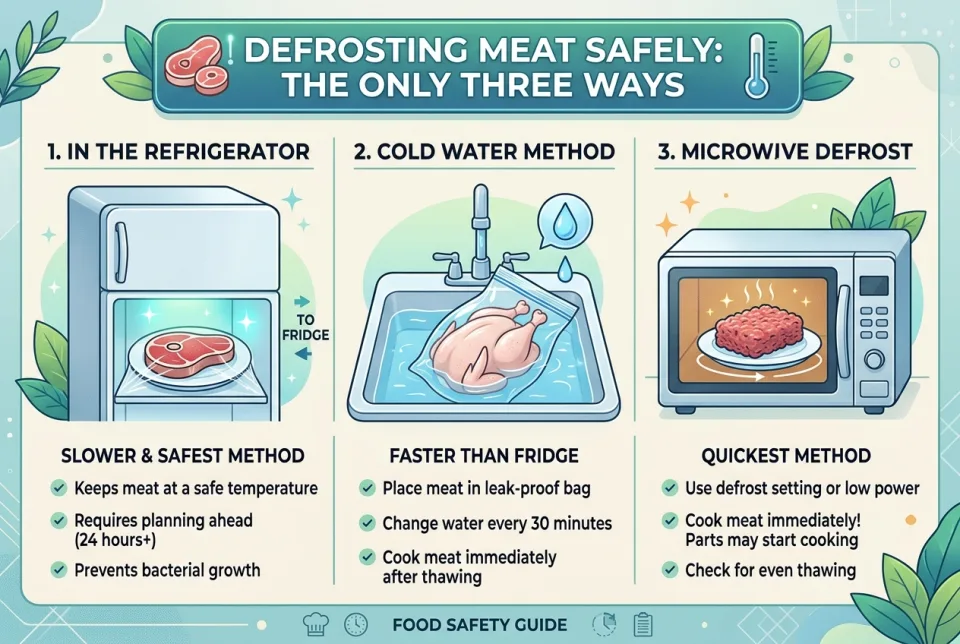
Defrosting meat safely is critical to prevent foodborne illness. Bacteria that cause food poisoning multiply rapidly at room temperature. The USDA recommends three safe methods: refrigerator thawing, cold water thawing, and microwave thawing. Each has specific steps and time considerations.
What is happening
When meat is frozen, bacteria are dormant. As it thaws, especially in the "danger zone" between 40°F and 140°F (4°C and 60°C), bacteria can multiply quickly. Safe thawing keeps meat out of this zone or ensures it is cooked promptly.
Emergency warning
If you suspect food poisoning (symptoms like nausea, vomiting, diarrhea, fever), seek medical attention, especially for young children, older adults, pregnant women, or those with weakened immune systems. Call local emergency services if symptoms are severe.
Step by step: the three safe ways
1. Refrigerator thawing (best for planning ahead)
- Place meat on a plate or in a container to catch drips.
- Store on the bottom shelf of the refrigerator to prevent cross-contamination.
- Allow 24 hours for every 5 pounds (2.3 kg) of meat. Large items may take longer.
- Use thawed meat within 1-2 days for ground meat, 3-5 days for steaks, chops, or roasts, and 1-2 days for poultry.
2. Cold water thawing (faster)
- Keep meat in its original packaging or a leak-proof plastic bag.
- Submerge in cold tap water (below 70°F/21°C).
- Change the water every 30 minutes to keep it cold.
- Estimate about 30 minutes per pound (0.45 kg).
- Cook immediately after thawing.
3. Microwave thawing (quickest)
- Remove all packaging, including foam trays and plastic wrap.
- Use the defrost setting according to your microwave's instructions.
- Cook immediately after thawing, as some areas may begin to cook.
What NOT to do
- Never thaw meat on the kitchen counter or in hot water.
- Do not refreeze meat thawed in cold water or microwave unless it has been cooked.
- Avoid thawing at room temperature, even in a sink.
When to call for help
If you or someone experiences severe food poisoning symptoms such as high fever, bloody diarrhea, dehydration, or prolonged vomiting, contact a healthcare provider. In an emergency, call local emergency services.
What to monitor
After thawing, check that the meat is still cold (below 40°F/4°C) and has no off odors or sliminess. Cook thoroughly to the recommended internal temperature.
How to prevent it
Plan ahead for refrigerator thawing, keep your refrigerator at or below 40°F (4°C), and always wash hands and surfaces after handling raw meat.
For more details, see the USDA Food Safety and Inspection Service guidelines.
This is general information and not a substitute for professional medical advice. In an emergency, call your local emergency services.
Sources & references
Spotted an error? Report it — we correct factual mistakes promptly.
Read next
What Do You Do If Your Homemade Food Tastes Bland? 9 Ways to Improve Flavor
Bland food is usually missing one of a few key elements: salt, acid, fat, or umami. Here are nine practical ways to fix the flavor of a dish without starting over.
What to Do If You Keep Ordering Takeout: 8 Ways to Make Home Cooking Easier
If takeout has become your default dinner, small changes to planning, shopping and kitchen setup can make home cooking the easier choice. Here are 8 practical ways to cook at home more often without relying on willpower alone.
What to Do If You Keep Ordering Takeout: 8 Ways to Make Home Cooking Easier
If takeout has become your default dinner, the problem is usually friction, not willpower. These eight practical changes make cooking at home faster, cheaper and easier than ordering.
Pressure cooker safety: the essential rules
Pressure cookers are safe when used correctly, but mistakes can cause serious burns or explosions. Follow these essential rules for safe pressure cooking.
Related handy tools
Checklists, decision guides, scenarios and quizzes for the same situation.