What to Do If You Have Too Many Things and No Storage - 10 Space-Saving Solutions
Your closet door won't close. There's a box in the hallway you've stepped over three times today. The garage has become a place where things go to be forgotten, not parked.
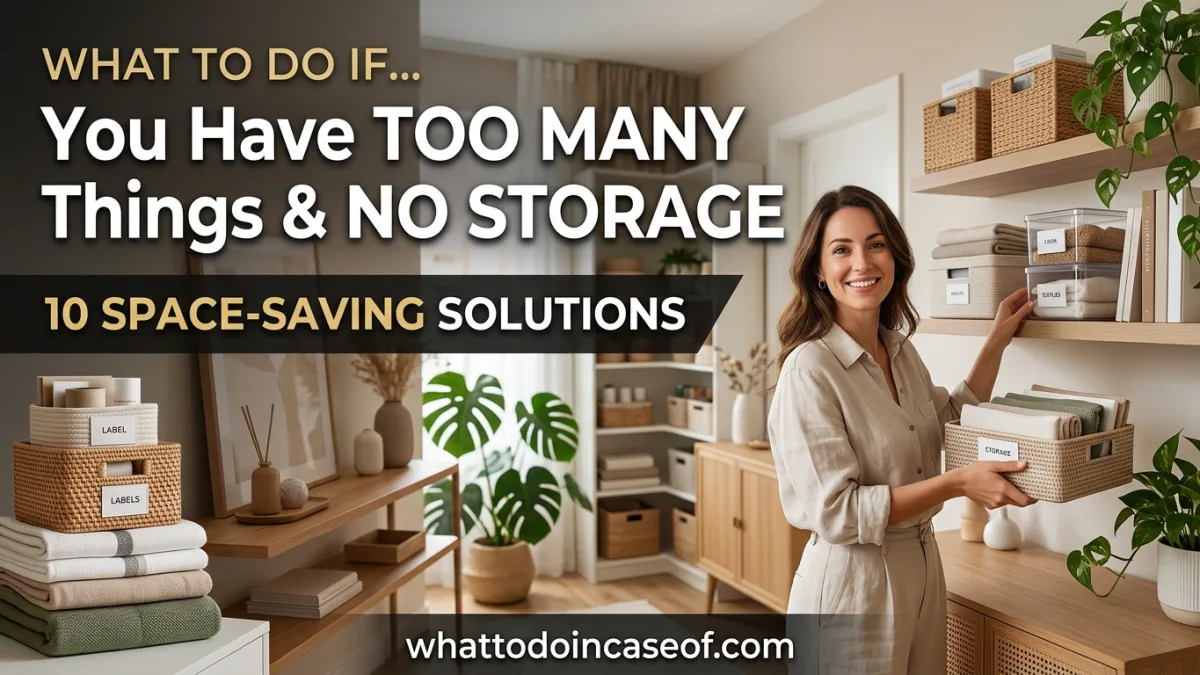
Your closet door won't close. There's a box in the hallway you've stepped over three times today. The garage has become a place where things go to be forgotten, not parked.
You don't necessarily need a bigger home. You need a system. This guide walks through ten realistic space-saving solutions, from the free ones you can start tonight to the bigger projects worth paying for, and it helps you figure out which one actually fits your situation.
The Problem
Too much stuff and nowhere to put it is one of the most common household frustrations, and it rarely fixes itself. Every new purchase, gift, or hand-me-down needs a home, and if nothing leaves the house, the pressure keeps building.
The real cost isn't just clutter. It's the ten minutes you spend hunting for scissors, the guilt over a garage you can't walk through, and the quiet argument about whose stuff is taking up the shelf.
The most common mistake people make is buying storage containers before they've decided what to keep. You end up with tidy-looking bins full of things you didn't want in the first place. Sort first. Buy bins later, and only for what survives the sort.
Why It Happens
Storage problems usually come from one of a few causes, and knowing yours changes the fix.
You never had a declared home for things. Papers, cables, and chargers pile up on the kitchen counter because no drawer was ever assigned to them. Random piles are what happens when items have no address.
Life changed faster than your storage did. A spare room became a home office. A hobby grew from one box to a corner of the garage. Your shelves never got the memo.
Getting rid of things feels risky. What if you need it later? What if it was expensive? That hesitation is normal, and it's the single biggest reason storage stays full.
You're storing other people's things. Grown kids' childhood toys, a relative's furniture, items you're "holding for now." This is storage you didn't choose and can't easily use.
The Solutions
Here are ten options, roughly ordered from cheapest and fastest to biggest and most expensive.
1. The 20-minute daily clear-out
Pick one small zone, a single drawer or shelf, and empty it completely. Keep, donate, or toss, one item at a time. This works because small wins build momentum and don't require a free weekend.
The downside is speed: at 20 minutes a day, a whole house takes weeks. It makes sense if you're overwhelmed and need to start somewhere.
Cost: free.
2. Vertical space you're not using
Look at your walls, not your floor. Over-door hooks, wall-mounted rails, stackable shelves, and hanging organizers can roughly double the usable space in a closet or pantry.
Advantages: cheap, reversible, renter-friendly. Disadvantages: poorly installed shelves can damage walls, and overloading hooks bends doors. This is the fastest win for most people.
Cost: usually modest, from a few dollars for hooks to a small project budget for a shelving system.
3. Beds and furniture that store things
Storage beds, ottomans, and benches with lift-up lids turn dead space under you into real storage. In a small flat, this can replace an entire dresser.
The catch: you need to actually use it, and heavy lift-up mechanisms aren't for everyone. It makes sense for seasonal items, spare linens, and things you rarely touch.
Cost: varies widely, from budget ottomans to custom bed frames.
4. A serious declutter with a rule
Adopt one rule and stick to it, such as "if I haven't used it in a year, it goes." The rule matters more than the method. It removes the daily negotiation with yourself.
Advantages: it frees space permanently and often makes storage you already own feel sufficient. Disadvantages: it takes emotional energy, especially with sentimental items. For those, take a photo and let the object go.
Cost: free.
5. Rethink what you're storing at all
Some categories of stuff take up space because buying felt easier than borrowing. Tools, party supplies, camping gear, and specialty kitchen appliances are classic examples. Libraries, tool-lending libraries, and neighbors can hold these for you.
Advantages: you free space and money. Disadvantages: you give up some convenience and need to plan ahead.
Cost: free, and sometimes it saves you money.
6. Sell, donate, or give it away
The fastest way to "create" storage is to remove things. Sell what has value, donate what doesn't, and give away what a friend genuinely wants.
Advantages: space plus possibly cash. Disadvantages: selling takes time and coordination, and low-value items aren't worth the effort. Donation is faster and often the better call.
Cost: free, though some donation centers have rules about what they accept, so check before you load the car.
7. Off-site storage, used honestly
A storage unit is a tool, not a solution. It works when you have a defined purpose and an end date, like storing furniture during a renovation or between moves.
Advantages: instant space, flexible sizes. Disadvantages: ongoing monthly cost, and it's easy to fill a unit with things you'll never retrieve. Prices vary widely by region and unit size, so get local quotes, and treat recurring fees as a real budget line.
If you go this route, label boxes by room and keep a list of what's inside. Otherwise you're just paying rent on forgotten objects.
8. Digitize what's already digital in spirit
Old photos, manuals, tax records, and DVDs can often be scanned or replaced. This doesn't clear a whole room, but it clears drawers and shelves you use daily.
Advantages: searchable, backed up, and immune to water damage if stored properly. Disadvantages: scanning takes time, and some originals (legal documents, sentimental items) should stay physical. Verify retention requirements for anything official before shredding.
Cost: free with a phone scanner app, or a modest fee for a scanning service.
9. Get professional help
Professional organizers and custom closet or garage designers exist for exactly this problem. They bring an outside eye and can often see solutions you've stopped noticing.
Advantages: faster results, systems tailored to your space. Disadvantages: real cost, and quality varies. Ask for references, get quotes from more than one provider, and be wary of anyone who pressures you into a big purchase on the first visit.
For vetted local help, our trusted local provider directory is a reasonable starting point.
10. Change the space itself
Sometimes the honest answer is a bigger shelf, a loft conversion, a shed, or a well-designed garage wall system. This is the most expensive route and the one to consider last.
Advantages: a permanent increase in capacity. Disadvantages: cost, disruption, and the risk of filling new space with the same old habits. If you build more storage, pair it with a real decluttering rule or you'll be back here in two years.
Cost: varies enormously. Get at least two or three quotes before committing.
Which Option Is Best for You?
There's no single winner, because the right answer depends on why your space is full.
If you're overwhelmed and short on time, start with daily small clears and vertical space. Those two together solve more homes than anything else on this list.
If your stuff is mostly sentimental or inherited, the blocker is emotional, not spatial. A decluttering rule plus a trusted friend to sit with you while you sort is often more effective than any shelf.
If you're mid-renovation, between homes, or genuinely short on room, off-site storage makes sense as a temporary bridge. Set an end date before you sign anything.
If you've tried the cheap fixes and still can't function, professional help or a real space change is worth the money. Don't spend years fighting a layout that was never going to work.
Step-by-Step Action Plan
- Pick one zone. Not the whole house. One drawer, one closet, one corner.
- Empty it completely. Seeing everything at once is what makes decisions possible.
- Sort into four piles: keep, donate, sell, toss. Be honest about the sell pile; if you won't list it within a week, it's a donation.
- Give the keepers a home. If something has no home, either it leaves or you assign it a specific spot.
- Add one vertical solution to the zone you just cleared. Hooks, a shelf, a rail. Cheap and reversible first.
- Repeat in a new zone tomorrow. Twenty minutes is enough.
- Schedule a donation drop-off within the next seven days so bags don't migrate back into the house.
- Photograph sentimental items before letting them go, and check our practical guides for related how-to walkthroughs.
- Set a review date three months out. If nothing has crept back, you've built a habit, not just a tidy room.
Common Mistakes
- Buying bins before sorting. Fix: sort first, measure second, shop third.
- Starting with the hardest room. Fix: begin with a drawer or a pantry shelf where decisions are easy.
- Keeping things "just in case" without a limit. Fix: give yourself one clearly labeled box for maybes, and nothing beyond it.
- Filling a storage unit and forgetting it. Fix: set a calendar reminder to review the unit every few months.
- Ignoring safety in the rush to store more. Fix: never block exits, heaters, or electrical panels, and keep cleaning products and small items away from young children. Our kids and family safety section covers the basics.
- Piling heavy boxes overhead. Fix: heavy items go low, light items go high.
- Doing it all alone. Fix: sort with someone who can ask the blunt questions you avoid.
Expert Takeaway
The most important lesson is simple: storage problems are usually decision problems in disguise. You don't have a shelf shortage, you have a backlog of unmade choices. Clear the decisions first, and the space tends to take care of itself.
FAQ
How do I store things when I have no storage space at all? Start with vertical space and multi-purpose furniture, then remove items before adding containers. If you're genuinely out of room, temporary off-site storage is a valid bridge, but set an end date.
Is a storage unit worth it? It depends on purpose and duration. For a renovation or a move, yes. For indefinite overflow, it's usually money spent avoiding a decision.
How do I declutter when everything feels sentimental? Photograph the item, keep a small, defined number of truly meaningful pieces, and let the rest go. Sentiment lives in memory, not in the box.
What's the fastest way to free up space this weekend? Pick one room, empty one zone at a time, and get donations out of the house the same day. Speed comes from removing, not reorganizing.
Should I hire a professional organizer? If cheap fixes haven't worked and the clutter is affecting daily life, yes. Get several quotes and ask for references. Our blog has more on choosing help wisely.
This article is general information, not a substitute for professional advice. If clutter is affecting your safety, health, or relationships, consider speaking with a qualified professional.
Want the trusted steps for this and similar situations? Browse the full set of practical guides, read more practical-knowledge articles, or check the emergency numbers for your country so you are ready if something goes wrong.
Written by
Michael Carter
Safety and first-aid editor dedicated to creating practical guides that help people understand what to do during emergencies and unexpected situations.
Spotted an error? Report it — we correct mistakes promptly.
Keep reading
Related articles

What to Do If Your Ceiling Starts Leaking - 9 Steps to Limit Water Damage
That brown stain was small last week. Now it's dark, spreading, and there's a drip hitting the floor every few seconds. You're standing there with a bucket and a towel, wondering whether this is a five-minute fix or the start of something expensive.

What to Do If Your House Suddenly Smells Bad
I noticed it at 6:40 on a Tuesday morning, standing at the kitchen counter in socks, waiting for the coffee to finish. Something smelled like old pennies and damp cardboard. I sniffed the air like a dog. Coffee was fine. Trash was fine. And then I opened the cabinet under the sink and got a face fu…

How Much Money Do You Need to Live Comfortably?
There’s no single magic number, but you can absolutely figure out your number in about an hour with a pen, a spreadsheet, and some honest thinking. By the end of this guide, you’ll have a clear monthly target, a plan to hit it, and a better sense of what “comfortable” actually means to you.
Related guides
Power cut in Morocco: what to do?
Power cut in Morocco: the right reflexes in a few simple steps.
Smart home hub offline: what to do?
Smart home hub offline: the right reflexes in a few simple steps.
Suspicious charge on credit card: what to do?
Suspicious charge on credit card: the right reflexes in a few simple steps.