What to Do If You Can’t Stop Checking Your Phone
You pick up your phone to check the time. Twenty minutes later you look up, mildly stunned, and you could not tell anyone what you just read. If that sounds familiar, you are not weak-willed and you are not alone. The average person now touches their phone hundreds of times a day, and a lot of thos…
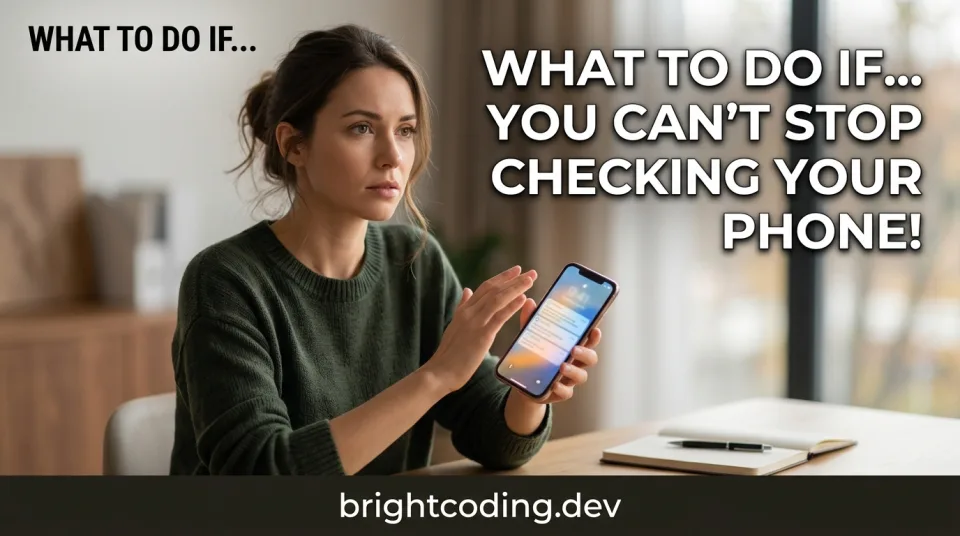
You pick up your phone to check the time. Twenty minutes later you look up, mildly stunned, and you could not tell anyone what you just read. If that sounds familiar, you are not weak-willed and you are not alone. The average person now touches their phone hundreds of times a day, and a lot of those checks happen on autopilot, before any conscious decision to look.
This guide is about breaking that loop without throwing your phone into a lake. You will get a clear explanation of why it happens, several practical fixes with honest trade-offs, and a step-by-step plan you can start tonight. No guilt, no lectures.
What is actually happening when you can’t stop checking your phone?
You have a habit loop, not a character flaw. Something triggers the reach (a notification, a moment of boredom, a pause in conversation), you perform the action (unlock, tap, scroll), and you get a small reward (a like, a reply, a headline, or just the relief of not wondering). Repeat that a few thousand times and your brain files it under "automatic."
The problem is that this automatic check costs you far more than the ten seconds it appears to take. It fragments your attention, which is why you can read a whole page and remember nothing. It hijacks quiet moments that used to be for thinking. And it tends to crowd out sleep first, because the last hour before bed is the easiest time to lose.
The most common mistake is aiming at the wrong target. People try to "use their phone less" in general, which is vague and impossible to measure. Others delete one app and feel smug while the browser version of the same app sits right there. And plenty of people rely on pure willpower alone, which fails exactly when you are tired, stressed, or bored, which is when you need it most.
Why does your brain keep reaching for it?
Variable rewards. This is the big one. If every check gave you something good, you would get bored. If none did, you would stop. The pull comes from not knowing, the same reason a slot machine is more gripping than a vending machine. A message might be from someone you love, or it might be nothing. Your brain has to check to find out.
The phone is your escape hatch from discomfort. Standing in a queue, waiting for someone to finish talking, sitting with an awkward thought. Reaching for the phone ends the discomfort instantly. Do that often enough and you lose the tolerance for boredom, which is genuinely useful for focus and creativity.
Notifications are engineered interruptions. They arrive at unpredictable intervals, which makes them harder to ignore than a predictable chime. Each one is a small summons, and ignoring a summons takes effort.
Your phone is also your alarm clock, camera, map, and wallet. That is the cruel part. You cannot simply leave it in another room when it is the thing that wakes you up. So the fix is rarely "get rid of it." It is "make the automatic parts harder and the intentional parts easier."
What are your realistic options?
Option 1: Make the phone boring (grayscale, no notifications, apps off the home screen)
What it is: You strip the phone's pull without removing the phone. Turn the screen to grayscale, kill non-essential notifications, and move the worst apps into folders or off the home screen entirely.
How it works: You are attacking the reward and the trigger at the same time. A gray feed is measurably less appetizing, and an app you have to search for gets opened on purpose rather than by reflex.
Advantages: Free, takes about fifteen minutes, no willpower required after setup, and you keep every function.
Disadvantages: You will undo it during a weak moment unless you make the settings annoying to change. Grayscale can be genuinely inconvenient for photos and maps.
When it makes sense: Almost always, as a first move. It is the lowest-cost change with the highest chance of sticking.
Option 2: Friction and distance (charging station in another room, phone-free zones)
What it is: Physical separation at key times. The phone charges in the kitchen overnight. Meals happen without it on the table. The bedroom is a no-phone zone.
How it works: Every extra step between you and the check is a chance for the automatic impulse to die. Distance works better than discipline because it does not require you to be strong at 11pm.
Advantages: Extremely effective for sleep and for meals, which are the two places phone use does the most quiet damage.
Disadvantages: You need a cheap alarm clock, and some people genuinely need to be reachable for work or family reasons. Those people should pick one protected window rather than trying to go fully dark.
Option 3: App timers and screen time limits
What it is: The built-in tools on iOS (Screen Time) and Android (Digital Wellbeing), plus app timers that lock an app after a set number of minutes.
How it works: You set a limit, the app warns you, you tap "ignore" anyway, and then you feel bad. That last part is the honest downside.
Advantages: Free, built in, and genuinely useful for people who lose track of time rather than people who reach reflexively. It gives you data, which is its own kind of wake-up call.
Disadvantages: Limits are trivially bypassable, and the "ignore" button trains you to ignore limits. Timers work best as information, not as a wall.
Option 4: A dedicated focus block (phone in a drawer, timer running)
What it is: You work or relax in deliberate blocks with the phone out of reach, using a timer to define the block.
How it works: You are borrowing a technique from productivity research: single-tasking in a defined window beats scattered attention every time. Twenty-five minutes is a common starting length, but any block you will actually repeat works.
Advantages: Builds the muscle of sustained attention, which is the thing you have actually lost. Great for work, study, and reading.
Disadvantages: Requires a little planning, and it can feel uncomfortable at first. That discomfort is the point, and it fades.
Option 5: A digital detox or a phone-free day
What it is: A longer break. A weekend, a day, or a week with sharply reduced use.
How it works: Resetting the baseline. After a few days without constant checking, the reflex weakens noticeably.
Advantages: Powerful for people who are deep in the habit and need a jolt.
Disadvantages: Relapse is common if you go straight back to the old setup. A detox without changing your environment is a holiday, not a fix. Also, if you have caregiving responsibilities or a job that requires you to be reachable, plan this carefully. If you are arranging coverage for kids or dependants, our kids and family safety resources are a sensible place to check what you actually need to stay reachable for.
Option 6: Get help if it is more than a habit
What it is: Talking to a doctor or mental health professional if phone use is tangled up with anxiety, depression, or compulsive behaviour that is damaging your life.
How it works: A professional can help you separate "bad habit" from something that needs treatment.
Advantages: If there is an underlying condition, no app timer will touch it.
Disadvantages: Cost and waiting times vary widely by country, and it is a bigger step than most people need. If you are unsure what support is available where you live, the emergency numbers by country page is a starting point for finding the right local service.
Which option should you actually pick?
For most people, the winning combination is Option 1 plus Option 2. Make the phone boring, then put distance between you and it at the two times that matter most, which for most people are the first hour of the day and the last hour before bed. That pair costs nothing and asks almost nothing of your willpower.
If your problem is losing track of time rather than reflexive checking, start with timers and screen time data, because you need to see the numbers before you will believe them. If you have tried everything and still cannot stop, or if the checking comes with real distress, skip the app settings and talk to a professional. And if you are the kind of person who needs structure and outside help, look at our practical guides for step-by-step formats that suit this kind of change.
There is no single best answer here. The right choice depends on whether your checking is driven by boredom, anxiety, work pressure, or pure reflex.
Your step-by-step plan for the next seven days
Tonight, do three things. Turn on grayscale. Turn off every notification except calls and messages from actual humans. Move your three worst apps off the home screen.
Tomorrow, buy a cheap alarm clock and move your phone charger out of the bedroom. This one change fixes more phone habits than any app.
For the next three days, run one phone-free block a day. Twenty-five minutes, phone in another room. Notice how long it takes before the urge fades. It is usually shorter than you expect.
By day four, check your screen time report and write down your real daily average. Not the number you would like it to be. The real one.
By day five, pick one protected window, a meal, a walk, or the first thirty minutes after waking, and make it permanently phone-free.
Over the weekend, do one thing that used to fill the time you now spend scrolling. Read a chapter, cook something, call someone. You are not just removing a habit, you are replacing it. Empty space gets refilled by the old behaviour.
On day seven, review what stuck and drop what did not. Keep the two changes that made the biggest difference and stop worrying about the rest.
Common mistakes that sabotage this
Going all-or-nothing. Deleting every app on day one leads to reinstalling them all on day four. Fix: change one thing at a time.
Relying on willpower alone. Willpower is lowest exactly when the urge is highest. Fix: change your environment instead of your resolve.
Keeping the phone as your alarm. You cannot avoid it if it is the first thing you touch. Fix: buy a clock.
Leaving notifications on "just in case." Every ping is a summons. Fix: allow calls and direct messages only, silence everything else.
Using screen time limits as the whole plan. They are data, not a fence. Fix: pair them with physical distance.
Judging yourself for slipping. Shame drives more scrolling, not less. Fix: treat a slip as information about your triggers, then adjust.
Ignoring the underlying feeling. If you scroll hardest when you are anxious or lonely, the phone is a symptom. Fix: address the feeling, and the reach weakens on its own.
The one thing worth remembering
You will not beat a reflex with a resolution. You beat it by changing what your hand finds when it reaches. Make the phone boring, put it somewhere else at the two moments that matter, and the urge fades faster than you would believe. If you want more practical, no-nonsense guidance on everyday problems, browse the What To Do In Case Of blog, and if you need to find local support for anything this article raised, our trusted local provider directory can help you find the right person.
FAQ
How many hours a day on my phone is too many?
There is no official threshold. The better question is whether your use is costing you sleep, focus, or time with people you care about. If it is, the number is too high for you, whatever it is.
Why can’t I stop checking my phone even when I want to?
Because the behaviour is automatic, not deliberate. It has been reinforced thousands of times by unpredictable rewards. Changing your environment works far better than trying to out-will the reflex.
Does deleting social media apps actually help?
It helps if the app is your main trigger. It does not help if you simply open the browser version instead. Remove the trigger and the replacement route, or expect the habit to follow you.
How long does it take to break a phone habit?
There is no fixed timeline, and anyone quoting an exact number of days is guessing. Most people notice the reflex weakening within a week or two of consistent environmental changes. Full comfort with boredom takes longer.
Is phone addiction a real condition?
"Phone addiction" is not a formal diagnosis in the main diagnostic manuals, though problematic smartphone use is widely studied. If your phone use is causing real distress or harm, treat it as a genuine health concern and speak to a professional rather than trying to fix it alone.
This article is general information, not medical or psychological advice. If your phone use is affecting your mental health, sleep, or relationships, talk to a qualified professional.
Written by
Basma IDBRAHIM
Travel & family enthusiast sharing practical tips, inspiring destinations, and ideas for making every journey and family moment memorable. ✈️👨👩👧👦
View profileSpotted an error? Report it — we correct mistakes promptly.
Keep reading
Related articles

What to do if...: your reflex guide to life's surprises
Clear, practical guides on what to do in a breakdown, an emergency or an everyday problem — fast answers, the mistakes to avoid, and the sources to trust.

What to Do If Your Clothes Shrink in the Wash
You pull your favourite jumper out of the machine and it looks like it was made for a toddler. Or the jeans that fit perfectly on Friday now stop halfway down your calves. It is a genuinely annoying moment, and it usually happens to the clothes you actually like.

What to Do If Your Online Order Never Arrives - 7 Steps to Get Your Money Back
That little "out for delivery" notification showed up three days ago. Since then: nothing. No knock, no package, no update. You've refreshed the tracking page so many times you know the courier's route by heart.
Related guides
Lost house keys: what to do?
Losing your house keys is stressful. Act quickly to secure your home, decide whether to rekey or replace locks, and avoid common mistakes that could put your safety at risk.
Kitchen smoke alarm goes off while cooking: what to do?
Learn how to safely handle a smoke alarm that activates while you are cooking, including how to silence it, prevent false alarms, and when to treat it as a real emergency.
What Should You Do If You Accidentally Mix Household Cleaning Products?
Mixing common cleaners like bleach and ammonia can create toxic gases. Get to fresh air immediately and call emergency services if you have trouble breathing.