What to Do If Your Credit Card Is Declined
The card taps. The reader blinks red. The cashier looks at you, then at the growing line behind you.
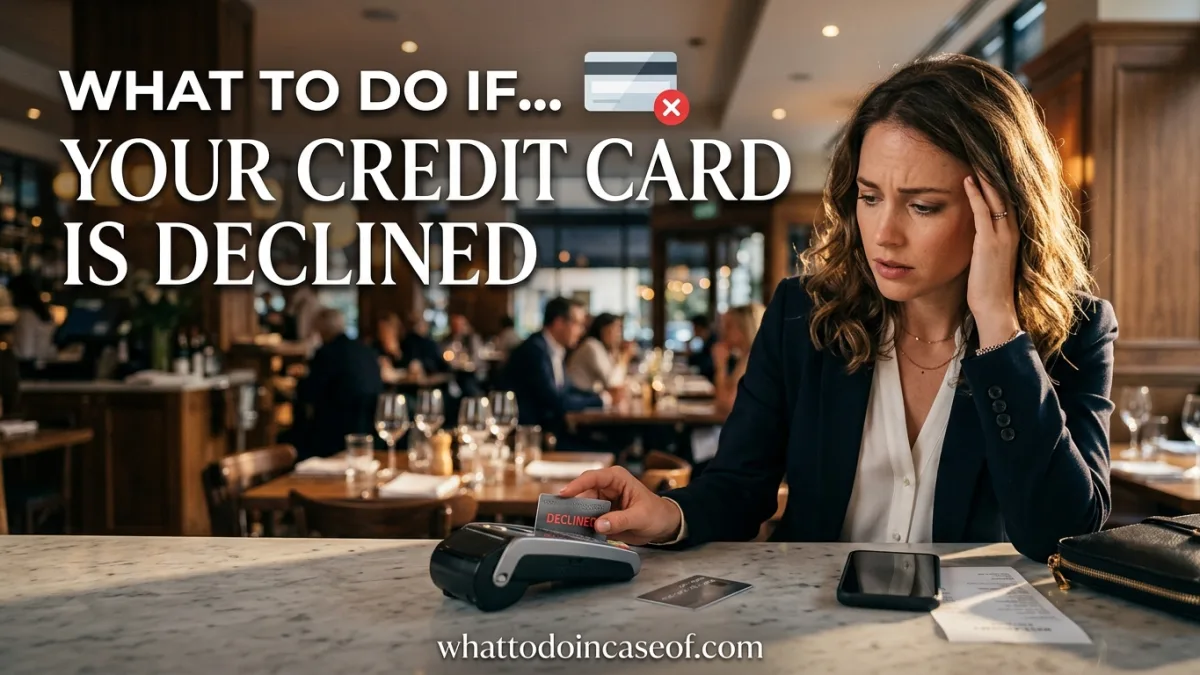
The card taps. The reader blinks red. The cashier looks at you, then at the growing line behind you.
It's a small humiliation, and it almost always has a boring explanation. This article walks through the eight mistakes people make in that moment and the handful of habits that make the whole thing a non-event next time.
Why most people get this wrong
A declined card feels personal. It isn't. Most declines are automated risk checks doing exactly what they were built to do: flagging something unusual or a balance that's already spoken for.
The trouble is what we do next. People panic, try the card again and again, or call the bank furious before they've checked anything. None of that fixes the problem faster.
The fix is almost always one of three things: a freeze you forgot about, a limit you didn't realize you'd crossed, or a security flag triggered by a perfectly normal purchase. Work through those, and you're usually back in business in minutes.
1 — Swiping again and again like it'll change its mind
You tap. Declined. You tap harder, as if the machine is just being stubborn.
People do this because repetition feels like control. It doesn't. Each retry can register as another suspicious attempt, and some banks will lock the card outright after a few rapid failures. Now you've turned a temporary flag into a real problem.
Try once more at most. If it fails again, stop and switch methods.
2 — Assuming it's a fraud lock and spiraling
Your bank texts: "Did you make this purchase?" You're standing in a checkout line, phone buzzing, heart rate climbing, convinced someone's draining your account.
Here's the thing most of these alerts are triggered by you. A new city, an unusual amount, a merchant you've never used. Answer the text or tap the "yes, that was me" button, and the card usually works again immediately.
Don't start cancelling cards before you've read the alert. Read it first.
3 — Forgetting the freeze you set yourself
Six months ago you lost your card, froze it in the app, then found it in a coat pocket. You never unfroze it. Life moved on.
This is one of the most common causes of a decline, and it's also the easiest to fix. Open your banking app, find the card controls, and check whether there's a freeze or a lock switched on. One toggle and you're done.
4 — Not knowing your actual available balance
You know your credit limit. You don't know that a hotel hold, a fuel pre-authorization, or a pending subscription has eaten into it.
Holds are the sneaky part. A rental car company might place a hold well above the rental price, and it can sit there for days. Your app shows the balance, but the available credit is the number that matters at checkout.
Check available credit, not just the statement balance. And if a hold is the culprit, you may just have to wait it out.
5 — Trying the same card at the same terminal three times
The terminal itself might be the problem. A bad connection, a dead phone line, or a merchant whose payment system is having a rough morning can all produce a decline that has nothing to do with your card.
If a second card works at the same terminal, that tells you something: it was never you. If no card works, it's the machine and the cashier probably already knows.
6 — Standing there silently while the line builds
The silence is the worst part. You, the cashier, and eleven people behind you all pretending not to notice.
Say something. "My card's being weird give me one second." Most cashiers have seen it a hundred times and will happily hold your items while you sort it out. You're not the first person this has happened to today, and you won't be the last.
7 — Leaving your only backup at home
You've got one card. It's in your phone wallet. Your phone is at 4% and the café doesn't take contactless anyway.
Carrying a single payment method is a bet that nothing will go wrong. It's a bad bet. Keep a second card somewhere separate from the first different pocket, different bag so a lost wallet doesn't take both down with it.
This is the same logic behind any decent emergency plan, whether it's a spare key or a family meeting point for when things go sideways. If you want a broader look at preparing for small everyday disruptions, the practical guides are a good place to start.
8 — Not calling the number on the back
People will spend twenty minutes Googling "why was my card declined" before they'll spend two minutes on the phone with their bank.
The number on the back of your card connects you to people who can see exactly why it declined. They can lift a freeze, confirm a fraud flag, or tell you the real reason in about ninety seconds. That's faster than any forum thread.
Keep the number saved in your phone under something you'll actually find. "Bank - card" works better than "1-800-555-0199."
Do this instead
- Stay calm, try once, then stop.
- Check your banking app for a freeze, a low available balance, or a fraud alert you missed.
- Read any text or notification from your bank before you assume the worst.
- Keep a second card somewhere separate from your main one.
- Save your bank's number in your phone so you don't have to hunt for it.
- Tell the cashier what's happening most will hold your items without a fuss.
- If you're traveling, set a travel notice in the app before you go.
FAQ
Will a declined card hurt my credit score? No. A decline is a failed authorization, not a missed payment, and it isn't reported to credit bureaus. Your score doesn't care.
Why does my card get declined for small purchases but work for big ones? Small, rapid, or unusual purchases can trip fraud detection precisely because they don't match your normal pattern. It's not about the amount it's about the shape of the transaction.
Can a merchant decline my card even if my bank approves it? Yes. Merchants can set their own rules, and some block certain card types, regions, or prepaid cards. If your bank says the charge went through, the issue is on the merchant's side.
How long do pending holds last? It varies. Many clear within a few days, but some can linger longer depending on the merchant and your bank. Check your app for the specific hold.
What if I'm abroad and my card stops working? Call the number on the back using whatever connection you have many banks have collect or in-app calling. If you're dealing with a wider emergency while traveling, keep emergency numbers by country saved before you leave.
The bottom line
A declined card is almost always a boring technical hiccup, not a crisis check the app, make one call, and move on.
Written by
Mohamed IDBRAHIM
I oversee the platform's development, content strategy, quality standards, and overall user experience. My goal is to make WhatToDoInCaseOf.com a reliable and practical resource where people can quickly find clear, useful information about what to do when facing everyday problems, unexpected situations, important decisions, and life challenges. I work to ensure that the platform remains easy to use, accessible, informative, and continuously improved with helpful guides, tools, calculators, and practical resources. Through a focus on clarity, usefulness, and innovation, I am committed to building a platform that helps people better understand their options and take the next step with confidence.
View profileSpotted an error? Report it — we correct mistakes promptly.
Keep reading
Related articles

What to Do If Your Bank Charges an Unexpected Fee
You check your balance on a Tuesday morning and the number is lower than it should be. Then you spot it: a $35 "maintenance fee" or a $12 "overdraft item fee" you never agreed to and never saw coming. Your stomach drops a little. That money was already spoken for.
Lost Access to Your Crypto Wallet? Don't Panic Here's Your Complete Rescue Guide (2026)
Locked out of your crypto wallet? This friendly, no-panic guide walks you through exactly what to do, from hunting down your seed phrase to spotting recovery scams, plus pro tips to never lose access again.
What to Do If You Accidentally Sent Money to the Wrong Person
You typed a phone number, hit send, and watched the confirmation appear. Then the sinking feeling: that wasn't the right person.
Related guides
Bank branch closed: how to deposit cash now?
Bank branch closed: the right reflexes in a few simple steps.
Lost access to a crypto wallet: what to do?
Lost access to a crypto wallet: the right reflexes in a few simple steps.
Airbag warning light on the dashboard: what to do?
Airbag warning light on the dashboard: the right reflexes in a few simple steps.