What to Do If Your Bedroom Is Always Too Hot
You dread bedtime. Not because you're not tired, but because you know what's waiting: a room that feels like the inside of an oven, a pillow you have to flip to the cool side three times a night, and a 3 a.m. wake-up call from your own sweat.
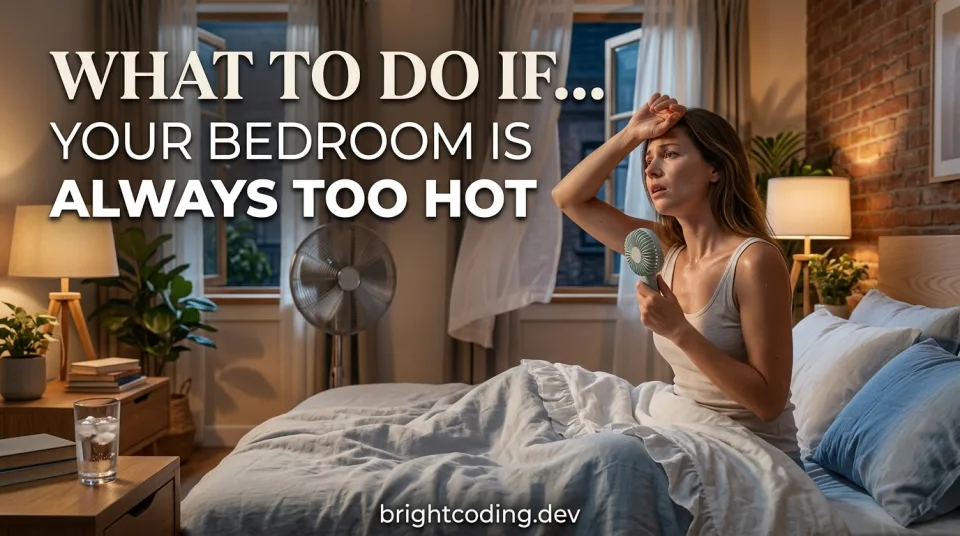
You dread bedtime. Not because you're not tired, but because you know what's waiting: a room that feels like the inside of an oven, a pillow you have to flip to the cool side three times a night, and a 3 a.m. wake-up call from your own sweat.
If your bedroom is always too hot, you're not imagining it and you're not being fussy. A warm bedroom quietly wrecks the one thing your body needs to recover: sleep. The good news is that this is one of the most fixable problems in a home, and you can usually solve most of it in a single weekend without ripping out walls or buying a new air conditioner.
This guide walks you through why your bedroom runs hot, what actually works, and the order to do things in so you're not wasting money on gadgets that don't help.
Why does my bedroom feel hotter than the rest of the house?
Rooms don't heat up by accident. Something is adding heat, trapping it, or both. Here are the usual suspects.
Heat rises, and you sleep upstairs. If your bedroom is on an upper floor, you're sitting at the top of a column of warm air. An attic above you that bakes all day radiates that heat down through the ceiling well into the evening.
Your bedroom faces the wrong way. A west- or south-facing window collects sun all afternoon, and the wall itself holds onto that heat for hours. That's why the room can feel hot at 10 p.m. even after sunset.
There's no real airflow. A closed door, a closed window, and no fan means the air just sits there. Your own body heat and breath slowly warm the space around you.
Your bed is a heat trap. Memory foam mattresses and synthetic sheets hold warmth against your skin. You're essentially sleeping on a slow-release radiator.
Something in the room is generating heat. A TV on standby, a desktop computer, a charging laptop, a gaming console, even a bright incandescent lamp. Small sources add up in a small room.
The thermostat is fighting you. If you cool the whole house to keep one room comfortable, you're paying for rooms nobody's in. And if the thermostat is in a cool hallway, it thinks everything is fine while your bedroom cooks.
Why does this matter more than just being uncomfortable?
Your body needs to drop its core temperature slightly to fall asleep and stay asleep. A hot room works against that natural drop, which is why you lie awake, wake up more often, and feel unrested even after a full night. It's not just about comfort. Consistent poor sleep affects mood, focus, and how you feel the next day.
What actually works to cool a bedroom down?
There's no single magic fix. Most people get the best results from stacking a few cheap changes with one bigger investment. Here's what each option really does.
1. Blackout curtains and reflective window film
What it is: Thick curtains that block sunlight, or a film you stick to the glass that reflects solar heat.
How it works: Both stop the sun from turning your room into a greenhouse during the day. The film keeps working even when the curtains are open.
The upside: Cheap to moderate, no installation skills needed, and it attacks the root cause if sun is your problem.
The catch: Blackout curtains only help if you close them before the sun hits the window. Closing them at night does nothing.
When it makes sense: Any bedroom with a sunny window. Start here.
2. A ceiling fan or a good floor fan
What it is: Moving air across your skin.
How it works: A fan doesn't lower the room temperature. It speeds up how fast your body sheds heat through evaporation and convection, so you feel cooler. That's a real effect, not a placebo.
The upside: Cheap to run, immediate, and it works even in a warm room.
The catch: It only cools you, not the room. Point it at yourself, not into empty space. And don't run a ceiling fan in a room nobody's in; you're just paying to move air.
When it makes sense: Almost always. This is the first thing to try.
3. A window fan that pulls cool night air in
What it is: A fan designed to sit in an open window and push air one direction.
How it works: At night, when outside air is cooler than inside, a window fan can flush the hot air out and pull cooler air in. Run it on exhaust to push hot air out, or intake to pull cool air in, depending on which side of the house the cool air is on.
The upside: Genuinely effective at night, and much cheaper than air conditioning.
The catch: It only works when the outside air is actually cooler than your room. On a hot, humid night it won't help much.
When it makes sense: If your evenings cool down where you live.
4. A portable or window air conditioner
What it is: A unit that actively removes heat from the air.
How it works: Unlike a fan, it genuinely lowers the temperature. A window unit is more efficient than a portable one, which has to vent hot air out through a hose and can leak some heat back into the room.
The upside: The most reliable fix. It works no matter how hot it is outside.
The catch: Costs more upfront and to run, and portable units are noisy. You'll also want to seal the window opening properly so you're not cooling the whole street.
When it makes sense: If your bedroom is regularly unbearable and other fixes haven't been enough.
5. Fixing the airflow, not just adding devices
What it is: Opening a window on one side of the house and another on the opposite side, so air can move through.
How it works: Cross-ventilation. Hot air leaves, cooler air replaces it. A single open window mostly does nothing.
The upside: Free.
The catch: Needs two openings and a temperature difference. Doesn't work in a sealed, stuffy apartment with one window.
6. Cooling your bed itself
What it is: Breathable bedding, a cooling mattress pad, or a mattress topper that doesn't trap heat.
How it works: Cotton, linen, and bamboo breathe. Memory foam and polyester don't. Changing what touches your skin can make a real difference even if the room stays warm.
The upside: Relatively cheap and improves comfort immediately.
The catch: "Cooling" is a marketing word. Look for natural, breathable fibers rather than trusting a label.
7. Reducing the heat your room makes
What it is: Turning off or unplugging electronics, switching to LED bulbs, and not leaving a laptop charging overnight.
How it works: Every device that draws power gives off some heat. In a small room, removing a few sources helps.
The upside: Free, and it lowers your electricity bill too.
Which option is right for you?
There's no single best answer, because the right fix depends on why your room is hot.
If it's the sun, start with blackout curtains and window film. If it's trapped air, start with a fan and cross-ventilation. If it's your bed, change the bedding. If it's everything and it's still brutal, an air conditioner is the honest answer.
Most people get the best result from doing two or three cheap things first, then deciding whether the remaining discomfort justifies the cost of real cooling. Don't buy an air conditioner before you've closed the curtains.
If your building or neighborhood has recurring heat problems, it can be worth talking to someone who knows your local setup. A directory of vetted local tradespeople is a good place to find an electrician, HVAC technician, or handyman who can look at ventilation and insulation without you guessing.
Step-by-step action plan
Do these roughly in order. Each step is cheap, and you can stop once the room is comfortable.
- Close the curtains before the sun hits the window. Not at sunset. Before.
- Put a fan where it cools you, not where it looks nice. Point it at the bed.
- Open two windows on opposite sides in the evening to create cross-ventilation.
- Strip the heat sources. Unplug the TV, charger, and anything on standby overnight.
- Swap your bedding for cotton or linen if you're sleeping on synthetics.
- Try a window fan at night to pull in cooler outside air.
- Check the thermostat location. If it's in a cool hallway, move the sensor or adjust the schedule so the bedroom gets attention.
- If it's still too hot, consider a window air conditioner and seal the opening properly.
- If the problem is structural (bad insulation, a hot attic, no ventilation), get a professional opinion before spending more on gadgets.
What if it's an emergency?
Heat is not just uncomfortable. If you or someone in the home is showing signs of heat illness, such as confusion, dizziness, nausea, a racing heart, or hot dry skin, that's a medical emergency. Call your local emergency number immediately. If you're unsure what that number is in your country, look it up before you need it. Heat stroke can escalate quickly, especially for older adults and young children.
Common mistakes that keep your bedroom hot
- Closing curtains at night instead of during the day. The sun already did its damage. Fix: close them before direct sun hits the glass.
- Running a fan in an empty room. You're cooling nobody. Fix: only run fans when you're in the room.
- Buying an air conditioner first. It's the most expensive fix and often not needed. Fix: try curtains, fans, and ventilation first.
- Leaving the bedroom door wide open. You're letting warm air from the rest of the house in. Fix: close it and cool the room you're actually in.
- Trusting the word "cooling" on bedding. It's mostly marketing. Fix: check the fiber content and choose natural, breathable materials.
- Ignoring the attic. If heat is radiating down from above, nothing in the room will fully fix it. Fix: look into attic insulation or ventilation.
- Overcooling and overspending. Cranking the AC to freezing wastes money and can leave you uncomfortable. Fix: aim for a comfortable sleeping temperature, not a cold one.
Expert takeaway
The single most important lesson: find the source of the heat before you buy anything. Sun, trapped air, a heat-trapping bed, and a hot attic all need different fixes. Diagnose first, then spend. Most people solve 80% of the problem with curtains, a fan, and a little airflow, and only reach for an air conditioner when those genuinely aren't enough.
FAQ
Why is my bedroom so hot at night even with the window open?
An open window only helps if there's somewhere for the hot air to go. With one window and no cross-breeze, the air just sits. Try opening a second window on the opposite side, or use a window fan to push air through. If it's still hot, the heat is probably coming from your walls, ceiling, or bed rather than the air itself.
Does a fan actually cool a room?
No. A fan cools you, not the room. It moves air across your skin, which helps your body shed heat. That's why it feels cooler even though the thermometer hasn't budged. It's still one of the cheapest and most effective sleep aids you can use.
What temperature should a bedroom be for sleeping?
Most sleep guidance points to a range somewhere around 16-19°C (roughly 60-67°F) as comfortable for most adults, though the ideal varies from person to person. The key is that your body needs to cool slightly to sleep well, so a room that's too warm will interfere regardless of the exact number.
Is it cheaper to cool just my bedroom or the whole house?
Cooling one room is almost always cheaper than running central air for the whole home, especially at night when you're only in one place. A window air conditioner or a well-placed fan in a single bedroom uses far less energy than cooling empty rooms.
What if my bedroom is hot because of the attic above it?
That's a structural problem and often the real culprit in upstairs bedrooms. Insulation and attic ventilation matter more than anything you do inside the room. It's worth getting a professional assessment before you spend more on fans and window units that are fighting a losing battle.
This article is general information, not a substitute for professional medical or building advice. If you or a family member shows signs of heat illness, treat it as an emergency and call your local emergency services right away.
Want the trusted steps for this and similar situations? Browse the full set of practical guides, read more practical-knowledge articles, or check the emergency numbers for your country so you are ready if something goes wrong.
Written by
Emma Richardson
Writer and researcher focused on simplifying financial topics and everyday decisions through clear, practical, and easy-to-follow guidance.
Spotted an error? Report it — we correct mistakes promptly.
Keep reading
Related articles

What to Do If You Want Your Home to Look Better on a Small Budget
Your place feels tired. Maybe it's the beige walls your landlord painted in 2009, the sofa you bought because it was cheap and not because you liked it, or the pile of stuff that never found a home. You want it to look better, and you don't have hundreds or thousands of dollars sitting around to ma…

What to Do If Your House Suddenly Smells Bad 9 Places to Check First
You walk in the door, drop your keys, and stop. Something is off. The house smells wrong, and it wasn't like this when you left.

What to Do If Your Smart TV Won’t Connect to Wi-Fi 8 Solutions to Try
Your show is queued up, the snacks are out, and your smart TV decides this is the moment to lose the Wi-Fi. The little network icon spins, an error message flashes, and you're left holding a remote that suddenly feels useless.
Related guides
Thermostat not responding: what to do?
A thermostat that will not respond is usually a power, battery or settings problem. Work through the simple checks before calling a technician.
Smart home hub offline: what to do?
When your smart home hub goes offline, it can disrupt your connected devices. Follow these steps to diagnose and fix the issue safely.
Traveler's diarrhea abroad: managing it
Traveler's diarrhea is common but usually self-limiting. Learn how to stay hydrated, when to use over-the-counter remedies, and when to seek medical care abroad.